
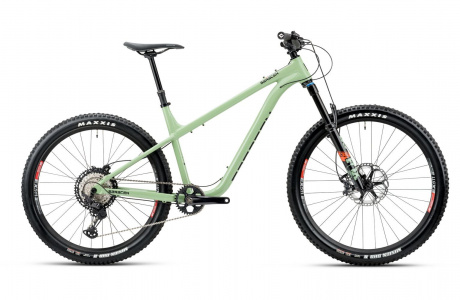
Saracen Mantra Race
Barrel down technical descents with hardtail simplicity and full-suspension confidence, then climb back for more.
- LSL geometry: long reach, slack head, low BB for descending confidence
- Mullet setup: 29" front rollover, 27.5" rear agility
- Fox 36 Performance Elite: 140mm travel, fully adjustable GRIP2
- Shimano XT throughout: 12-speed, four-piston brakes
- DT Swiss EX511 rims: 30mm internal, tubeless ready
- KS LEV Integra dropper: 150mm travel, internal routing
Saracen Mantra Race Deals

Prices and availability can change quickly. Delivery charges are not always included in listed prices.
Final price, stock status and delivery terms are set by retailer. We may receive a commission on purchases made.
Bikesy's Verdict
The Mantra Race delivers the kind of descending poise you'd expect from a much longer-travel bike, wrapped in a hardtail package that keeps things simple and engaging. That LSL geometry - long, slack, low - isn't marketing waffle; it genuinely transforms how a hardtail behaves when the trail tips down and the rocks pile up. You get stability at speed, composure through rough sections, and enough front-centre length to stop the front wheel wandering when you're committed.
Saracen hasn't skimped on the build. Fox 36 Performance Elite up front with proper GRIP2 adjustment, full Shimano XT drivetrain and four-piston brakes, DT Swiss hoops, and a dropper post that actually works - this is a spec sheet that makes sense for the bike's intent. The mullet wheel setup adds a layer of agility without sacrificing rollover, and the RaceFace carbon bar keeps weight in check while adding compliance where you need it.
If you want a hardtail that descends like it's angry but climbs without complaint, and you value UK engineering that prioritises fun over spreadsheet numbers, the Mantra Race earns its place on your shortlist.
Pros
- LSL geometry delivers full-suspension confidence on descents without the complexity
- Fox 36 Performance Elite and full Shimano XT spec punch well above typical hardtail builds
- Mullet setup balances 29-inch rollover with 27.5-inch agility and clearance
- UK-developed frame with thoughtful details: internal routing, tool mounts, rack and mudguard compatibility
- DT Swiss EX511 rims and XT hubs offer durability and tubeless-ready width
Cons
- Long reach may feel generous if you're between sizes or prefer a compact cockpit
- 13.6kg weight is reasonable for the spec but heavier than pure XC hardtails if you chase KOMs
- Stock Minion DHR II tyres are solid all-rounders but may need swapping for particularly loose or muddy conditions
About the Saracen Mantra Race
Saracen's Mantra Race sits at the sharp end of the UK brand's hardtail lineup, and it wears its LSL badge - Long, Slack, Low - like a declaration of intent. This isn't a hardtail that apologises for lacking rear suspension; it's a bike designed to make you forget you're riding rigid out back, at least until you're halfway down something steep and grinning. The geometry borrows confidence from the enduro world, the build kit punches well above typical hardtail fare, and the mullet wheel setup adds a twist that makes the whole package feel more capable than the sum of its parts.
Built around a hydroformed 6061 aluminium frame with progressive lines and beefed-up junctions, the Mantra Race pairs a 140mm Fox 36 Performance Elite fork with a full Shimano XT drivetrain and four-piston brakes. DT Swiss EX511 rims - 30mm internal width - roll on Shimano XT hubs, and a KS LEV Integra dropper post gives you 150mm of drop (125mm on the small). The mullet setup runs a 29-inch front wheel for rollover and a 27.5-inch rear for agility and clearance, a combination that works particularly well when the trail gets tight or the rider needs a bit more room to move. It's a thoughtful spec that reflects the bike's aggressive trail focus without tipping into overkill.
This is a hardtail for riders who want to charge descents with full-suspension confidence but appreciate the simplicity, directness, and lower maintenance of a rigid rear end. It's UK-developed, which means the geometry and handling priorities reflect the kind of trails we actually ride here - rooty, rocky, steep in places, and rarely smooth. The Mantra Race doesn't try to be everything; it knows what it's good at and leans into it hard.
Saracen Mantra Race geometry
The LSL philosophy shapes every number on the geometry chart, and you feel it the moment you weight the front wheel. Reach stretches out to 465mm on a medium, giving you room to move your weight back when the trail drops away, while the 64-degree head angle keeps the front wheel tracking predictably even when speed builds and the surface gets loose. The low bottom bracket - 45mm of drop - plants the bike and lowers your centre of gravity, which translates to stability through rough sections and confidence when you're leaning into berms or threading between trees.
That long front centre means the bike doesn't get nervous when you're committed; it holds a line and rewards smooth inputs rather than frantic corrections. The 75-degree seat angle keeps your weight forward enough for climbing without feeling like you're perched on the nose, and the 440mm chainstays - consistent across all sizes - add a flick of agility that stops the bike feeling like a barge when you need to change direction quickly. The mullet setup amplifies this: the 29-inch front wheel rolls over obstacles and maintains momentum, while the 27.5-inch rear lets you snap the bike around tighter corners and gives shorter riders more clearance when the saddle drops.
Some riders might find the reach generous - there's a school of thought that suggests sizing down if you're between sizes or prefer a more compact feel - but the length is there for a reason. When you're descending hard, that extra front-centre space becomes your safety net. The geometry doesn't make the bike feel sluggish; it makes it feel planted, and there's a difference.
Component choices & upgrades
The stock build on the Mantra Race is already well sorted. Fox 36 Performance Elite with GRIP2 damper gives you high- and low-speed compression and rebound adjustment, which means you can tune the fork to match your weight, riding style, and the terrain you're hitting. Shimano XT throughout - shifter, derailleur, crankset, cassette, brakes - is reliable, precise, and powerful enough for aggressive riding. The 10-51T cassette range covers steep climbs without leaving you spinning out on fast sections, and the four-piston XT brakes deliver consistent stopping power with 180mm rotors front and rear.
DT Swiss EX511 rims are tubeless-ready and wide enough - 30mm internal - to support the Maxxis Minion DHR II tyres in 2.3-inch width, though some riders might want to experiment with tyre choice depending on local conditions. The DHR II is a solid all-rounder, but if you're riding particularly loose or muddy trails, a more aggressive front tyre or a different rear compound could sharpen the bike's edge. The RaceFace Next R carbon handlebar - 780mm wide with 35mm rise - adds compliance without feeling flexy, and the 50mm RaceFace Turbine stem keeps the cockpit short and responsive.
If you're chasing upgrades, start with tyres and contact points - grips, saddle, pedals - to dial in comfort and control. The KS LEV Integra dropper works well, though riders on larger frames or those who want more drop might consider a longer-travel post if their inseam allows. Beyond that, the stock build doesn't leave much room for meaningful improvement unless your skills or terrain genuinely demand it. A lighter wheelset could shave a bit of weight, but the XT hubs and EX511 rims are already durable and capable. The frame has double tool mounts and internal routing, so adding a frame bag or tool storage is straightforward if you're planning longer rides.
Where the Saracen Mantra Race excels
Point the Mantra Race downhill and it comes alive. The LSL geometry gives you the confidence to carry speed through rough sections, lean into corners, and commit to lines that would feel sketchy on a more traditional hardtail. The long front centre and slack head angle mean the bike doesn't get nervous when the trail gets steep or loose, and the low bottom bracket keeps your weight centred and stable. The Fox 36 fork soaks up the big hits and keeps the front wheel tracking, while the rigid rear end gives you direct feedback and lets you pump terrain for speed. It's a bike that rewards smooth, committed riding and punishes hesitation.
The mullet setup adds versatility. The 29-inch front wheel rolls over roots, rocks, and ruts with less deflection, maintaining momentum and keeping the bike composed. The 27.5-inch rear wheel makes the bike feel more playful and responsive in tight sections, and it gives you more clearance when you drop the saddle and shift your weight back. For shorter riders, that extra clearance can be the difference between feeling cramped and feeling in control.
Climbing isn't the Mantra Race's primary mission, but the wide-range XT drivetrain and forward seat angle make it functional enough. You're not going to set KOMs on long fire-road slogs, but you'll get back to the top without hating life, and the bike's playfulness makes technical climbs more engaging than they would be on a longer-travel rig. The hardtail simplicity means less weight, less maintenance, and more direct power transfer - you put in the effort, the bike responds.
Where the Mantra Race isn't ideal: if you're after a pure XC race machine or a bike for marathon endurance events, the aggressive geometry and slightly heavier build will feel like overkill. The 13.6kg weight (size large) is reasonable for the spec, but it's not featherweight. If your local trails are smooth, flowy, and lack technical descents, you're not using the bike's strengths. And if you prefer the planted, forgiving feel of full suspension over the direct, engaging character of a hardtail, no amount of clever geometry will change that fundamental difference.
Saracen Mantra Race FAQs
What is the best tyre pressure for a Saracen Mantra Race?
Start around 25 - 28 psi front, 28 - 32 psi rear for a 75kg rider on tubeless Minion DHR IIs, then adjust based on terrain and feel. Lower pressure improves grip and comfort on rough trails; higher pressure reduces pinch-flat risk and rolling resistance on smoother surfaces. Your weight, riding style, and local conditions will shift those numbers, so experiment in 2-psi increments until the bike feels planted without wallowing or burping.
Is the Saracen Mantra Race good for climbing?
It's functional rather than exceptional. The 75-degree seat angle and wide-range XT cassette make technical climbs manageable, and the hardtail efficiency means your power goes straight to the rear wheel. You'll get back to the top without drama, but the long, slack geometry and slightly heavier build mean it won't match a dedicated XC hardtail on long fire-road grinds or sustained climbs where weight and position matter most.
What are the best upgrades for a Saracen Mantra Race?
Tyres first - experiment with compounds and tread patterns to match your local terrain. Contact points next: grips, saddle, and pedals to dial in comfort and control. If you're on a larger frame and have the inseam, a longer dropper post adds versatility. Beyond that, the stock XT drivetrain, Fox 36 fork, and DT Swiss wheels are already capable; meaningful upgrades require skills or terrain that genuinely demand more.
How does the Saracen Mantra Race compare to the Santa Cruz Chameleon?
Both are aggressive hardtails with progressive geometry, but the Chameleon offers more frame material and wheel-size options, including steel and carbon builds. The Mantra Race's mullet setup and UK-focused geometry give it a slightly different character - more planted on descents, a bit more playful in tight sections. The Chameleon's modularity appeals to riders who want to customise; the Mantra Race's spec and price point appeal to those who want a sorted package out of the box.
What size Saracen Mantra Race should I get for my height?
Medium suits 170 - 180cm (5'7" - 5'11"), large fits 178 - 186cm (5'10" - 6'1"). If you're between sizes, consider sizing down for a more compact, playful feel or sizing up for more stability and room to move on descents. The long reach means the bike feels bigger than traditional sizing, so if you prefer a shorter front centre or have a shorter torso, drop a size and test the fit.
Is the Saracen Mantra Race a good bike for downhill?
It's excellent for aggressive trail descents and enduro-style riding, but it's not a dedicated downhill bike. The 140mm Fox 36 fork and hardtail rear end give you confidence and capability on steep, technical trails, but you'll feel the limits on sustained downhill runs with big drops, jumps, or bike-park features where more travel and rear suspension would add control and comfort. For uplift days or local gravity trails, it's more than capable; for a full season at the bike park, you'd want more bike.
What is LSL geometry on a bike?
LSL stands for Long, Slack, Low - a geometry philosophy that prioritises descending confidence and stability. Long reach gives you room to shift your weight back; slack head angle keeps the front wheel tracking predictably at speed; low bottom bracket lowers your centre of gravity for better balance and control. It's a design approach borrowed from enduro and downhill bikes, applied here to a hardtail to make it more capable on aggressive trails without adding rear suspension.
Does the Saracen Mantra Race come with pedals?
No, pedals aren't included. Most riders prefer to fit their own clipless or flat pedals based on personal preference, shoe compatibility, and riding style, so manufacturers typically leave them off to keep the price down and avoid forcing a choice that might not suit everyone.
Key Features & Benefits
- LSL (Long, Slack, Low) geometry: Delivers descending stability and confidence that rivals longer-travel bikes, letting you carry speed through rough sections without the front wheel wandering.
- Mullet wheel setup (29" front, 27.5" rear): Combines rollover and momentum from the larger front wheel with agility and clearance from the smaller rear, making tight sections more playful and giving shorter riders more room.
- Fox 36 Performance Elite GRIP2 fork, 140mm travel: Fully adjustable high- and low-speed compression and rebound let you tune the fork to your weight and terrain, soaking up big hits while keeping the front wheel tracking.
- Shimano XT 1x12 drivetrain and four-piston brakes: Reliable, precise shifting across a 10-51T range and consistent, powerful stopping with 180mm rotors - components that match the bike's aggressive intent without drama.
- Hydroformed 6061 aluminium frame with internal routing and mounts: Strong, stiff frame construction with clean lines, internal dropper routing, and rack/mudguard mounts for versatility beyond pure trail riding.
Saracen Mantra Race 2024 and 2023 differences
The 2024 and 2023 Mantra Race models share the same core specification as the 2025 bike: Fox 36 Performance Elite fork with 140mm travel and GRIP2 damper, full Shimano XT 1x12 drivetrain and four-piston brakes, DT Swiss EX511 rims on XT hubs, Maxxis Minion DHR II tyres in the mullet setup, and the KS LEV Integra dropper post. The LSL geometry - long reach, 64-degree head angle, 75-degree seat angle, 440mm chainstays, 45mm bottom bracket drop - remained consistent across all three years, so the descending character and handling priorities are unchanged.
The 2025 model introduced new colourways - Sage Green and Purple - while retaining the same frame construction and component choices. Some reviews of the 2023 model noted minor points such as the potential need for more aggressive tyres, lack of chainstay protection, and occasional inconsistent brake bite points, though these observations appear to reflect individual setup preferences rather than widespread issues. The 2024 model carried the same Sage Green and Purple colour options as the 2025 release. Pricing held steady at £2,799 across 2024 and 2025, with no significant spec changes between the two years.
Earlier models, such as the 2020 Mantra LSL, featured significantly different specifications: a 3x8 drivetrain with Shimano Tourney groupset, a less aggressive 66-degree head angle, and quick-release rear dropouts with an optional upgrade to bolt-thru. The progression from those earlier builds to the current Race specification represents a substantial shift in intent and capability, moving from a more general trail hardtail to the aggressive, descending-focused machine available today.
Alternatives to Consider
Within Saracen's own Mantra LSL range, the Mantra Elite LSL steps down with a Marzocchi Bomber Z2 fork and a mix of SLX and XT components, offering similar geometry and character at a lower price if you're willing to trade some adjustment and refinement. The Mantra Trail LSL sits at the entry point with Deore/SLX parts and a RockShox fork, ideal if you want the LSL geometry but need to keep the budget tighter. Both share the same frame DNA, so you're getting the descending confidence and UK-developed handling priorities across the range.
Cross-brand, the Cotic Solaris Bronze is a direct rival with similarly aggressive hardtail geometry and a focus on descending capability; it offers steel frame options if you prefer the ride quality and durability of that material. The Santa Cruz Chameleon brings modularity and a wider range of build options, including carbon frames and different wheel-size configurations, appealing to riders who want to customise their setup. The Nukeproof Scout 290 Comp offers a 29-inch single wheel size with progressive geometry and a capable build, while the Ragley Big Al leans into playful, rowdy handling with steel construction and a slightly more compact feel. The Marin San Quentin 3 delivers aggressive hardtail performance with a focus on value and dirt-jump-inspired geometry, though it skews slightly more towards park and pump-track riding than pure trail descending.
Reviews
Aggressive hardtails live or die by their geometry, and the Mantra Race's LSL numbers translate into real-world poise that belies the lack of rear suspension. Long reach and a slack head angle mean the bike holds a line through rough sections without getting nervous, and the low bottom bracket keeps your weight centred when speed builds. Descending feels composed rather than frantic; you can commit to lines and trust the front end to track predictably, even when the surface gets loose or the gradient steepens.
Fox 36 Performance Elite with GRIP2 damper gives proper adjustment range - high- and low-speed compression and rebound - so you can tune the fork to match your weight and the terrain. Shimano XT throughout delivers the kind of reliable, precise performance you expect from the groupset: shifts are clean, the 10-51T cassette range covers steep climbs without leaving you spinning out, and the four-piston brakes offer consistent power with good modulation. DT Swiss EX511 rims on XT hubs roll smoothly and handle tubeless setup without fuss, while the 30mm internal width supports the Maxxis Minion DHR II tyres well.
Mullet setup adds a layer of versatility. The 29-inch front wheel rolls over obstacles and maintains momentum, while the 27.5-inch rear makes the bike feel more agile in tight sections and gives shorter riders more clearance when the saddle drops. It's a combination that works particularly well on technical trails where you need both rollover and manoeuvrability. Climbing isn't the bike's primary mission, but the forward seat angle and wide-range drivetrain make it functional enough - you'll get back to the top without drama, and the hardtail efficiency means your power goes straight to the rear wheel.
RaceFace Next R carbon bar adds compliance without feeling flexy, and the 50mm stem keeps the cockpit short and responsive. KS LEV Integra dropper works smoothly with 150mm of travel (125mm on the small), though riders on larger frames might want more drop if their inseam allows. Some suggest sizing down due to the long reach, and that's worth considering if you're between sizes or prefer a more compact feel. Stock tyres are solid all-rounders, but experimenting with compounds or tread patterns could sharpen the bike's edge in particularly loose or muddy conditions. Weight sits at 13.6kg for a large, which is reasonable for the spec but not featherweight - if you're chasing pure XC speed, lighter options exist.
When the trail tips down and the rocks pile up, the Mantra Race feels like a bike that costs more than it does. UK-developed geometry reflects the kind of trails we actually ride here - rooty, rocky, steep in places - and the build kit matches the bike's aggressive intent without tipping into overkill. It's a hardtail that makes you forget you're riding rigid out back, at least until you're halfway down something steep and grinning.
Full Specification
| Spec | Value |
|---|---|
| Frame Material | Series 2 Custom Butted and Hydroformed 6061 Aluminium |
| Frame Construction | Hydroformed |
| Frame Features | Progressive LSL geometry, tapered headtube (ZS44-ZS56), internal cable routing, low-slung top tube, Chip-Slot dropout system |
| Mounts | Double tool mounts, rack mounts, mudguard mounts |
| Tyre Clearance | Ample mud clearance at rear; mullet setup (29" front, 27.5" rear) provides increased clearance for shorter riders |
| Standards (BB) | Shimano BSA, 73mm |
| Standards (Rear Axle) | 12 x 148mm Boost |
| Fork | Fox 36 Performance Elite GRIP2 |
| Fork Travel | 140mm |
| Fork Adjustments | Tapered steerer, HSC, LSC, HSR, LSR adjust, Grip2 damper |
| Drivetrain | 1x12 speed |
| Shifters | Shimano XT M8100, 1x12 speed |
| Rear Derailleur | Shimano XT M8100, 12-speed |
| Crankset | Shimano XT M8100, 32T chainring |
| Crank Length | 170mm |
| Cassette | Shimano XT M8100, 10-51T, 12-speed |
| Chain | KMC X12 |
| Brakes | Hydraulic four-piston |
| Brake Levers | Shimano XT M8100 |
| Calipers | Shimano XT M8120 |
| Rotors (Front) | 180mm |
| Rotors (Rear) | 180mm |
| Rims (IW) | DT Swiss EX511, 30mm internal width, Tubeless Ready |
| Hubs (Front) | Shimano XT M8100, 15x110 Boost |
| Hubs (Rear) | Shimano XT M8110-B, 12x148 Boost |
| Spokes | Double-butted stainless steel |
| Tyres (Front) | Maxxis Minion DHR II, EXO TR, 29 x 2.3" |
| Tyres (Rear) | Maxxis Minion DHR II, EXO TR, 27.5 x 2.3" |
| Handlebar | RaceFace Next R Carbon, 780mm width, 35mm rise, 6-degree bend, 35mm clamp bore |
| Stem | RaceFace Turbine, 50mm length, 6-degree rise, 35mm clamp |
| Grips | ODI Elite Motion Lock-on |
| Headset | Prestine PT-F13 |
| Seatpost | KS LEV Integra, 30.9mm diameter, 150mm travel (125mm on size Small), internal routing, Southpaw remote |
| Saddle | Saracen Custom CrMo MTB |
| Weight (Approx) | 13.45kg (Medium without pedals); 13.6kg (Large) |