
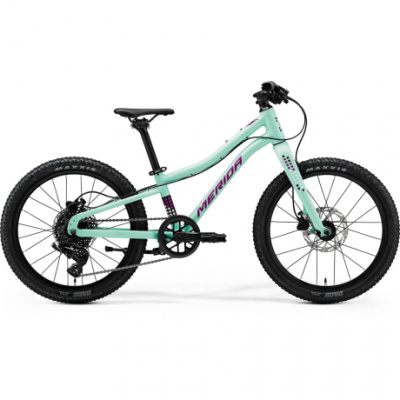
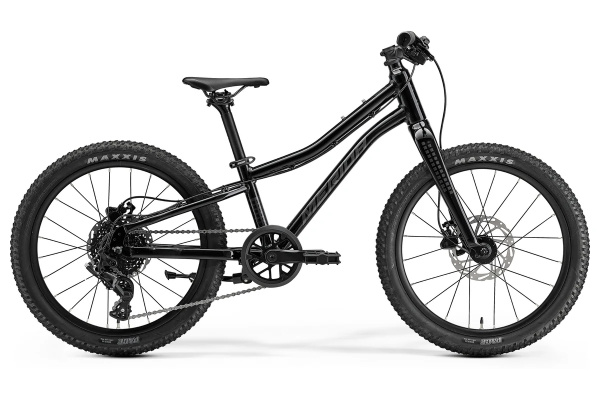
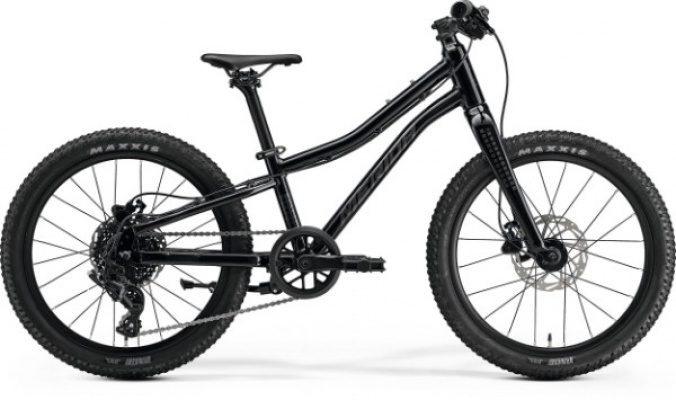
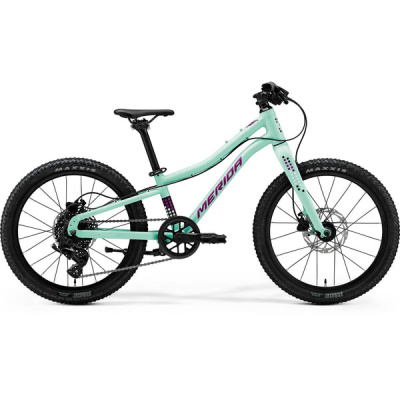
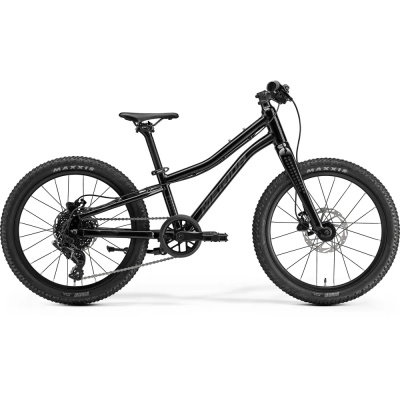
Merida MATTS J20+
Light, capable, and confidence-inspiring: proper trail fun for young riders without the weight or faff.
- Plus-sized 2.4" tyres: grip and comfort on rough trails
- Hydraulic disc brakes with short-reach levers for small hands
- Rigid aluminium fork keeps weight down to 9.5 kg
- 1×8 Microshift drivetrain: simple, reliable shifting
- Low standover and adjustable stem grow with your child
- Fits riders 109 - 129 cm tall (approx. 5 - 8 years)
Merida MATTS J20+ Deals
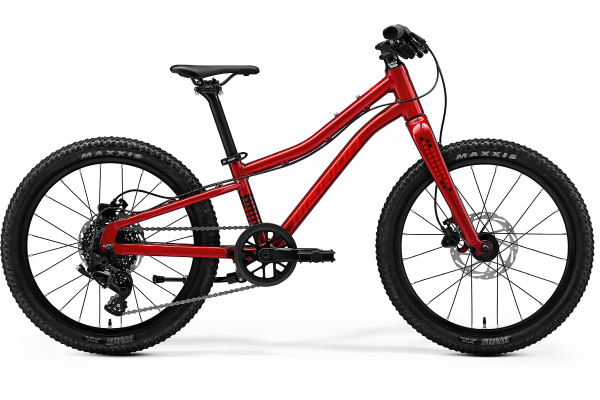
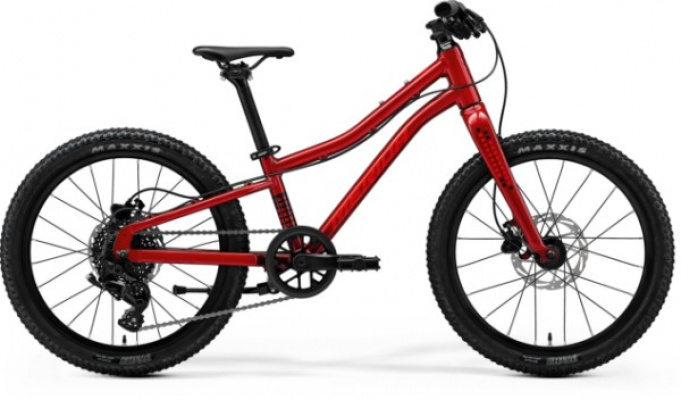
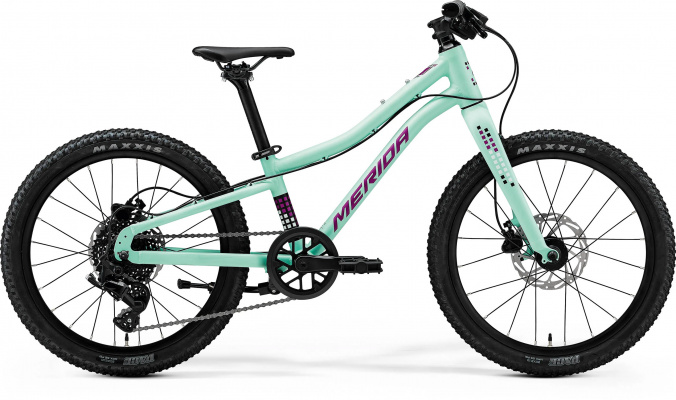
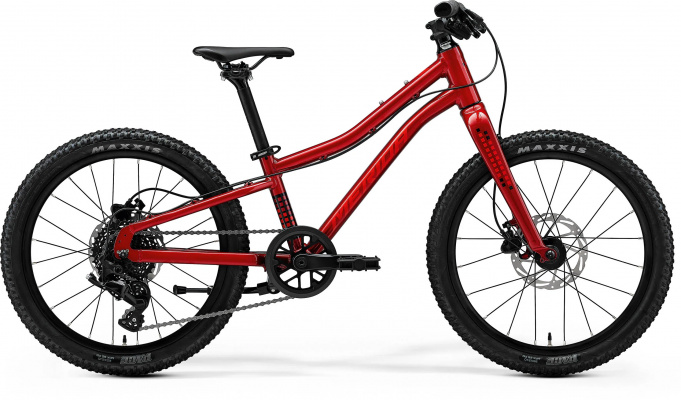
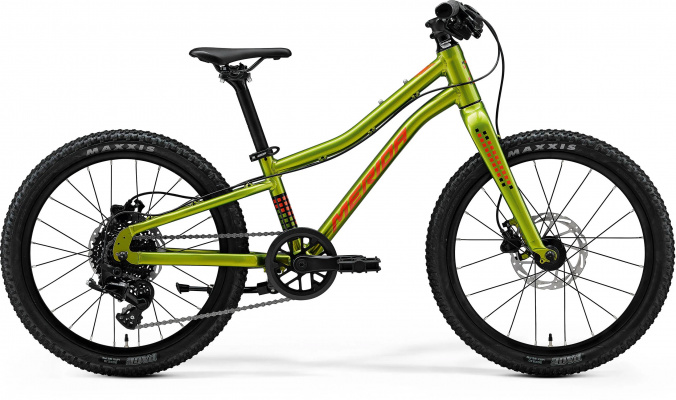
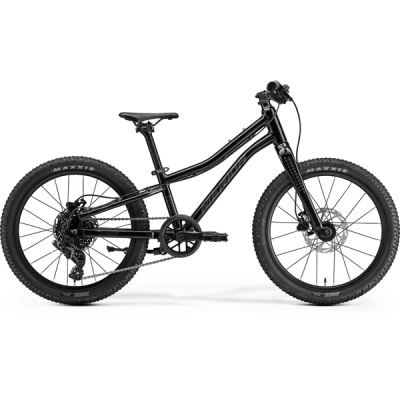
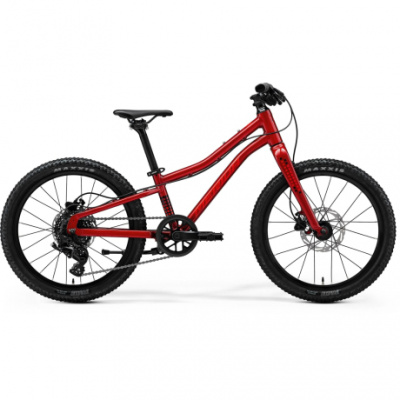

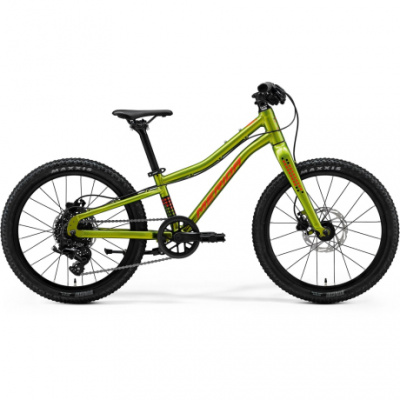
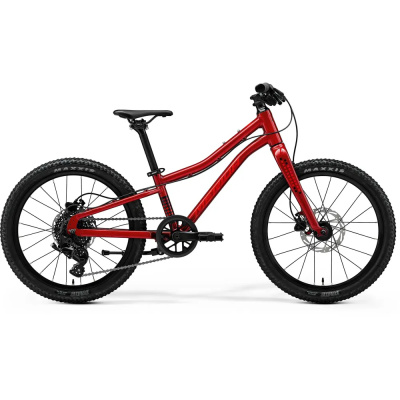
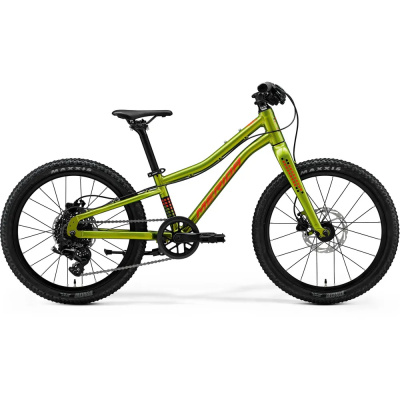
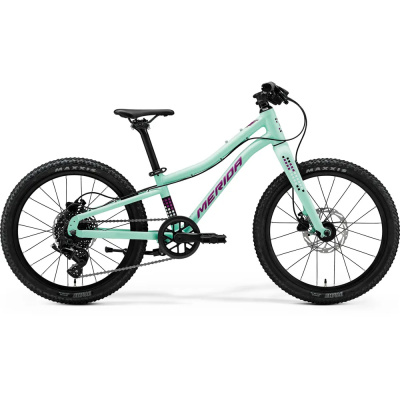
Prices and availability can change quickly. Delivery charges are not always included in listed prices.
Final price, stock status and delivery terms are set by retailer. We may receive a commission on purchases made.
Bikesy's Verdict
The Merida MATTS J20+ nails the brief: it's light enough for young riders to handle confidently, tough enough to survive the inevitable crashes, and capable enough to turn weekend park laps into proper trail adventures. Those Plus tyres and hydraulic brakes aren't gimmicks - they're the difference between a child who rides cautiously and one who attacks corners and roots with a grin. The rigid fork keeps weight and complexity down without sacrificing comfort, and the simple 1×8 drivetrain means less time explaining gears, more time riding.
If you want your child to love off-road riding rather than tolerate it, this is the bike that makes it happen. It's not the cheapest option, but the quality of the frame, the thoughtfulness of the component choices, and the adjustability that extends its lifespan make it worth every penny. Buy it, set the saddle height, and watch them disappear down the trail.
Pros
- Impressively light at 9.5 kg, easy for young riders to handle and manoeuvre
- Plus-sized tyres deliver grip, comfort, and confidence on trails and rough paths
- Hydraulic disc brakes with short-reach levers: powerful, reliable stopping for small hands
- Simple 1×8 Microshift drivetrain eliminates front-mech confusion and chain-drop drama
- Adjustable stem and spacers extend usable lifespan as your child grows
Cons
- Rigid fork means bigger hits rattle through more than suspension would, though the Plus tyres help
- Single frame size may feel cramped for taller riders nearing 129 cm if cockpit isn't adjusted
- Entry-level rear derailleur and cassette are functional but not race-spec if your child progresses to competition
About the Merida MATTS J20+
You want your child to love riding, not wrestle with a bike that's too heavy or too complicated. The Merida MATTS J20+ strips away the faff - no clunky suspension fork, no fiddly front mech - and doubles down on what matters: light weight, proper stopping power, and tyres fat enough to smooth out the bumps and inspire confidence. That Plus suffix isn't marketing fluff; those 2.4-inch CST or Maxxis rubber hoops transform how the bike feels under a young rider, soaking up roots and gravel with a planted, almost grown-up composure. Merida's built this hardtail using the same Techno Forming System they apply to their adult race machines, so the 6061 aluminium frame is double-butted, stiff where it counts, and refreshingly light at around 9.5 kilograms complete.
Hydraulic disc brakes on a kids' bike might sound like overkill until you watch a six-year-old haul confidently into a corner, feathering the Tektro levers with one finger instead of death-gripping rim brakes that barely slow them down. The rigid fork keeps things predictable and shaves grams; paired with those wide tyres, it delivers enough cushion for fire-road fun and singletrack exploration without the weight penalty or maintenance headache of budget suspension. The 1×8 Microshift drivetrain is intuitive - one trigger, eight gears, no chain-drop drama - and the geometry tucks the rider low and central, so balance comes naturally. This isn't a toy with knobblies; it's a proper trail hardtail scaled down, ready to turn weekend park laps into proper off-road adventures.
Merida MATTS J20+ geometry
Merida's drawn the MATTS J20+ with a steeply sloping top tube that drops the standover height right down, so even shorter riders in the 109 - 129 cm range can plant both feet flat when they stop. That low centre of gravity isn't just a confidence trick; it genuinely helps kids feel they're sitting in the bike rather than perched on top, which translates to calmer handling when the trail gets lumpy or a root appears mid-corner. The cockpit is compact - 620 mm bars, a short 60 mm stem with a six-degree rise - so steering inputs are direct without feeling twitchy, and the upright posture keeps sight lines high for spotting obstacles early.
Because the frame is a single 10-inch size, Merida's leaned on adjustability: the flip-flop stem can be reversed to tweak reach, and a stack of spacers under the headset lets you raise the bars as your child grows. The 27.2 mm seatpost has 15 mm of setback, so you can fine-tune saddle position to keep pedalling efficient as legs lengthen. The result is a bike that doesn't feel cramped at the lower end of the height range or stretched at the upper limit, and the neutral handling means young riders can focus on where they're going rather than fighting the front end.
Component choices & upgrades
Out of the box, the MATTS J20+ is already well sorted. The Tektro HD-J2820 hydraulic disc brakes - 160 mm front, 140 mm rear, with rounded-edge rotors for safety - offer modulation and power that V-brakes or cable discs simply can't match, and the short-reach levers mean small hands can pull them without strain. The Microshift Acolyte 1×8 drivetrain is bombproof: a 28-tooth chainring up front, a 14 - 34 cassette out back, and quick trigger shifters that click positively without requiring thumb strength a child doesn't yet have. The Merida Expert JR crankset uses 127 mm arms, properly scaled so knees track cleanly and pedalling feels natural rather than forced.
Those Plus tyres - whether the CST Jet or Maxxis Pace depending on spec year - are the real performance upgrade baked in; they're wide enough to run lower pressures for grip and comfort without risking pinch flats, and they transform how the rigid fork rides. If your child progresses to more technical terrain and you want a touch more cushion, swapping to a slightly plusher tyre compound or experimenting with pressure is the easiest tweak. The Merida JR 20+ rims are strong enough for rowdy riding, and the Joytech hubs spin smoothly on quick-release axles that make wheel-off transport simple.
Upgrades? Honestly, hold fire until skills demand them. If your young rider starts racing or tackling genuinely rough trails, a lighter saddle or grippier pedals (the stock Marwi or VP plastic platforms are fine for learning but can feel vague when things get steep) might be worth considering. The Shimano MF-TZ500 cassette and KMC chain will take plenty of abuse before needing replacement, and when they do, like-for-like swaps keep costs sensible. The frame's BSA bottom bracket and standard 135×9 mm rear spacing mean future-proofing is straightforward, but the stock build is already thoughtful enough that most kids will outgrow the frame before they outgrow the components.
Where the Merida MATTS J20+ excels
This bike is outstanding at giving young riders - especially those aged five to eight, standing 109 to 129 cm tall - a genuine taste of off-road riding without the weight or complexity that kills enthusiasm. It's brilliant on gravel paths, light singletrack, forest fire roads, and park trails where the wide tyres and hydraulic brakes let kids ride with confidence rather than caution. The rigid fork and low weight mean it's also perfectly happy as a daily ride to school or the local play park, and the simple drivetrain means less time fettling, more time riding.
It does well on mildly technical terrain - roots, small rocks, hardpack with the odd rut - because those Plus tyres absorb enough chatter to keep the ride composed, and the geometry keeps the rider balanced and in control. It's not a race bike, so if your child is chasing lap times or wants to session jumps, lighter wheels and a more aggressive position might suit better. And while the rigid fork is a smart choice for this category, it does mean bigger hits - think deep potholes or drop-offs - will rattle through to the bars more than a suspension fork would.
Where it's not ideal: truly rough, rocky descents with sustained chunder will eventually overwhelm the tyres' ability to smooth things out, and at that point a suspension fork (and the weight penalty it brings) starts to make sense. If your child is already confident and riding aggressively technical trails, you might look at a slightly larger wheel size or a bike with front suspension. But for the vast majority of young riders building skills and confidence, the MATTS J20+ hits the sweet spot between capability, simplicity, and fun.
Merida MATTS J20+ FAQs
What is the correct size Merida MATTS J20+ for my child?
The MATTS J20+ comes in a single 10-inch frame size designed for riders approximately 109 - 129 cm tall, typically aged five to eight years. The steeply sloping top tube and low standover height mean shorter riders can touch the ground confidently, while the adjustable stem and spacers let you raise the cockpit as your child grows. If your child is at the lower end of that range, check they can comfortably reach the bars and brakes; if they're nearing the upper limit, consider the larger MATTS J24+ to avoid them outgrowing it too quickly.
Is the Merida MATTS J20+ a good mountain bike for trails?
Absolutely. The Plus-sized tyres, hydraulic disc brakes, and lightweight aluminium frame make it genuinely capable on gravel paths, light singletrack, and forest trails - not just pavements. The rigid fork keeps weight down and handling predictable, and the wide rubber soaks up enough bumps to keep young riders comfortable and confident. It's not built for extreme downhill or jump parks, but for family adventures and building off-road skills, it's a proper trail hardtail scaled down.
How much does the Merida MATTS J20+ weigh?
Complete bike weight is approximately 9.1 to 9.5 kilograms, depending on spec year and component choices. That's impressively light for a kids' hardtail with hydraulic brakes and Plus tyres, making it easier for young riders to manoeuvre, lift over obstacles, and pedal uphill without feeling overwhelmed by a heavy machine.
What are the key differences between the 2025 and 2026 Merida MATTS J20+?
The 2026 model runs a 1×8-speed Microshift Acolyte drivetrain with Microshift trigger shifters and Tektro HD-J2820 hydraulic brakes, typically fitted with Maxxis Pace 20×2.10" tyres. The 2025 version featured either a Shimano 7-speed or Microshift 8-speed setup and often came with CST Jet 20×2.4" tyres. Both years share the same lightweight aluminium frame, rigid fork, and kid-specific geometry; the drivetrain and tyre spec are the main variables, with the 2026 build leaning slightly more towards Microshift componentry for simplicity and reliability.
Can I add suspension to a Merida MATTS J20+?
Technically, yes - the frame uses a standard 1⅛-inch headset, so you could fit a 20-inch suspension fork if you found one with the correct axle-to-crown height and steerer diameter. Practically, though, it's rarely worth it: budget suspension forks in this wheel size are often heavy, poorly damped, and add complexity without much real benefit, especially when the Plus tyres already provide decent bump absorption. If your child needs more cushion, you're better off moving to a larger bike with proper suspension rather than retrofitting this one.
What is the maximum tyre size for the Merida MATTS J20+?
The frame and fork are designed to clear up to 20×2.4" tyres, which is what the Plus designation refers to. That's generous clearance for a kids' bike and allows you to run lower pressures for grip and comfort without worrying about mud or debris clogging the frame. Going wider than 2.4 inches isn't recommended and may cause clearance issues, especially at the chainstays and fork crown.
Are hydraulic disc brakes necessary on a kids' bike like the Merida MATTS J20+?
Necessary? Perhaps not. Worth it? Absolutely. Hydraulic discs offer consistent, powerful stopping in all conditions - wet, muddy, or dry - and require far less hand strength than rim brakes or cable discs, which is crucial for young riders with smaller hands. The short-reach Tektro levers mean kids can modulate braking with one or two fingers, building confidence and control rather than panic-grabbing. Once you've seen a child stop smoothly and safely on a steep descent, you won't want to go back to V-brakes.
How do I adjust the Merida MATTS J20+ to fit my growing child?
Start with the saddle: raise it so your child's leg is almost straight at the bottom of the pedal stroke, with a slight bend at the knee. The flip-flop stem can be reversed to add or reduce reach, and you can remove spacers from below the stem and add them on top to raise the bars as your child grows taller. The 27.2 mm seatpost has 15 mm of setback, so you can slide the saddle forward or back on its rails to fine-tune position. These adjustments will buy you a year or more of comfortable riding before your child outgrows the frame entirely.
Key Features & Benefits
- Plus-sized 2.4" tyres (CST Jet or Maxxis Pace): Wider rubber soaks up bumps, grips loose surfaces, and inspires confidence on trails without the weight of suspension
- Tektro hydraulic disc brakes with short-reach levers: Powerful, consistent stopping in all conditions with minimal hand strength required - crucial for young riders
- Rigid aluminium fork and TFS double-butted frame: Keeps complete bike weight down to 9.5 kg for easier handling, pedalling, and lifting over obstacles
- 1×8 Microshift Acolyte drivetrain with 28T chainring and 14 - 34T cassette: Simple, intuitive shifting with enough range for climbs and flat sections, no front-mech confusion
- Low standover height and adjustable cockpit (flip-flop stem, spacers): Fits riders 109 - 129 cm tall, grows with your child, and builds confidence with feet-flat stopping
Merida MATTS J20+ 2025 differences
The 2025 MATTS J20+ featured either a Shimano 7-speed drivetrain (RD-TY300 rear derailleur, SL-M315-7 shifters) or a Microshift 8-speed setup, depending on market and spec level. Tyre choice typically leaned towards the CST Jet C1820 in 20×2.4", offering slightly more volume than the 2026 model's Maxxis Pace 20×2.10" rubber. Brake spec varied between Tektro M275 and the HD-J2820 calipers, though both were hydraulic with short-reach levers. The frame, fork, and geometry remained unchanged, so the key differences are drivetrain manufacturer and tyre model rather than fundamental capability. If you're choosing between a leftover 2025 and the current 2026 bike, the Microshift 8-speed on the newer model offers slightly more consistent shifting, but either year delivers the same confidence-inspiring ride character and trail capability.
Alternatives to Consider
Within Merida's own junior range, the MATTS J24+ is the natural step-up for taller or older riders ready for 24-inch wheels; it shares the same Plus-tyre philosophy and hydraulic brakes but offers more cockpit room and slightly longer-travel capability. If your child is at the smaller end of the height range or you want a lighter, more nimble option for smoother trails, the standard MATTS J20 (without the Plus designation) runs narrower tyres and shaves a few grams, though you lose some of the cushion and grip that makes the Plus so confidence-inspiring.
Cross-brand, the Specialized Riprock 20 is a direct rival with similarly wide tyres, a playful geometry, and strong component choices, though it often commands a premium. The Trek Wahoo 20 offers a more traditional hardtail setup with narrower rubber and a slightly racier feel, suited to kids who've already got trail skills and want a lighter, faster ride. The Cannondale Trail 20 sits in a similar price bracket with a focus on durability and simplicity, though its rigid fork and narrower tyres mean less bump absorption than the Merida's Plus setup. For families prioritising outright quality and willing to stretch the budget, the Islabikes Beinn 20 Small is lighter still and beautifully engineered, but it skews towards narrower tyres and a more road-biased geometry. Finally, the Cube Cubie 200 offers a European alternative with solid componentry and a playful aesthetic, though availability and spec can vary by market. The MATTS J20+ carves its niche by balancing trail capability, simplicity, and value without skimping on the bits that matter - brakes, tyres, and weight.
Reviews
Grip and comfort define the ride. Those Plus tyres plant the bike on loose gravel and hardpack, smoothing out roots and ruts that would rattle a narrower setup, and the extra contact patch means young riders can lean into corners without the front washing out. Hydraulic brakes transform confidence: one-finger modulation replaces the death-grip panic of rim brakes, and the short-reach levers mean even smaller hands can feather speed on descents. The rigid fork might sound like a compromise, but paired with 2.4-inch rubber it delivers predictable handling and keeps the complete bike light enough for a six-year-old to wrestle back upright after a tip-over.
Climbing feels easier than it should. The 28-tooth chainring and 14 - 34 cassette offer enough range for fire-road slogs without spinning out on the flat, and the 127 mm crank arms keep knees tracking cleanly so pedalling stays efficient. When the trail tilts down, the low centre of gravity and compact cockpit keep the rider centred and balanced; the bike doesn't feel like it's running away, even when speed builds. We appreciate the attention to detail: rounded rotor edges, a flip-flop stem for growth, and a kickstand mount that acknowledges this is a bike kids will actually ride to school, not just trailer to trails.
Because the frame uses Merida's Techno Forming System - the same hydroforming process they apply to race hardtails - stiffness is impressive for the weight, and the double-butted tubes mean it doesn't feel flexy or vague under power. The Microshift drivetrain shifts cleanly without the finesse of Shimano's pricier groups, but it's robust and intuitive, which matters more when the rider is still learning to anticipate gear changes. The Joytech hubs spin freely, the KMC chain stays quiet, and the whole package feels like it'll survive a season of mud, crashes, and enthusiastic neglect. This isn't a bike that demands constant fettling; it just works.
Full Specification
| Spec | Value |
|---|---|
| Frame Material | 6061 Aluminium, double butted and technoformed |
| Frame Design | Lightweight with steeply sloping top tube for low standover height |
| Frame Features | Kickstand mounts, replaceable dropout hangers |
| Frame Size | 10 inch |
| Bottom Bracket | FSA TH-7420ST, 68-124, BSA |
| Rear Axle | 135x9mm Quick Release |
| Fork | Merida MATTS J20+ rigid aluminium fork |
| Drivetrain | 1x8-speed Microshift Acolyte |
| Shifters | Microshift Acolyte Quick Trigger Pro |
| Rear Derailleur | Microshift Acolyte Speed Super Short Cage RD-M5180S |
| Crankset | Merida Expert JR, 28-tooth chainring, 127mm crank arm length |
| Cassette | Shimano MF-TZ500, 14-34 teeth, 7-speed |
| Chain | KMC Z8.3 |
| Brakes | Hydraulic disc brakes |
| Brake Calipers | Tektro HD-J2820 with short-reach levers |
| Rotors (Front) | 160mm with rounded edges |
| Rotors (Rear) | 140mm with rounded edges |
| Rims | Merida JR 20+ |
| Hubs (Front) | KT-K68F, 100x9mm, 20 spoke |
| Hubs (Rear) | Joytech D242DSE, 135x9mm, 24 spoke |
| Spokes | Black steel |
| Tyres (Front) | Maxxis Pace 20x2.10 inch |
| Tyres (Rear) | Maxxis Pace 20x2.10 inch |
| Handlebar | Merida Expert JR, 620mm wide, 0mm rise |
| Stem | Merida CC aluminium, 31.8mm diameter, 60mm length, 6-degree rise |
| Headset | FSA NO.10P Neck15 |
| Grips | Merida Expert JR |
| Seatpost | Merida CC, 27.2mm diameter, 15mm setback, aluminium |
| Saddle | Merida COMP JR |
| Pedals | Marwi SP-202 |
| Weight (Approx) | 9.5 kg |