
Xlab Saddle Bags
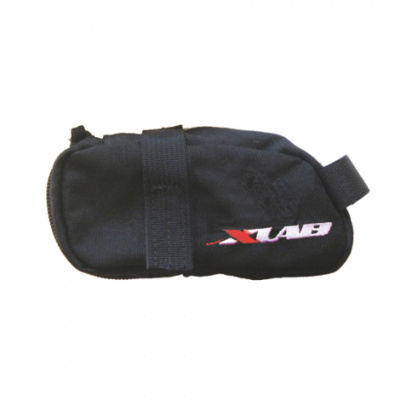
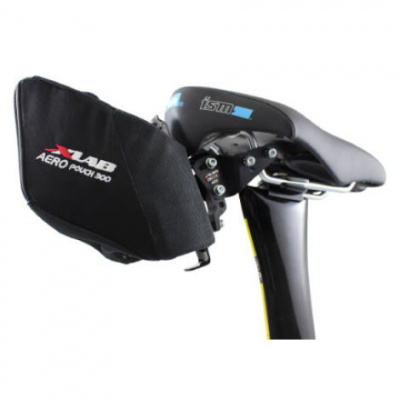
When every watt counts, XLab saddle bags are engineered with a singular focus: keeping your essential spares completely out of the wind. The aero-tuck design tucks the bag entirely within the aerodynamic wake of your seatpost and thighs, so there's no drag penalty and no inner-thigh chafing during hard pedalling efforts. That's not a minor detail on a TT course or an Ironman bike leg - it's the whole point.
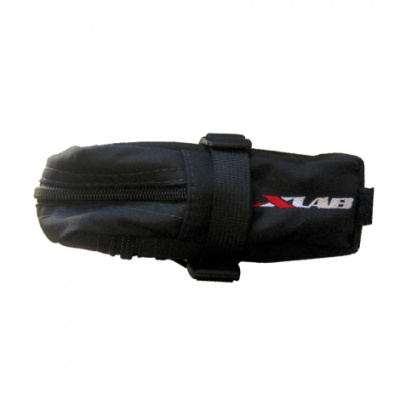
The range scales from strict minimalists to riders covering full iron-distance. A compact Micro or Stealth model holds a tube, a CO2 canister, and an inflator head - nothing more, nothing less. Step up to the Mini or Mezzo tier and you've got room for dual tubes, tyre levers, and a multi-tool without the bag ballooning out into your legs. Rubberised anti-slip mounting straps lock things down against the seatpost, so the bag stays planted over potholed UK lanes rather than swinging around when you're putting power down out of the saddle.
Materials are weather-resistant and built to deal with rear wheel spray - a given on British roads. Need to fill the bag? Our XLab frame bags section and dedicated CO2 inflators and tools categories will sort the rest of your emergency kit.
Prices and availability can change quickly. Delivery charges are not always included in listed prices.
Final price, stock status and delivery terms are set by retailer. We may receive a commission on purchases made.
Fitting Your XLab Bag: Rail Types and Seatpost Shapes
Before you buy, check your saddle and seatpost setup. Most XLab bags use a universal Velcro strap system that loops over standard 7x7mm alloy rails without any fuss. For riders running oversized 7x9mm ovalized carbon rails - common on higher-end road and triathlon saddles - the adjustable straps accommodate the wider profile without creating stress risers or pinch points on the rail surface. Snug, not strangled, is the target. Carbon rails are more sensitive to localised pressure than alloy, so make sure the straps sit flat against the rail rather than biting into one edge.
Seatpost shape matters more than most people realise. Round posts at 27.2mm or 31.6mm are straightforward - the straps are long enough to wrap cleanly and the lower stabilisation strap anchors without fouling your rear brake or tyre. Deep-section aero seatposts on dedicated TT or triathlon bikes are a different story. The wider profile can reduce the effective strap length, so check the specific XLab model's compatibility notes before ordering. As a rule, you want at least two to three inches of exposed seatpost below the saddle clamp for the lower strap to sit properly. If you're tight on that clearance, it's worth flagging before you're standing in a car park on race morning trying to bodge a fit.
If you're weighing up alternatives with more relaxed mounting systems, Apidura saddle bags use a harness-style attachment that suits unusual rail geometries well, and Lezyne saddle bags offer a rigid mounting option that some riders prefer for smaller-capacity storage. XLab's advantage sits squarely in the aerodynamic profile and the purpose-built triathlon focus.
Picking the Right Capacity for Your Ride
The best aero saddle bags for triathlon are the ones sized exactly for what you actually carry - not oversized bags rattling half-empty, not bags so small you're cramming a tube in sideways. XLab's hierarchy is well thought out here.
At the compact end, the Micro and Stealth models are strictly for race-day minimalism: one latex or butyl tube, a single CO2 canister, and an inflator head. That's your lot. For a sprint or Olympic-distance triathlon, that's entirely sufficient - the chance of needing a second tube on a 40km bike leg is low enough to accept the trade-off. What you gain is a bag so aerodynamic it barely registers visually against the seatpost, which is exactly what you want if you're chasing a PB on a local 10-mile TT.
Step up to the Mini and Mezzo tier and the picture changes. Ironman distances are long enough that carrying dual tubes, a pair of tyre levers, and a compact multi-tool is sensible rather than paranoid. These mid-range bags add the volume without abandoning the narrow front profile that prevents inner-thigh chafing during aggressive pedalling - one of XLab's more practically useful design choices. The premium models in this tier often feature a red interior lining, which sounds trivial until you're fishing for a tiny quick link or valve core in fading light at the roadside. Small thing, genuinely useful.
For training rides where you're less focused on marginal aerodynamic gains, an XLab seat bag for road bikes at the Mezzo capacity gives you the room to carry a bit more without moving to a frame bag. Speaking of which, if your kit list is growing, pairing a saddle bag with an XLab frame bag keeps storage aerodynamically considered across the whole bike rather than resorting to a jersey pocket stuffed with tools.
Dealing With UK Roads: Grit, Spray, and Vibration
Saddle bags sit directly in the firing line of your rear wheel. On UK roads - particularly through winter - that means a sustained barrage of water, mud, and fine grit that acts like grinding paste on zip mechanisms over time. XLab's weather-resistant materials handle the broad strokes well, but zips need attention regardless of brand.
Get into the habit of brushing the zipper teeth out with an old toothbrush every few weeks and running a dry silicone lubricant along the track. It takes two minutes and prevents the kind of jammed zip that leaves you fighting your bag at the side of an A-road in the rain. If you're riding through winter without mudguards - as many of us do - wrapping your spare tube inside a small zip-lock bag before it goes into the saddle bag is worth doing. Moisture and grit will work their way into even well-sealed bags over a long wet season, and a degraded tube sitting in damp is a puncture waiting to happen when you least want it.
The rubberised anti-slip mounting straps earn their keep on rough road surfaces. UK lane riding - think the kind of patchy tarmac you find across much of rural England and Wales - generates enough vibration to work a loosely fitted bag into a rhythmic sway that gets worse the harder you ride. XLab's straps grip the seatpost rather than just encircling it, which damps that lateral movement without needing you to over-tighten to the point of creasing the bag body. Check the strap tension before longer rides, not after the first hour.
Riders who prioritise waterproofing above all else will find Castelli saddle bags worth comparing - some models use fully welded seams rather than zips, which is about as waterproof as under-seat storage gets. The trade-off is access speed, which matters less on a training ride than on a race. For aerodynamic under seat bike bags aimed squarely at triathlon and TT use, XLab remains one of the more considered options on the market. You can also pair your saddle bag setup with an XLab computer mount to keep the whole cockpit clean and purpose-built rather than a patchwork of different brands' hardware.
Xlab Saddle Bags FAQs
What size XLab saddle bag do I need for a triathlon?
For sprint or Olympic-distance events, a Micro or Stealth model is enough - one tube, a CO2 canister, and an inflator head covers you. For Ironman distances, move up to a Mini or Mezzo capacity so you can carry dual tubes, tyre levers, and a multi-tool without compromising the bag's aerodynamic profile.
Do XLab saddle bags fit oversized carbon saddle rails?
Yes. Most XLab bags use adjustable Velcro straps that accommodate 7x9mm ovalized carbon rails without issue. Make sure the straps lie flat against the rail surface rather than pinching at an edge - carbon rails don't like localised pressure. Snug is correct; overtightened causes abrasion over time.
How do I stop my saddle bag from swaying when out of the saddle?
Secure the seatpost strap first, pulling it firm before you address the rail straps. XLab's rubberised straps are designed to grip rather than just wrap, which resists lateral movement during hard efforts. Even strap tension on both rail sides matters - an unevenly loaded bag will always want to swing towards the looser side.