
Vittoria BMX Tyres
Vittoria BMX tyres have been a fixture on race tracks and skateparks long enough that you'll spot the tread pattern on bikes from Hastings to Glasgow without really trying. The range centres on the Tattoo series - a lineup that's earned its reputation through bead-to-bead tread coverage, genuine pinch flat protection, and rubber compounds that don't go off after a few sessions on abrasive concrete. Vittoria's proprietary Graphene compound sits at the heart of the faster models, threading the needle between outright grip and low rolling resistance in a way that cheaper single-compound tyres rarely manage. Whether you're casing jumps at a local pump track, grinding ledges on UK street spots, or chasing a holeshot on a race circuit, there's a Vittoria in this range that suits the way you ride. The 20-inch lineup splits neatly into wire-bead workhorses and lighter folding-bead options, so you're not forced into paying for weight savings you don't need. Check the grid below, compare current UK prices, and find the right tyre for your setup.
Prices and availability can change quickly. Delivery charges are not always included in listed prices.
Final price, stock status and delivery terms are set by retailer. We may receive a commission on purchases made.
Sizing Your Vittoria BMX Tyres: What the Numbers Actually Mean
BMX sizing is one of those areas where the shorthand on the label doesn't always tell the full story. Most freestyle, park, and street riding uses the 406mm ISO bead diameter - what virtually everyone means when they say a 20-inch BMX tyre. That's the standard you'll find across Vittoria's Tattoo range. Where it gets slightly awkward is BMX racing at the younger classes: Micro and Mini categories sometimes run a 451mm ISO rim, which is physically incompatible with 406mm tyres despite both being called 20-inch. If you're buying for a race setup, check the rim's ISO diameter before you order.
Width matters too, and it interacts directly with your rim's internal width. Vittoria BMX tyres typically span 20x1.95 and 20x2.125, with some street-oriented builds pushing to 2.2 inches and above. A wider tyre on a narrow rim - say, anything under 25mm internal width - will sit taller and narrower than its stated size, which affects both the contact patch and the sidewall support you're relying on for coping hits. Going up to a 2.25-inch or wider street tyre is a worthwhile upgrade for added volume, but check your frame and fork clearance first. Tight fits can lead to rubbing under load, and some older freestyle frames have very little room around the tyre crown.
Tattoo vs. Tattoo Light: Picking Your Tier
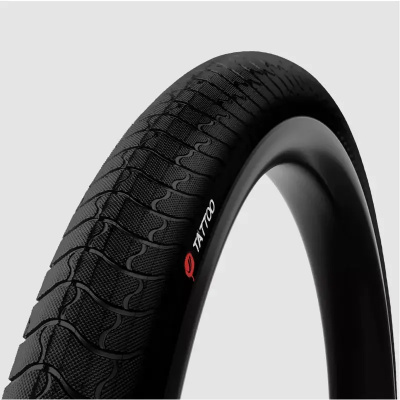
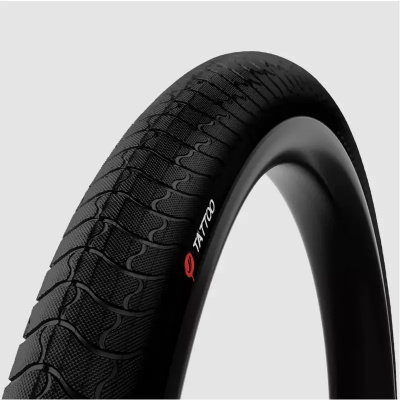
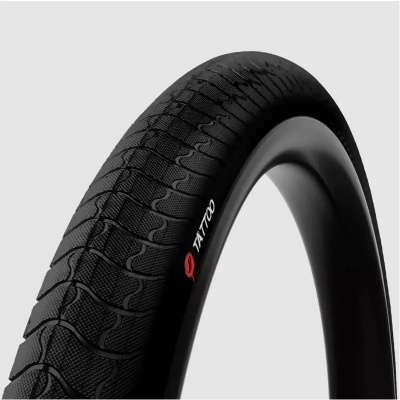
Vittoria's BMX range splits into two clear camps, and the difference is more than just price. The standard Tattoo uses a wire bead and a robust casing - heavy by race standards, but that weight comes with real benefits. The construction resists sidewall cuts when you're sliding out on brick or scraping coping at awkward angles, and the lower TPI casing is less sensitive to embedded grit. For street and park riding where your tyres take sustained punishment, wire bead is the sensible call. It's also easier on the wallet, which matters when you're replacing tyres more frequently due to wear.
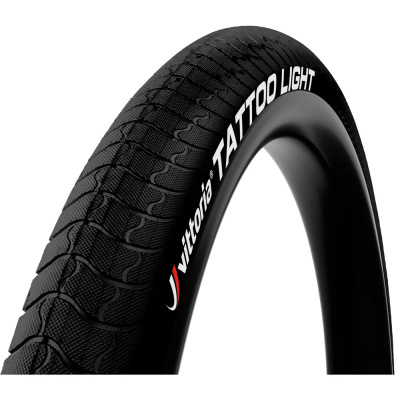
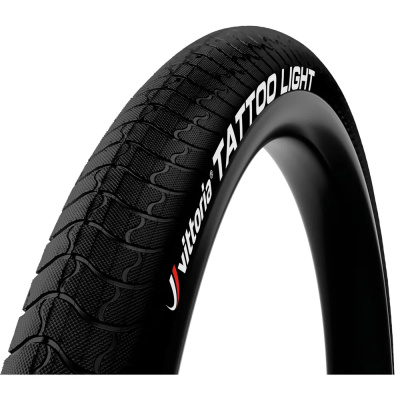
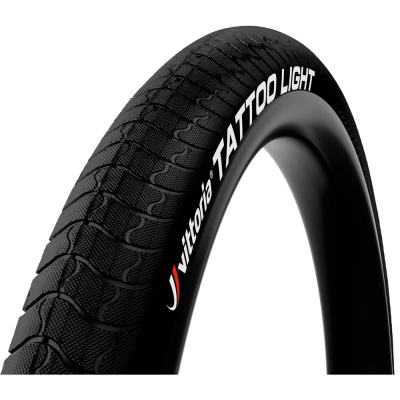
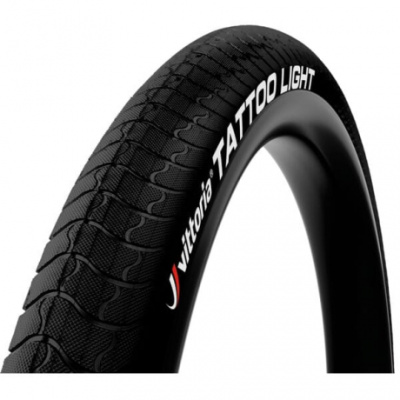
The Vittoria Tattoo Light changes the brief entirely. A folding bead replaces the wire, the casing uses a higher thread-count nylon construction, and the result is a noticeably lighter tyre with a more supple feel through the casing. Rotational weight drops meaningfully compared to the wire-bead version - and on a BMX, where you're spinning up from a dead stop repeatedly, that reduction is felt in acceleration rather than just measured on scales. The Tattoo Light makes most sense for dirt jumping and racing, where tyre wear is lower and outright performance matters more than longevity under street abuse. It also seats on the rim more easily, which is a small but genuine practical benefit at the side of a van. If you're cross-shopping, Maxxis BMX tyres occupy a similar split between heavy-duty and lightweight race-oriented options, and Michelin BMX tyres are worth a look if you want to see how compound philosophy differs across brands.
Vittoria's Graphene compound features in the performance end of the range. Graphene-reinforced rubber runs cooler under load, resists tearing better than standard compounds, and maintains grip consistency as the tyre wears - so you're not getting great traction on day one and then progressively worse rubber as the tread thins. That durability matters particularly on UK street spots, where abrasive tarmac and rough concrete eat through softer compounds quickly.
Keeping Vittoria Tyres Running: Pressures, Wear, and UK Conditions
Tyre pressure is probably the most under-discussed variable in BMX, and getting it wrong in either direction costs you performance and increases puncture risk. For street and park riding - square-edged impacts, concrete, coping - run 60 to 80 PSI. That range keeps the tyre firm enough to resist pinch flats when you land awkwardly on a ledge or drop into a tight bowl transition. Drop below that on street and you're asking for a pinch flat every time you case something hard-edged. For dirt tracks and pump tracks, 45 to 55 PSI gives you more casing compliance and a larger contact patch on loose or damp surfaces, which translates to better traction without the tyre squirming under load.
The bead-to-bead tread design on the Tattoo series is worth understanding because it's genuinely functional rather than cosmetic. Standard centre-tread tyres leave the sidewall smooth, which means that tread pattern disappears exactly where you need grip most - when the bike leans hard into a tight corner or you're rolling along a narrow ledge at an angle. Bead-to-bead coverage keeps the knurled or textured rubber running all the way to the rim bead, which directly protects the sidewall from abrasion against coping, rails, and rough concrete edges. UK skateparks vary wildly in surface quality - some indoor parks have smooth sealed concrete, others have rough aggregate that's effectively sandpaper on rubber - so that sidewall durability is not a minor detail.
After any street session, it's worth running your fingers around the tread to check for embedded glass or flints. The UK has plenty of both, and small fragments that haven't penetrated through to the tube can work their way in over subsequent rides. Catching them early takes ten seconds; a mid-session flat takes considerably longer. Pairing your Vittoria tyres with quality Vittoria inner tubes keeps the system consistent, and if you're riding particularly gnarly street regularly, Vittoria tyre liners add a layer of puncture protection without the weight penalty of going up a tyre size. Muddy winter pump tracks are a slightly different challenge - the Tattoo's tread pattern clears reasonably well, but if your local track gets properly boggy between October and March, check whether the tread spacing suits the conditions rather than assuming any BMX tyre will cope.
Vittoria BMX Tyres FAQs
Are Vittoria BMX tyres good for street riding?
Yes. The Vittoria Tattoo series uses bead-to-bead tread coverage, which keeps the rubber running all the way to the rim edge - exactly where you need grip and protection when riding ledges, rails, or rough concrete. The Graphene compound also resists the kind of abrasion that quickly degrades cheaper single-compound tyres on UK street surfaces.
What tyre pressure should I run on Vittoria BMX tyres?
For street and park, run 60 to 80 PSI to avoid pinch flats on square-edged impacts and hard concrete. If you're on a dirt track or pump track, drop to around 45 to 55 PSI for better grip and casing compliance on looser or softer surfaces. Adjust within those ranges based on your weight and riding style.
Are Vittoria BMX tyres folding or wire bead?
Both. The standard Vittoria Tattoo uses a wire bead - robust, cost-effective, and well-suited to street and park where durability matters more than weight. The Vittoria Tattoo Light uses a folding bead with a higher TPI casing, saving meaningful rotational weight for dirt jumping and racing where you want a more responsive, lighter tyre.