
Tufo Gravel And Cyclocross Tyres
Tufo Gravel & Cyclocross Tyres carry a pedigree built on decades of elite tubular construction, and that obsession with casing quality shows up clearly in their modern tubeless gravel and CX range. Where a lot of tyre brands treat the casing as an afterthought, Tufo leans hard into high TPI construction - typically 210 to 375 TPI - giving you a ride feel that's closer to a supple tubular than most riders expect from a clincher.
The SPC Silica compound is the other headline. On wet chalk descents or slippery root networks, it grips with a confidence that low-silica rubber simply doesn't match. And for anyone who rides British bridleways seriously, the Jubena sidewall layer is worth understanding: it's a flexible protective ply woven into the sidewall specifically to resist the kind of sharp flint cuts that can end a ride in seconds on the South Downs or the Chilterns.
The range spans fast-rolling file treads through to open-block mud tyres, so there's a model suited to most UK gravel and CX scenarios. All current tubeless-ready models meet current ETRTO standards, and hookless rim compatibility is confirmed across the range - more on the pressure limits below. If you want race-day speed without gambling on reliability, Tufo is a serious option worth comparing.
Prices and availability can change quickly. Delivery charges are not always included in listed prices.
Final price, stock status and delivery terms are set by retailer. We may receive a commission on purchases made.
Tubeless Setup, Hookless Rims and Sizing
All of Tufo's current tubeless-ready gravel and CX tyres are built to ETRTO standards, which means sizing is consistent and predictable across compliant rims. For a 40c tyre, Tufo recommends an internal rim width of 21 - 25mm for the best casing profile - go narrower and you lose the intended tread contact patch; go significantly wider and the shoulder knobs start to roll unpredictably under load.
Hookless compatibility is confirmed across the tubeless-ready range, which matters given how many modern gravel wheelsets now use hookless bead seats. The critical detail: hookless rims cap you at 73psi (5 bar). That's not a Tufo limitation specifically - it's the ETRTO hookless standard - but it's worth knowing before you start pumping. For gravel use at typical UK weights and speeds, 73psi is rarely a constraint anyway; most riders running 40c tyres are well below that. For CX, where pressures are even lower, it's a non-issue entirely.
To complete a tubeless build properly, you'll want compatible rim tape, valves, and sealant dialled in before you fit the tyre. Tufo's own Tufo Rim Tape is sized to work with their casings, and pairing it with Tufo Valve Extenders makes deep-section wheel setups straightforward. Get the bead seated correctly first time and you'll save yourself the faff of mid-ride burping.
Speedero, Thundero and Swampero - Which One Are You After?
Tufo's gravel lineup splits into three clear personalities, and picking the wrong one is an easy mistake if you're going purely on tread photos.
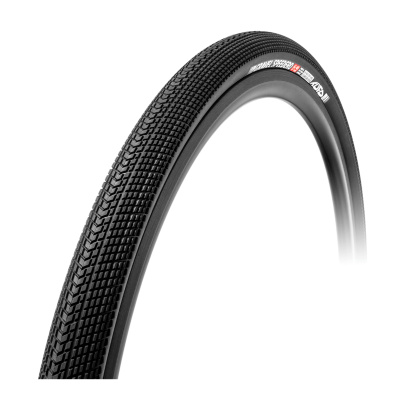
The Speedero is the fast one. Its near-file tread pattern keeps rolling resistance low on hardpack, compact gravel, and even tarmac link sections. If your rides are mostly dry Lane or forest road with occasional loose stuff, this is the quick choice. Vittoria's gravel range offers similar fast-rolling options at this end of the spectrum, so it's worth a direct comparison if speed on smoother surfaces is the priority.
The Thundero is the all-rounder. A tighter centre tread keeps rolling speed reasonable on firmer ground, while the more aggressive shoulder knobs give you something to bite into when you tip the bike into a loose corner or drop onto a wet bridleway. For the kind of mixed riding that defines most UK gravel routes - tarmac approach, flint track, grassy descent, repeat - the Thundero is usually the sensible pick. The Tufo Thundero vs Speedero question comes down to one thing: how much of your ride is genuinely loose or wet? If the answer is more than a third, go Thundero.
The Swampero is built for the bad stuff. Open block design, wide spacing between knobs, and a tread pattern that actively sheds the sticky winter clay you'll find on bridleways across the Midlands and the Welsh Marches. It's the best Tufo gravel tyre for UK mud by some margin, and worth considering for anyone doing late-autumn or winter riding where conditions deteriorate fast. Panaracer's gravel mud options are the nearest direct competition here - both brands take mud-shedding seriously.
For dedicated cyclocross racing, Tufo also produces the Cubus and Primus - CX-specific tubular and clincher options built around the same high-TPI philosophy. If you're running a CX race calendar rather than gravel events, those are worth a separate look alongside Challenge's CX tubular range.
Staying on Top of UK Flint and Winter Conditions
British gravel riding has a specific problem that riders from continental Europe don't always account for: flint. The sharp, angular shards on chalk downland bridleways - the South Downs Way is the obvious example - don't just puncture tyres, they slash sidewalls clean through. A standard tyre casing offers almost no resistance to this. The Jubena layer in Tufo's gravel tyres addresses this directly. It's a flexible woven ply integrated into the sidewall, sitting between the casing threads and the outside rubber. Flexible enough not to kill ride quality, tough enough to resist a glancing flint cut that would destroy a thinner sidewall.
The puncture proof ply under the tread works alongside this - a high-density woven layer that sits directly beneath the rubber to resist penetration from above. Neither layer makes the tyre indestructible, but together they give you a meaningful layer of real-world confidence on rough UK surfaces.
Sealant maintenance is where a lot of riders let themselves down. Highly supple, high-TPI casings are slightly more porous than stiffer lower-TPI alternatives - that's a trade-off you make knowingly for better ride feel - which means sealant evaporates a little faster. For a 40c tyre, put in 40 - 60ml at setup. Check it every three to four months; shake the wheel and listen for liquid movement. If it sounds dry, top it up before your next long ride rather than after a puncture you could have sealed on the road. Tufo Tubeless Sealant is formulated to work with their casings, though most quality latex-based sealants will do the job.
One thing riders sometimes overlook: tyre pressure matters more with supple casings than with stiffer ones. Run too high and you lose the grip advantage of the SPC Silica compound entirely - the tyre skims over wet roots rather than conforming to them. Drop to 30 - 35psi on a 40c for typical UK mixed-surface riding and you'll notice the difference immediately.
Tufo Gravel And Cyclocross Tyres FAQs
Are Tufo gravel tyres hookless compatible?
Yes, the current Tufo tubeless-ready gravel range is confirmed hookless compatible and meets ETRTO standards. The key restriction is the 73psi (5 bar) maximum pressure that applies to all hookless rim setups - not a Tufo-specific rule, but one you need to respect. For gravel riding, most riders run well below that anyway, so in practice it rarely affects tyre choice.
What is the difference between Tufo Thundero and Speedero?
The Speedero runs a near-file tread for low rolling resistance on hardpack, compact gravel, and tarmac. The Thundero has a tighter centre tread for reasonable rolling speed but more aggressive shoulder knobs for loose corners and wet conditions. If your riding mixes surfaces - which most UK gravel routes do - the Thundero handles the variation better. The Speedero is faster when conditions stay dry and firm.
How much sealant do I need for Tufo gravel tyres?
For a 40c Tufo gravel tyre, use 40 - 60ml of sealant at initial setup. Because high-TPI supple casings are slightly more porous than stiffer alternatives, sealant evaporates a touch faster - check levels every three to four months and top up as needed. Shake the wheel before a long ride; if you can't hear or feel liquid moving, add more before you head out.