
Sweet Protection Trousers
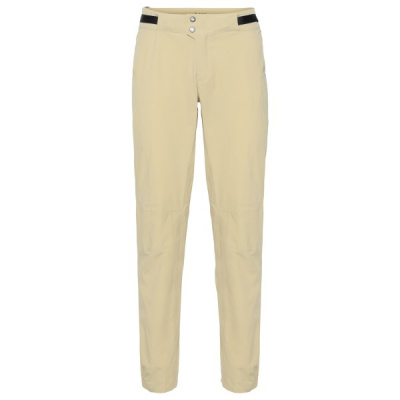
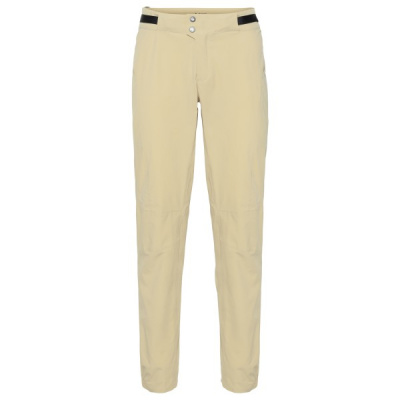
Sweet Protection MTB trousers are built around a simple idea: your legs should never be the thing that slows you down. Whether you're grinding up a sodden Peak District climb or threading singletrack through overgrown Welsh hillside, these trousers keep pace without bunching, snagging, or turning into a soggy mess halfway through the ride.
The range centres on 4-way stretch softshell fabrics - most notably DuPont Sorona blends in the Hunter pant series - that move with you rather than against you. A PFC-free DWR coating handles trail spray and light rain without sacrificing breathability, so you're not steaming on the way up just to stay dry on the way down. Articulated knees follow the natural bend of your leg, meaning your pedal stroke stays efficient even when the going gets steep.
Fit-wise, these are cut for riders who wear protection. The pre-shaped knees have enough room for low-to-medium-profile pads underneath, and Velcro waist tabs let you dial in the fit without wrestling with a belt at the trailhead. Reinforced insteps stop the drivetrain chewing through the fabric on longer days. If you spend a lot of time riding in the UK between October and April, that last detail matters more than you'd think.
Prices and availability can change quickly. Delivery charges are not always included in listed prices.
Final price, stock status and delivery terms are set by retailer. We may receive a commission on purchases made.
Fabric Tech and Weather Performance
Sweet Protection leans heavily on DuPont Sorona for the core fabric in trousers like the Hunter pant. Sorona is a bio-based fibre that combines genuine abrasion resistance with meaningful stretch - more durable than standard polyester blends, and far more forgiving than anything stiff enough to shrug off bramble scratches on tight singletrack. It's the kind of material that holds up over a full season of riding rather than pilling after a dozen washes.
The 4-way stretch construction is worth understanding properly. It's not just comfort padding - it means the fabric moves in every direction as your hips, knees and ankles work through the pedal stroke. On a steep technical climb, that freedom translates directly into efficiency. Tight, inflexible fabric pulls against your movement; this doesn't.
Weather resistance comes via a PFC-free DWR coating. That means no perfluorocarbons - the coating sheds water without the environmental baggage that older treatments carried. In practice, trail spray, puddle splatter and moderate drizzle bead off the surface rather than soaking in. What it won't do is keep you completely dry in sustained heavy rain; this is a softshell approach, not a hardshell one. That trade-off is deliberate. Full waterproofing traps heat, and on a winch-and-plummet ride in humid conditions - think the Quantocks or anything north of the border in autumn - you'd be drenched from the inside long before the rain got to you. The softshell balance gives you real breathability where it counts, with enough weather resistance to handle a typical UK trail day. Think of it as the difference between a windproof cycling jersey and a full rain cape: one keeps you comfortable across conditions, the other handles the worst at the cost of everything else.
Compared to Endura trousers, which often favour more structured waterproofing, Sweet Protection's approach sits firmly on the breathability side of that equation. Worth knowing before you buy.
Understanding the Sweet Protection Fit and Range
The Sweet Protection Hunter pants are the anchor of the range and the ones most riders will gravitate towards for trail and enduro use. The fit is athletic without being race-tight - there's room to move, but nothing flapping around in the wind or catching on your saddle mid-corner. Articulated, pre-curved knees are the defining feature. They follow the natural angle of your leg when you're pedalling, so there's no fabric pulling across the knee cap or bunching behind it. Once you've ridden in a well-articulated trouser, going back to a flat-cut pair feels immediately wrong.
The ankle taper matters too. Sweet Protection trail pants are cut closer at the cuff, which keeps fabric away from your chainring and cassette. Combined with reinforced insteps, it's a genuinely practical detail for anyone who's watched a less thoughtful pair of trousers get shredded by a sharp chainring on a long descent. Velcro adjustable waist tabs replace the need for a belt entirely - you can adjust on the go, and there's no buckle to dig in when you're compressed over the bars.
On sizing: these trousers run true to size with a tailored, athletic cut. If you're between sizes and you plan to layer a base layer underneath on cold days, go up. The waist tabs give you enough adjustment to compensate without the fit going baggy.
Crucially, these trousers are cut to work with protection underneath. The pre-shaped knees accommodate low-to-medium-profile knee pad shapes without distorting the fit or restricting your pedal stroke. If you're putting together a full protection setup, have a look at our range of Sweet Protection knee pads - the fit between the two is considered rather than accidental. For riders who prefer POC trousers or Fox trousers, the knee pad integration can vary; Sweet Protection's consistency here is one of its stronger points.
If you ride through summer and want something lighter for warmer days, the Sweet Protection MTB baggy shorts use similar construction principles and are worth pairing in your kit rotation.
Layering and Care for UK Riding
A good pair of trail trousers only works properly when the rest of your kit isn't fighting against them. For UK winter riding - anything from November through to March, realistically - pairing Sweet Protection trousers with a Sweet Protection jacket gives you a coherent system: matched DWR treatments, compatible stretch fabrics, and a consistent silhouette that doesn't bunch or gap at the waist when you're bent over the bars.
On colder days, a lightweight thermal base layer underneath is usually enough. The softshell fabric handles wind surprisingly well, so you rarely need a heavy mid-layer unless it's genuinely bitter. Keep the layering simple - bulk kills movement, and movement is what these trousers are built around.
Washing is where a lot of riders unknowingly damage their DWR coating. Use a technical fabric cleaner rather than standard detergent; regular washing powder leaves residue that clogs the fabric's pores and kills water repellency faster than trail use does. Wash on a cool cycle, and never use fabric softener. Once the DWR starts to wet out - water soaking in rather than beading - reproof with either a wash-in treatment like Nikwax Tech Wash followed by TX.Direct, or a spray-on reproofer applied after washing. Tumble drying on a low heat or ironing on a low setting through a cloth can also reactivate a tired DWR coating without reproofing, at least for another few rides.
Store them unfolded if you can. Creasing softshell fabric repeatedly along the same lines can eventually stress the DWR treatment at those points. It's a minor thing, but these trousers are worth looking after properly.
Sweet Protection Trousers FAQs
Are Sweet Protection trousers true to size?
Yes, they fit true to size with a tailored, athletic cut. The integrated Velcro waist tabs let you fine-tune the fit without a belt, so you've got a useful range of adjustment either side of your usual size. If you're planning to layer underneath on cold rides, sizing up is worth considering.
Can you wear knee pads under Sweet Protection MTB pants?
Yes. Models like the Hunter pant are cut with pre-shaped, articulated knees specifically to accommodate low-to-medium-profile MTB knee pads. The fit stays consistent with pads underneath, and your pedal stroke isn't compromised. It's one of the more considered aspects of the design.
Are Sweet Protection Hunter pants waterproof?
Water-resistant rather than fully waterproof. The PFC-free DWR coating handles trail spray, puddle splatter and light rain well, but sustained heavy rain will eventually soak through. The trade-off is genuine breathability - on hard climbs in humid conditions, that matters more than most riders expect.