
Shimano 9 Speed Front Derailleurs
A Shimano 9 speed front derailleur is one of those parts that quietly does a lot of work - and when it stops working, you feel it on every climb. Whether you're keeping a Sora-equipped winter road bike honest on rain-slicked tarmac or breathing new life into a 3x9 Alivio mountain bike for the trails, Shimano's 9-speed front mechs are among the most reliable replacements you'll find at this level.
These aren't just generic swap parts. Shimano's Wide Link construction adds torsional rigidity to the cage, so high-torque shifts under load don't result in that familiar metallic crunch. Hyperdrive compatibility means the derailleur works in concert with correctly specced chainrings - ramps and pins timed to guide the chain cleanly rather than flick it across hopefully. That matters when you're grinding up a long drag in the big ring and need a snappy drop to the middle.
Getting the right mech, though, means matching several variables: mounting standard, cable routing direction, swing type, and - critically - whether your shifters are road or MTB. Use our filters to pin down exactly what your frame and groupset need before you buy.
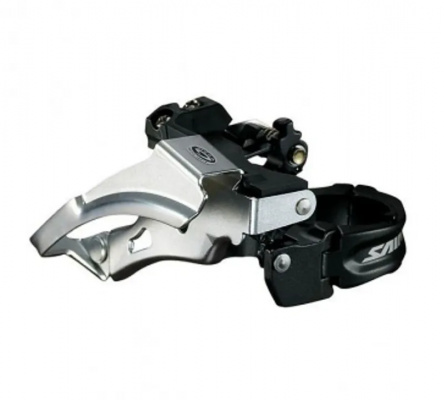
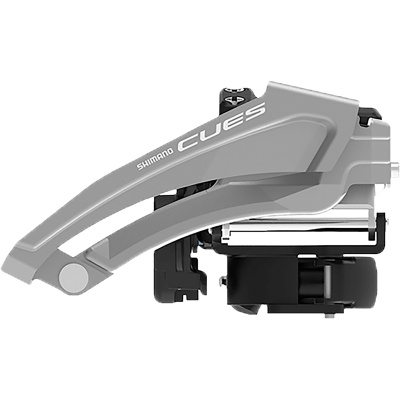
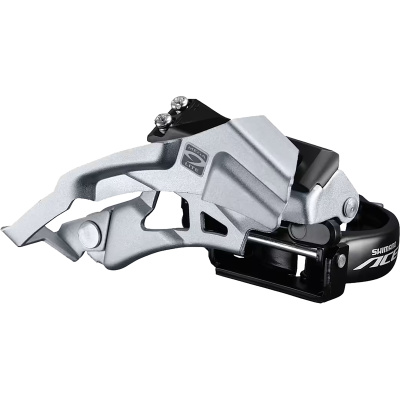
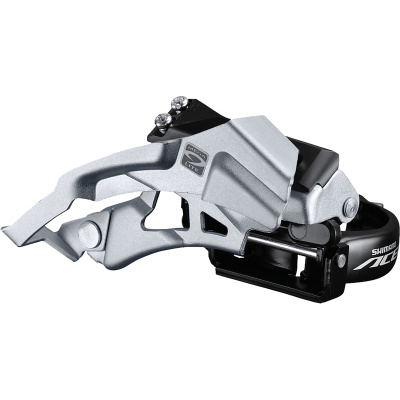
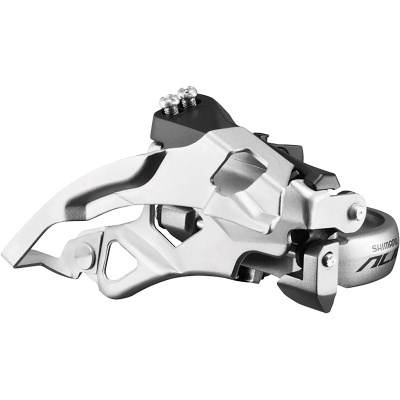
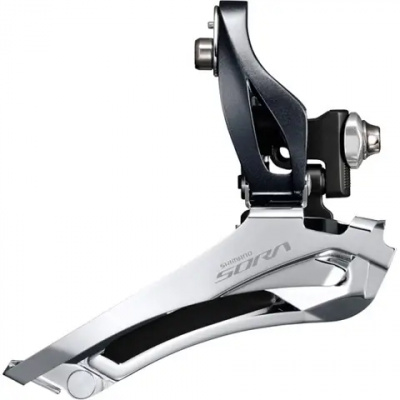
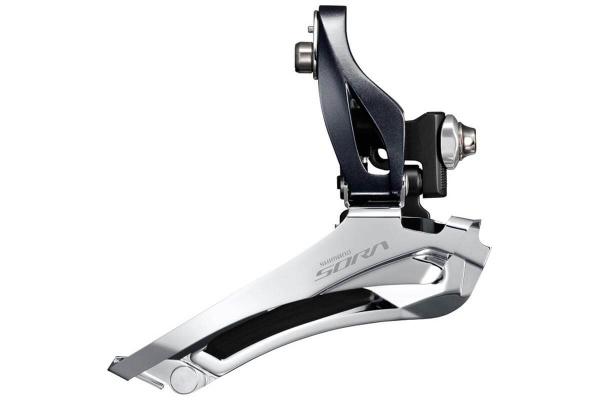
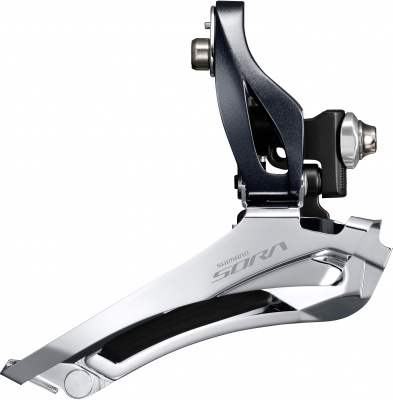
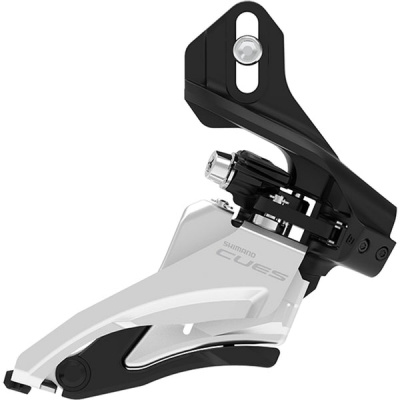
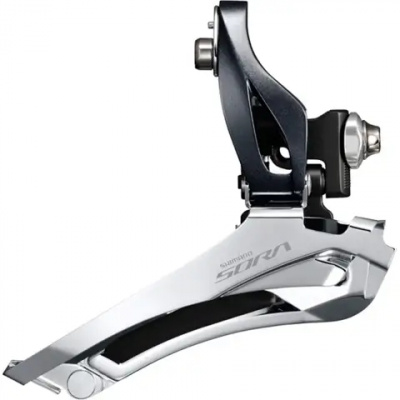
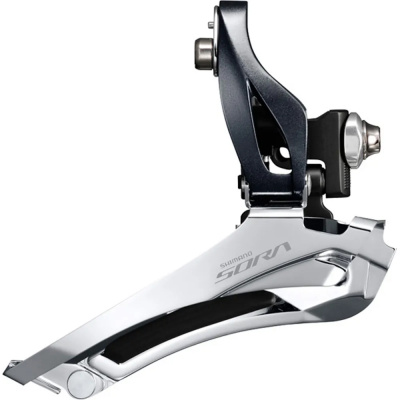
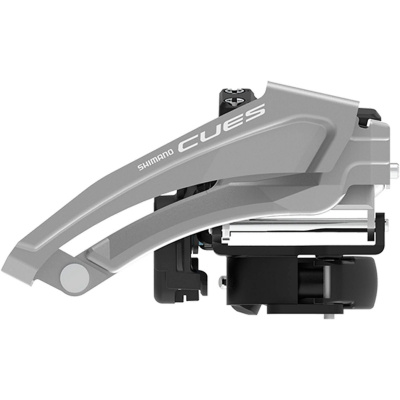
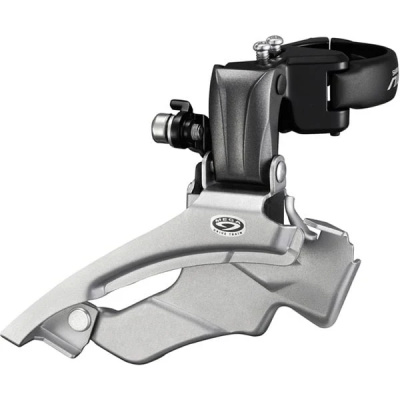
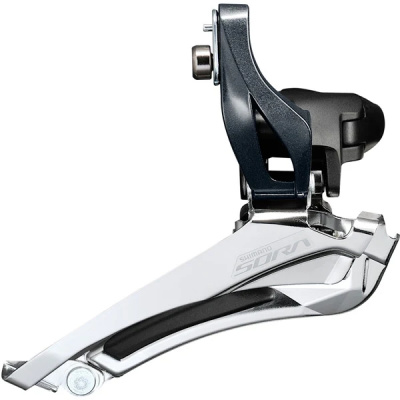
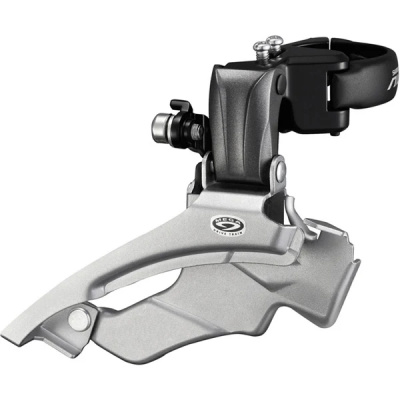
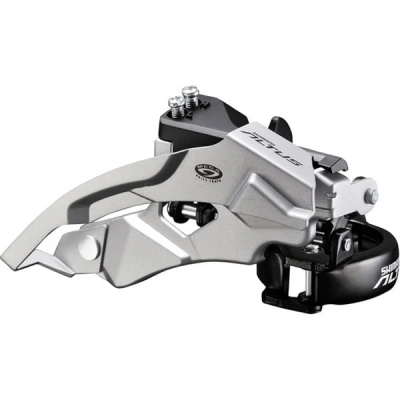
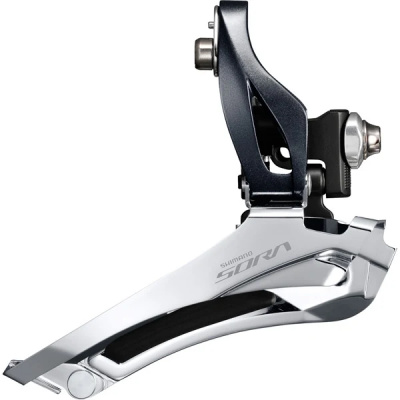
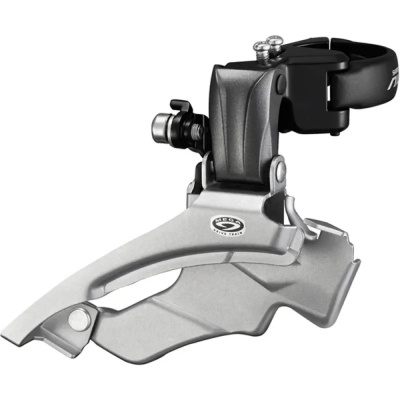
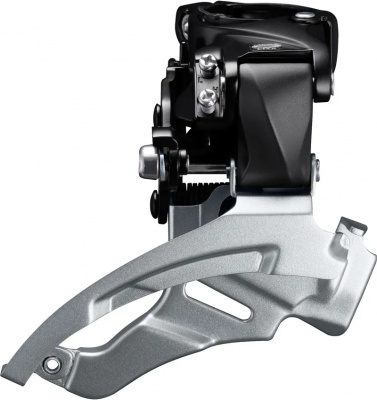
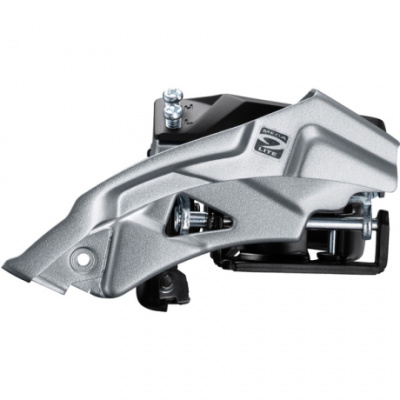
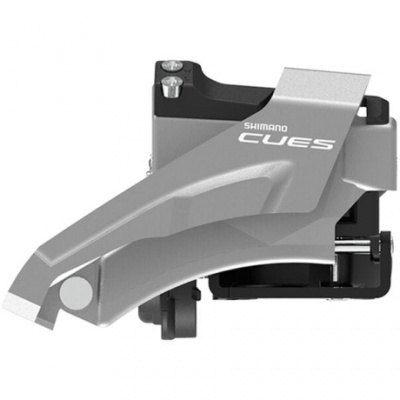
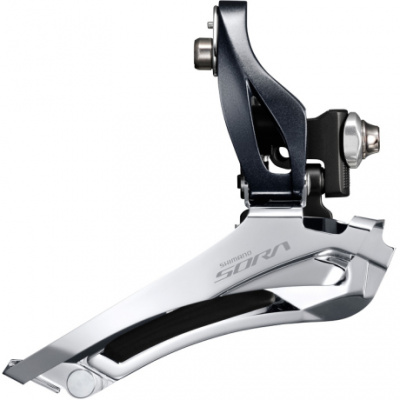
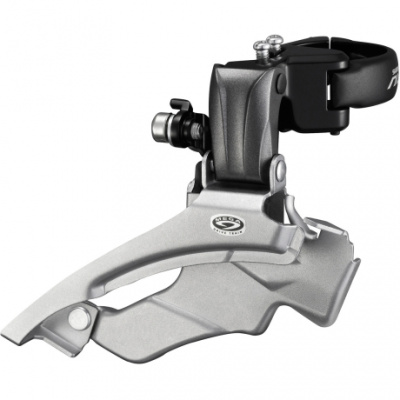
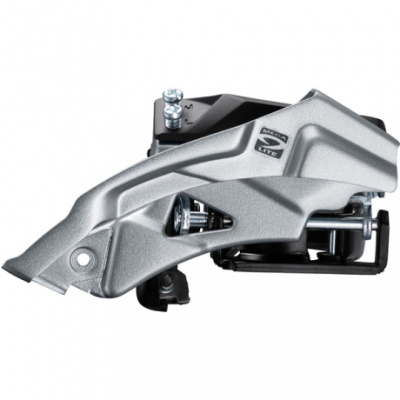
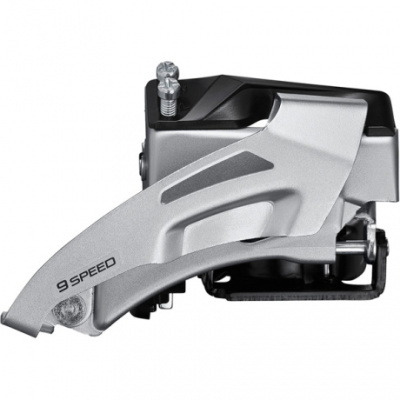
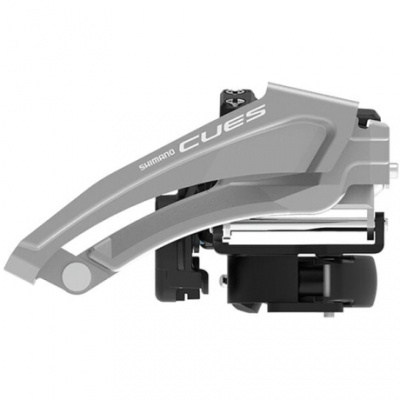
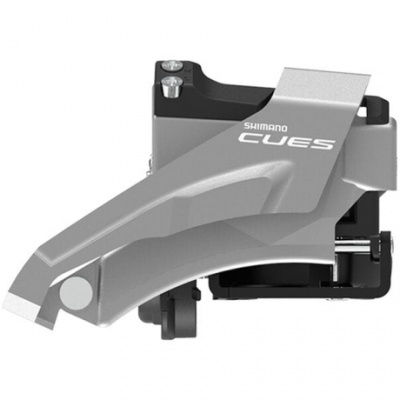
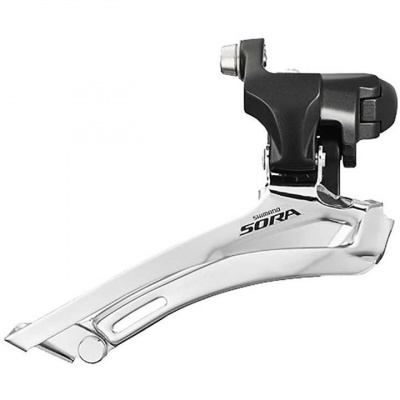
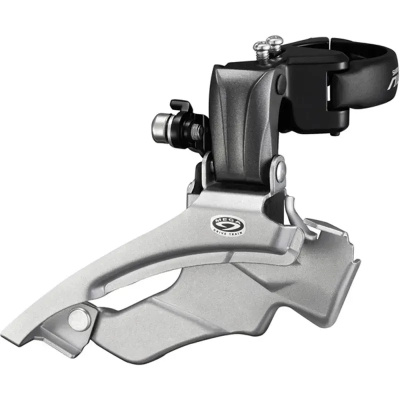
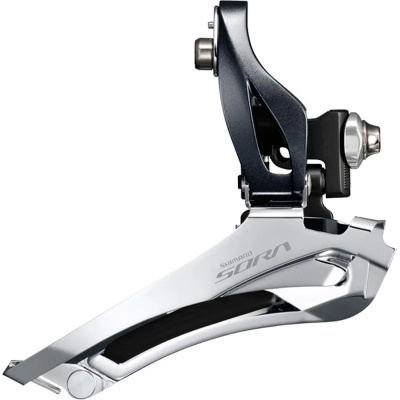
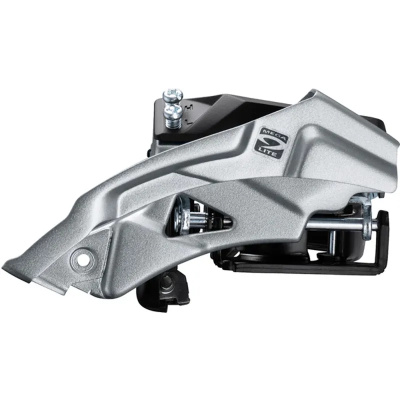
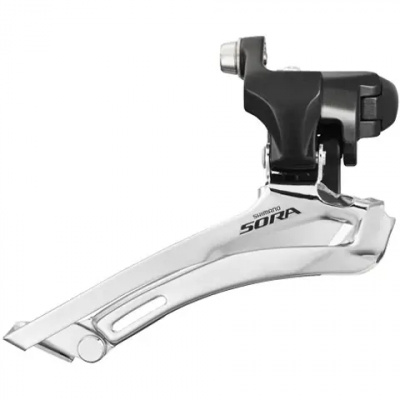
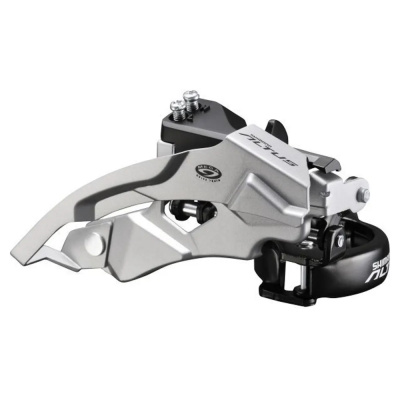
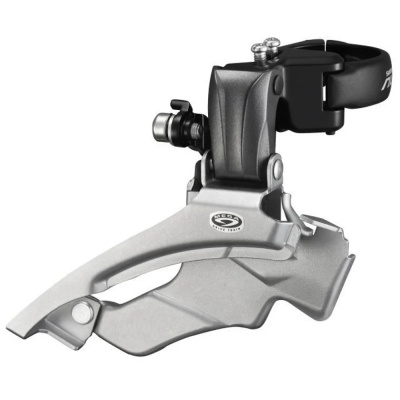
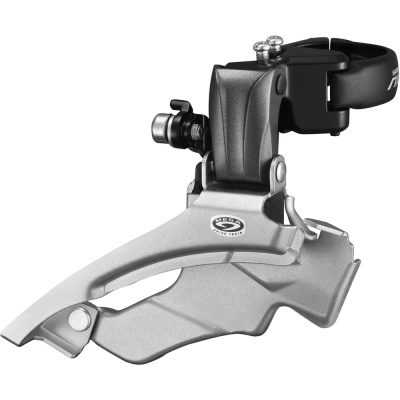
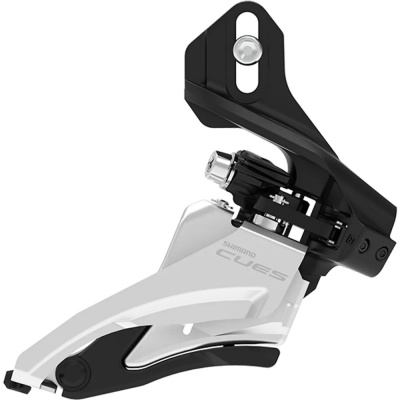
Prices and availability can change quickly. Delivery charges are not always included in listed prices.
Final price, stock status and delivery terms are set by retailer. We may receive a commission on purchases made.
Compatibility: Mount, Swing, and Cable Pull
Before anything else, you need four pieces of information: mounting standard, swing type, cable pull direction, and whether your drivetrain is road or MTB. Get any one of these wrong and the mech won't fit, won't index, or won't clear your frame properly.
Braze-on vs Band-on is the first decision. Braze-on frames have a direct threaded boss on the seat tube - the mech bolts straight to it. Band-on mechs use a clamp, and clamp diameter matters: 28.6mm suits older steel frames, 31.8mm fits most modern aluminium road bikes, and 34.9mm is common on MTB frames. If your frame has a braze-on fitting but the mech you want is band-on (or vice versa), a Shimano derailleur clamp or adapter can bridge the gap - check our clamps page for the right spec before you order.
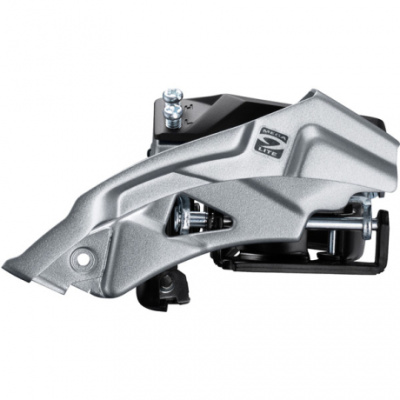
Top swing vs down swing describes where the derailleur's moving pivot sits relative to the clamp. Top swing places the pivot above the clamp, which suits frames where a low-slung clamp would foul a water bottle boss or suspension linkage. Down swing puts the pivot below the clamp - a lower profile that many mechanics prefer because the pivot sits slightly further from frame-level muck and grit ingress. Neither is universally better; it comes down to what your frame geometry allows.
Cable routing is next. Top pull means the cable arrives from above - typical on road bikes where the cable runs along the top tube. Bottom pull routes the cable from underneath the bottom bracket shell, common on MTB and hybrid frames. If you're not sure which yours is, trace the front gear cable from the shifter down to the bottom bracket area. Most modern Shimano 9-speed MTB mechs use Dual Pull routing, which handles both directions without an adapter - genuinely useful if you're fitting a replacement to an older or unusual frame.
The most important compatibility warning: Shimano road and MTB 9-speed front derailleurs are not interchangeable with each other's shifters. Sora R3000 uses a different cable pull ratio to Alivio M3100, Acera, and Altus mechs. Fitting a road mech with MTB shifters - or the reverse - will give you partial, sloppy shifts that no amount of barrel adjuster tweaking will fix. Match road to road, MTB to MTB. Full stop.
The 9-Speed Shimano Range: Which Tier Suits You
Shimano's 9-speed front derailleur lineup spans road and MTB, with clear differences in arm geometry, cage width, and chainring capacity between them.
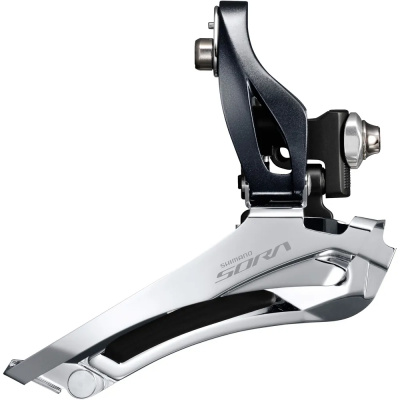
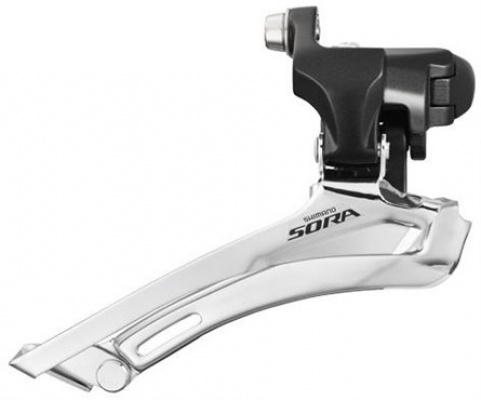
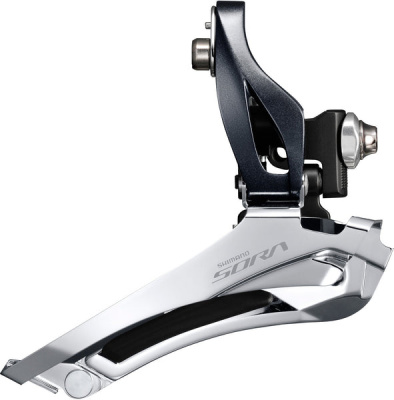
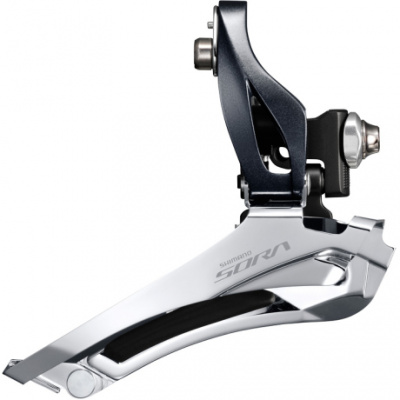
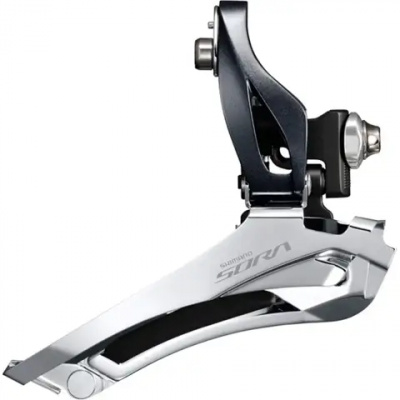
On the road side, the Sora R3000 is the current standard. Its longer arm geometry reduces the cable force needed to move the cage, which translates to a lighter lever action at the shifter - noticeable on long days in the saddle when your hands are tired. The cage is profiled for 2x9 road chainrings, typically 50/34 or 52/36 combinations, and it works in concert with Hyperdrive-compatible chainrings where the ramp and pin geometry is optimised specifically to work with the derailleur's movement arc. It's a tidier, more refined unit than its MTB counterparts - which is exactly what you'd expect for tarmac use.
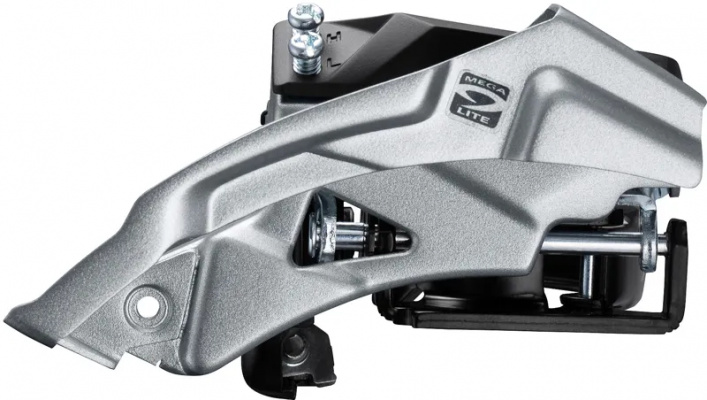
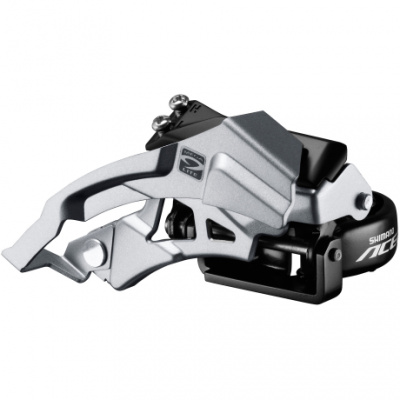
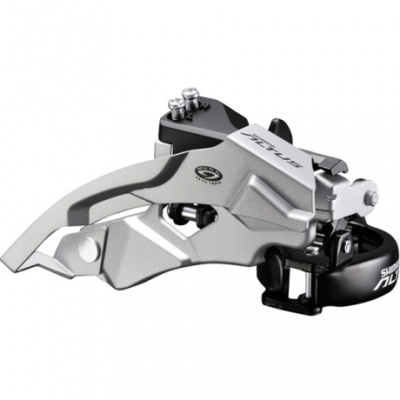
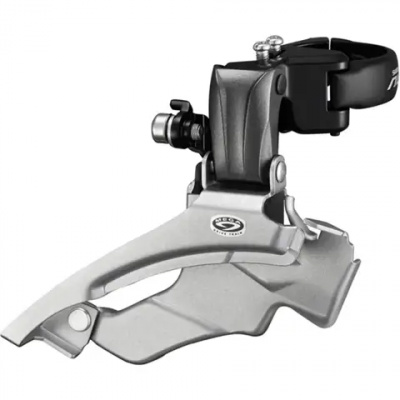
On the MTB and trekking side, you're looking at the Alivio M3100, Acera, and Altus. All three are designed around wider cages to clear knobbly tyres and are built with triple chainring (3x9) capacity in mind - essential if you're running a granny ring for steep climbs. The cage clearance is wider, the pivot seals are beefier, and the overall build is more agricultural in a good way.
Moving up from Altus to Alivio isn't a dramatic jump, but it's a meaningful one. Alivio's pivots are better sealed against contamination, the cage itself is stiffer - which you'll notice as crisper shifts rather than a slight flexing sensation mid-movement - and the weight saving, though modest, is real. If you're replacing an Altus on a bike you actually enjoy riding rather than just commuting on, the Alivio is worth the small step up. Acera sits between the two: a solid all-rounder that suits hybrid and trekking bikes where you want more durability than Altus without paying for full Alivio spec.
Thinking about stepping to a ten-speed setup at some point? Our Shimano 10 speed front derailleurs page covers what's involved in that transition.
Keeping It Running Through a UK Winter
A front derailleur sits right in the firing line of rear wheel spray - road grit, wet mud, winter salt. None of that is kind to exposed pivots and cable runs.
The return spring is the first thing to suffer. When UK grit works its way into the pivot and the spring starts to stiffen, you'll notice the chain being reluctant to drop back to the inner ring - you push the lever, nothing happens for half a pedal stroke, then it clunks down. That sluggishness isn't usually the derailleur dying; it's the pivot and cable fighting each other. Flush the pivot points with a light degreaser, let it dry, then work in a wet lube for winter or a dry wax-based lube for drier spells. Do this every few weeks if you're riding through the muck regularly.
Here's the thing most people miss: by the time a front mech feels genuinely slow, the inner cable has usually been sandpapered by grit inside the outer housing for months. Replace the inner gear cable and the full outer housing at the same time - not just the cable. Fresh housing transforms shift feel more than most riders expect, and it's a cheap fix compared to a new mech. Sealed cable ferrules at each end of the outer housing are worth fitting while you're in there; they keep the worst of the water out and buy you noticeably more miles before the next service.
If you're doing the job yourself, a quality set of Shimano-compatible workshop tools makes cable cutting and housing crimping considerably less frustrating. The Wide Link cage design on these mechs holds its alignment well, so once you've indexed the derailleur correctly on fresh cables, it tends to stay put rather than drifting across the winter.
Shimano 9 Speed Front Derailleurs FAQs
Are all Shimano 9-speed front derailleurs compatible with each other?
No - and this is the one to get right before you buy. Shimano road 9-speed (Sora) and MTB 9-speed (Alivio, Acera, Altus) front derailleurs use different cable pull ratios, so they're only compatible with their respective shifter families. Fitting a road mech with MTB shifters won't index properly, no matter how much you adjust it.
What is the difference between top swing and down swing?
It refers to where the derailleur's moving pivot sits. Top swing places the pivot above the clamp - useful on frames where a low clamp would foul a bottle boss or linkage. Down swing puts the pivot below the clamp, which many mechanics prefer for its lower profile. Your frame's geometry and cable routing will usually dictate which one fits correctly.
How do I know if I need a top pull or bottom pull derailleur?
Trace your front gear cable from the shifter down to the bottom bracket area. If it arrives at the derailleur from above, you need top pull. If it routes under the bottom bracket shell and comes up from below, you need bottom pull. Most modern Shimano 9-speed MTB front derailleurs include Dual Pull compatibility, so they handle both routing directions without any adapter needed.