
Ribble Gravel Bikes
Ribble Gravel Bikes sit in a genuinely interesting corner of the market - direct-to-consumer pricing, UK-designed geometry, and a frame material for almost every kind of rider. That last point matters more than it might sound. Choose wrong and you're either lugging unnecessary weight up Peak District climbs or nursing a race-tuned carbon bike down rutted Welsh bridleways that would make a mountain biker wince.
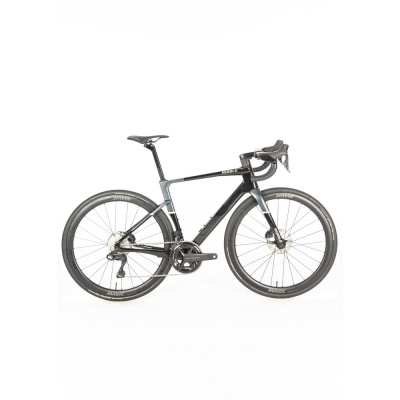
The range breaks down cleanly. The Gravel AL is the accessible entry point - aluminium, versatile, and a reasonable commuter crossover. The Gravel 725 uses Reynolds 725 steel for that characteristic ride quality and works brilliantly as a bikepacking workhorse. The Gravel Ti is titanium, built to last decades, and genuinely lovely on rough ground. At the top sits the Gravel SL, Ribble's Toray T1000 carbon racing machine for riders who want to go fast on mixed surfaces.
Every model runs through Ribble's BikeBuilder platform, so you can dial in your drivetrain, choose between 700c and 650b wheels, and configure finishing kit before a single bolt is turned. It's a proper spec-to-order setup rather than a take-it-or-leave-it box. Browse the range below and we'll help you work out which one fits your riding.
Prices and availability can change quickly. Delivery charges are not always included in listed prices.
Final price, stock status and delivery terms are set by retailer. We may receive a commission on purchases made.
Decoding the Ribble Gravel Lineup
Four frame materials, four distinct characters. The Gravel AL keeps things sensible - aluminium construction, a geometry that works for weekend gravel and the occasional commute, and a price point that leaves budget for decent tyres. It's not trying to be anything it isn't, which is exactly why it suits riders who want one bike doing most jobs without overthinking it.
Step up to the Gravel 725 and you're into Reynolds 725 triple-butted steel - a material with genuine low-frequency damping that takes the sting out of a day on rocky bridleways. Steel also means straightforward repairability if you're deep into a multi-day route and something goes wrong. Threaded bottom bracket, solid rack mounts, fork bosses everywhere you'd want them. It's the one you'd trust on a Scottish Highlands crossing.
The Gravel Ti is the long-game bike. Titanium doesn't fatigue, doesn't corrode, and has a natural compliance that sits somewhere between steel and carbon - firm enough to feel precise, forgiving enough to ride all day. It commands a premium, but riders who buy titanium rarely replace it.
Then there's the Gravel SL. Toray T1000 carbon layup, aero-optimised shaping, and a cockpit built for pace rather than luggage. This is Ribble's answer to the fast gravel race scene - think Dirty Reiver rather than a loaded overnight route.
Worth clarifying here: the Gravel range is not the same as Ribble's CGR. The CGR (Cross, Gravel, Road) is a genuinely capable all-rounder, but its geometry leans toward the road end - tighter head angle, shorter wheelbase, slightly less tyre clearance. The dedicated Gravel series runs a slacker head angle and longer wheelbase for real off-road stability. If you're spending serious time on unpaved surfaces, the Gravel range is the right starting point. Riders who want something that also handles a fast sportive should look at the Canyon gravel range or Genesis gravel bikes for comparison - both take a similarly road-influenced approach at various price points.
How Ribble Builds These Bikes
The Gravel SL's Toray T1000 and T800 carbon layup is worth understanding rather than just nodding at. T1000 fibre is among the highest-modulus materials used in production bike frames - it's stiff where you want stiffness (bottom bracket, head tube) while Ribble varies the layup in the rear triangle to manage comfort. The result is a frame that transfers pedalling effort efficiently without beating you up over a long mixed-surface day. That's a real engineering trade-off, not marketing language.
On the steel and titanium models, the functional detail that makes the most difference in practice is the dropped seatstays. By connecting the seatstays lower on the seat tube, Ribble introduces vertical flex into the rear end. You feel this immediately on rough surfaces - it takes the sharp edge off chattery gravel and stops your hands from going numb after two hours on a Peak District bridleway. It's a passive compliance solution that adds no weight and requires no maintenance, which makes it more reliable than any elastomer insert.
The Level 5 integrated carbon gravel cockpit on the SL deserves a mention for two reasons beyond aesthetics. Internal cable routing through an integrated bar and stem reduces aero drag meaningfully at gravel race speeds, and it also keeps your cables out of the mud and grit that would otherwise grind through housing on a filthy winter ride. The flip side: fitting or swapping cables takes longer, and you lose the quick stem-swap flexibility of a traditional setup. Worth knowing before you buy.
Reynolds 725 triple-butted steel on the Gravel 725 means the tube walls vary in thickness - thicker at the stress points, thinner in the middle sections to keep weight down without sacrificing strength. It's a mature manufacturing process that produces a ride feel carbon still can't fully replicate: slightly elastic, confidence-inspiring, and genuinely pleasant on rough ground. Kinesis use a similar steel-first philosophy on some of their gravel builds if you want a direct comparison point.
Owning a Ribble in British Conditions
Tyre clearance is where Ribble gravel bikes earn their keep in the UK. Most frames in the range accommodate up to 700c x 45mm or, with a 650b wheelset swap, 47mm rubber. That 650b option is genuinely useful if you ride Welsh winter mud - smaller diameter with a wider tyre keeps you rolling when 700c tyres would be packing solid. It's not a gimmick; it changes what the bike can handle.
The metal frames - AL, 725, and Ti - all use threaded bottom brackets. After a wet ride on the Lincolnshire Wolds or a muddy autumn outing near the Pennines, you'll appreciate this. Press-fit BBs and grit are a miserable combination; a threaded shell cleans up and services without drama. The carbon Gravel SL uses press-fit, which is the standard trade-off at this end of the market - you get frame stiffness gains, and you accept that BB servicing requires more care.
Ribble's BikeBuilder customisation platform lets you configure Shimano GRX 1x11 drivetrains across most of the range, and for UK riding this is usually the sensible choice. A single chainring system means fewer cable runs to clean, no front mech to clog with mud, and a simpler setup to maintain through a British winter. If you're building a bikepacking setup on the 725 or Ti, the platform also lets you select luggage-friendly finishing kit and wider gearing ranges from the outset - far easier than changing components post-purchase.
The AL, 725, and Ti models carry extensive frame and fork boss mounts - top tube bento box positions, multiple fork cage mounts, and rear rack compatibility - making them legitimate bikepacking platforms. The Gravel SL skips most of this in favour of race weight and clean lines. That's an honest design decision, not an oversight. If you need bags, pick a different model. Boardman gravel bikes offer a similar split between race-oriented and adventure-oriented builds if you want to see how another brand handles the same choice.
Ribble Gravel Bikes FAQs
What is the difference between Ribble CGR and Gravel?
The CGR is designed to cover road, gravel, and light off-road riding from a single frame - its geometry sits closer to a road bike, with a steeper head angle and shorter wheelbase. The dedicated Gravel range runs a slacker head angle and longer wheelbase for proper off-road stability, and offers wider tyre clearance. If unpaved surfaces are your main focus, the Gravel series is the more capable choice.
What is the maximum tyre clearance on a Ribble Gravel bike?
Most Ribble Gravel frames fit up to 700c x 45mm or 650b x 47mm tyres. The 650b option gives you meaningful mud clearance for winter riding without going full mountain bike. Check individual model specs via BikeBuilder, as clearances can vary slightly between the AL, 725, Ti, and SL.
Are Ribble gravel bikes good for bikepacking?
The Gravel AL, 725, and Ti are well set up for bikepacking - all three carry multiple frame and fork mounts for bags, cages, and racks. The Gravel SL is a different proposition: it's race-focused, runs minimal mounts, and suits fast, light riding rather than loaded touring. Match the model to the type of riding rather than assuming the whole range works the same way.