
Merida Time Trial & Triathlon Bikes
Merida Time Trial and Triathlon bikes are built around one idea: get you to the finish line faster without leaving your legs in tatters. The lineup is anchored by serious wind-tunnel development and real aerodynamic data, not just sharp angles for the catalogue shot. Whether you're lining up for a club 10 on a blustery A-road or staring down 112 miles before a marathon run, there's a Merida speed machine shaped around that goal.
Two distinct platforms do the work here. The Warp TT keeps things UCI-legal for sanctioned time trials, while the Time Warp Tri strips away the rulebook to chase maximum drag reduction over Ironman distance. Both use Merida's CF5 carbon frame construction - stiff where it needs to be, shaped to slice air rather than fight it. The S-FLEX seat post is the quietly clever bit: an elastomer window that takes the chip-seal sting out of long efforts, so your lower back isn't screaming before you've racked the bike. If you're after road speed in a more conventional package, our Merida Road Bikes page is worth a look. For pure race-day speed, read on.
Prices and availability can change quickly. Delivery charges are not always included in listed prices.
Final price, stock status and delivery terms are set by retailer. We may receive a commission on purchases made.
Decoding the Merida Time Trial and Triathlon Lineup
The first question most riders ask is which bike actually fits their racing. The answer hinges on one thing: are you racing under UCI rules or not? The Warp TT is the disciplined one - tube proportions conform to UCI regulations, making it the correct choice for any sanctioned British Cycling time trial event. The geometry is aggressive, the position is locked in low, and there's no room for the aerodynamic fairings you'd see on a dedicated tri machine. It's a proper racing tool, not a training compromise.
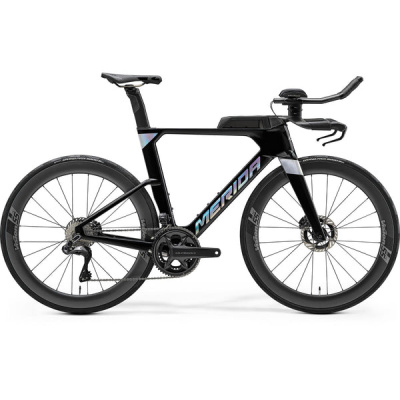
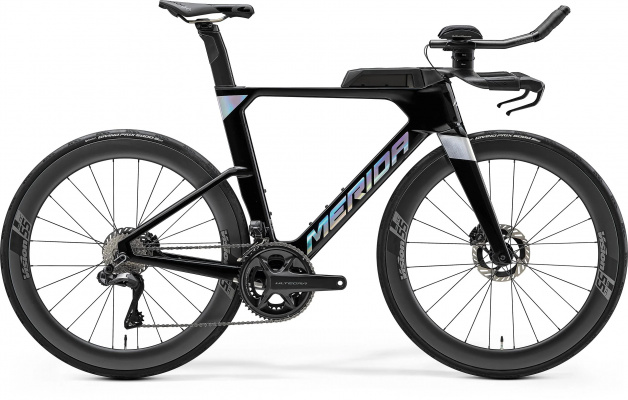
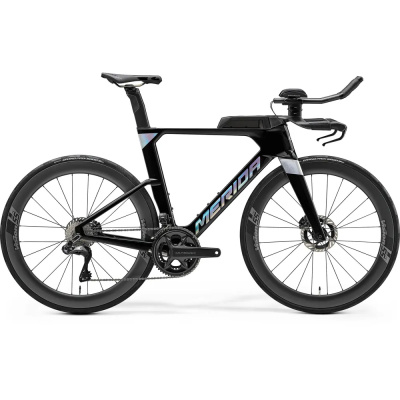
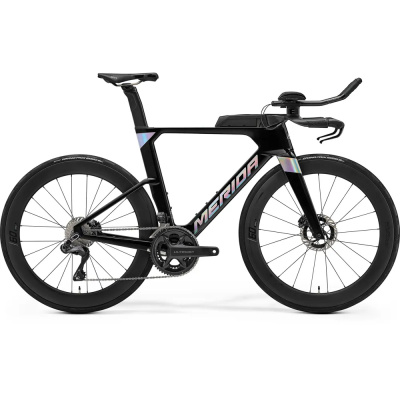
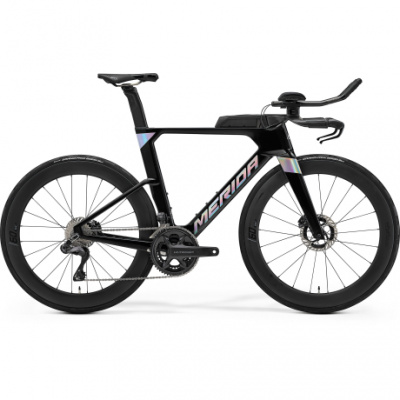
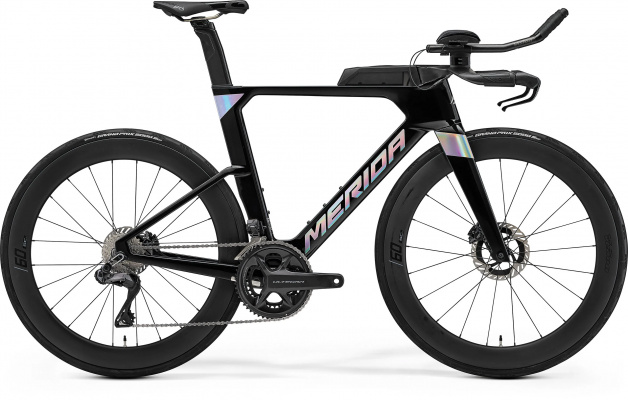
The Time Warp Tri takes a different approach entirely. Without UCI constraints to worry about, Merida's engineers could shape the frame around pure drag reduction - deeper sections, smoother transitions, more integrated lines from stem to seatstay. Disc brakes come as standard, which matters when you're scrubbing speed into a wet roundabout on a UK course. The Tri model also adds integrated nutrition storage, specifically a bento box built into the top tube so you're not fumbling with pockets or bar bags mid-race. That detail alone makes a real difference over Ironman distance when fuelling precision affects your run. Riders who want comparable speed from a rival stable can browse Cervélo's TT and triathlon range or check out what Giant's TT lineup offers at various price points.
The Tech Behind the Speed
CF5 carbon isn't just a model designation - it refers to Merida's highest-grade carbon layup process. The fibre orientation is tuned to deliver stiff power transfer through the bottom bracket while keeping weight low enough that the bike doesn't punish you on longer efforts. You feel it most when you're out of the saddle over a short drag: the frame responds immediately, no flex, no lag.
The S-FLEX seat post deserves more attention than it typically gets in spec comparisons. The cut-out window fitted with an elastomer insert absorbs the persistent road buzz that chip-seal British tarmac generates across 50 or 100 miles. It's not suspension - it's vibration damping, and the difference to lower back fatigue is measurable rather than marginal. If you've ever stepped off a TT bike with your legs fresh but your lumbar region wrecked, this is the feature addressing that exact problem.
Cockpit integration on the Time Warp uses the Vision Metron system. Cables route internally through the bar and stem assembly, which removes exposed housings from the airflow and tidies the front end considerably. More practically, the Vision Metron cockpit allows genuine adjustment - reach, stack, and pad width can all be dialled without compromising the clean lines. Getting your time trial position right biomechanically is more important than squeezing every last watt from the frame, and Merida's setup accommodates that process properly. Scott's TT range takes a similar integrated approach if you want to compare cockpit systems side by side.
Riding a Merida TT Bike on UK Roads
UK time trialling has its own particular demands. Club 10s on dual carriageways mean exposed crosswinds, especially on flatter courses in the Fens or along coastal routes where there's nothing to break the wind for miles. On a deep-section aero bike, lighter riders feel crosswinds more acutely - wheel depth selection matters here, and if you're under 65kg, a shallower front wheel on gusty days is a sensible call rather than a stubborn one.
Disc Cooler technology is Merida's answer to a problem that's more relevant in the UK than in many other markets: wet braking. The system uses CNC-milled fins positioned beneath the disc calipers to dissipate heat rapidly. On a dry Spanish sportive this is a nice-to-have. On a wet British TT course with a technical roundabout on the return leg, consistent brake feel under heat matters. The fins keep caliper temperature stable so your braking response stays predictable rather than variable.
Maintenance is worth thinking about before you're standing in a cold garage in February wondering why the headset feels rough. Integrated headsets on aero frames collect grit and water during winter riding more aggressively than traditional external cups. A quick bearing check and regrease every few months keeps things running quietly - it's a five-minute job that saves a much more annoying one later. The same logic applies to cleaning around the internal cable routing ports after wet rides; blocked drainage points are where corrosion starts.
On longer Ironman-distance efforts, the combination of CF5 stiffness and S-FLEX compliance means the bike works with you across varied road surfaces rather than fighting you. Chip-seal fatigue is real over 100 miles, and the frame's vibration management is designed with exactly that in mind. Pair it with a tyre in the 25 - 28mm range at appropriate pressure and you've dealt with most of what UK roads throw at you.
Related searches:
Merida Time Trial & Triathlon Bikes FAQs
Are Merida bikes good for triathlons?
The Time Warp Tri is built specifically for triathlon racing. Its non-UCI aero profile reduces drag more aggressively than a standard TT bike, the integrated nutrition storage keeps fuelling tidy over long efforts, and the S-FLEX seat post damps road vibration so your legs arrive at the run transition in better shape. It's a focused tool for the discipline.
What is the difference between Merida Warp TT and Time Warp Tri?
The Warp TT is UCI-compliant - correct tube proportions, no aero fairings - making it the right choice for sanctioned time trial events. The Time Warp Tri ignores those rules to maximise aerodynamic efficiency, adds disc brakes, integrates nutrition storage, and uses a geometry better suited to multi-sport athletes who need to run after the bike leg.
Can you adjust the cockpit on a Merida Time Warp?
Yes. The Vision Metron integrated cockpit offers genuine adjustability across reach, stack, and pad width. You can refine your time trial position without compromising the integrated cable routing or the clean aero lines of the front end. It's set up to be fitted properly, not just bolted on and left.