
Gazelle Pannier Bags
Gazelle pannier bags are built around a simple idea: your kit should work as hard as you do, whatever the weather throws at the morning commute. Dutch utility cycling has long demanded bags that attach without fuss, carry serious loads, and don't rattle loose over potholed streets - and Gazelle's range delivers exactly that. The headline feature is the MIK (Mounting is Key) system, which uses a pre-mounted adapter plate to click the bag into a compatible rack in one motion, locking it firmly against vibration and opportunistic removal. No fumbling with hooks in the rain. No rattling down the high street.
Beyond the mounting, waterproof construction is the real daily-use differentiator for UK riders. Gazelle uses water-repellent recycled fabrics with sealed seams across the premium end of the range, while even entry-level models cope well with routine drizzle. Adjustable hook spacing and e-bike battery clearance built into the rack hook geometry mean these bags work across Gazelle's own e-bike fleet without awkward compromises. Check heel clearance before you buy - it matters more than most riders expect. Pair rear storage with Gazelle bar bags to balance the load, or browse Gazelle e-bikes if you're building a whole commuting setup from scratch.
Prices and availability can change quickly. Delivery charges are not always included in listed prices.
Final price, stock status and delivery terms are set by retailer. We may receive a commission on purchases made.
Fitting Gazelle Panniers: Mounting Standards and Rack Compatibility
The question we hear most often - do Gazelle pannier bags fit any bike rack? - has a two-part answer depending on which bag you're buying. Models equipped with the MIK mounting system require either a MIK-compatible rack or an aftermarket MIK carrier plate to function. The system works via an adapter plate bonded to the back of the bag; this plate slots into the profiled rail of a MIK-ready carrier and locks with a keyed release, giving you a connection that's genuinely rattle-free and reasonably theft-resistant. It's the cycling equivalent of a tool-free quick-release - fast when you know it, secure when you don't.
Non-MIK Gazelle bags use adjustable hook systems designed to clamp onto rack tubing between 8mm and 16mm in diameter, which covers the vast majority of rear carriers on the market. The lower sway hook - the small secondary clip that stops the bag pendulum-ing into your spokes - needs to be set correctly for the specific rack width you're running. Get this wrong and you'll feel it: a bag that swings on descents eventually contacts the tyre or spokes, and that's a mechanical you really don't want mid-commute.
If you're running a Gazelle e-bike with a rear-mounted battery, check the e-bike specific rack hook spacing before ordering. Gazelle designs its own racks with battery clearance factored in, but third-party racks occasionally position the mounting rails in a way that puts bag hardware directly in line with battery housings. A quick measurement of the available rail length saves a frustrating return. For rack-related spares and adapters, Gazelle spare parts is worth checking before you go hunting elsewhere.
Single vs. Double Panniers: Picking the Right Format
Gazelle's pannier lineup splits broadly into two formats, and the right choice depends entirely on how you use the bike. Single shopper-style panniers - typically one bag on the drive side or non-drive side - are the commuter's go-to for quick removal. You click off at the office, sling the bag over your shoulder, and you're done. Capacity sits in the 15 - 20 litre range for most single models, which covers a laptop, lunch, and a change of kit without bulk.
Fixed double panniers are a different beast. Mounted symmetrically across both sides of the rear rack, they push total capacity to 35 - 50 litres depending on the model, and the balanced load makes a meaningful difference to handling - particularly noticeable on Gazelle e-bikes where uneven weight amplifies steering pull. If you're doing a weekly shop or touring-adjacent commuting with overnight kit, doubles are the practical choice.
Material quality separates the tiers clearly. Entry-level bags use water-repellent canvas - treated woven fabric that handles drizzle and light rain without issue but isn't immune to saturation in prolonged downpours. Premium models step up to tarpaulin-style fabrics with welded seams and roll-top closures, creating a fully waterproof envelope that performs in sustained heavy rain without a cover. The construction difference is visible and tactile: premium bags feel stiffer, have fewer external pockets (by design - every zip is a potential water ingress point), and keep their shape under load. If your commute regularly runs longer than twenty minutes in proper UK rain, the premium construction earns its extra cost fairly quickly. Alternatives worth comparing include Ortlieb panniers at the waterproof end and Altura panniers for a broader mid-market view.
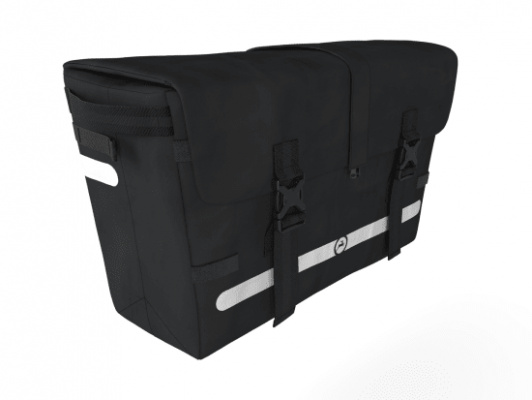
One detail worth noting across both tiers: reflective detailing on Gazelle bags is functional rather than decorative. Panel-level reflective strips add meaningful low-light visibility from the side - which is exactly the angle that matters most at junctions on dark winter mornings.
Surviving UK Winters: Hardware Maintenance Worth Doing
Road grit is the silent killer of pannier hardware. On UK roads through autumn and winter, the rear wheel throws a constant stream of salt, fine stone, and road film directly at whatever is mounted behind it. Over a few months, this works into the spring mechanisms of quick-release hooks and, on MIK-equipped bags, into the release key channel. The first sign is usually a hook that needs more force than it used to - leave it and you'll eventually get a jammed mechanism or a broken spring.
The fix is straightforward and takes five minutes. Every few weeks through winter, rinse the rack contact points and hook hardware with clean water - not a pressure washer, which forces grit deeper into springs - then dry and apply a dry PTFE lubricant to the hook springs and MIK release channel. Dry lube picks up less grit than wet lube, so it's the right call in this environment. If you're using Basil panniers or other hook-style bags alongside your Gazelle setup, the same maintenance routine applies.
Canvas models need reproofing once a year - a spray-on DWR (durable water repellency) treatment, applied after washing, restores the bead-and-run behaviour that keeps water from soaking into the fabric weave. The bag will tell you when it needs it: water starts to soak in rather than sitting on the surface. Don't wait until you notice the lining feels damp inside.
Check stitching around the hook attachment points annually too. This is where load stress concentrates, and catching a failing seam before it pulls through is considerably less annoying than replacing a bag mid-winter.
Gazelle Pannier Bags FAQs
Do Gazelle pannier bags fit any bike rack?
Bags with standard adjustable hooks fit most racks with tubing between 8mm and 16mm - so the majority of racks you'll encounter. MIK-equipped models are different: they need a MIK-compatible rack or an aftermarket MIK carrier plate to click in properly. Check which system your bag uses before ordering.
How does the MIK mounting system work on Gazelle bikes?
The MIK system uses an adapter plate on the back of the bag that slots into the profiled rail of a MIK-ready rear rack. It locks automatically when seated - no rattling, no lift-off - and releases only when you insert and press the MIK key. Fast to attach, secure in use, and straightforward to remove when you need to.
Are Gazelle panniers fully waterproof?
Premium models with welded seams and roll-top closures are fully waterproof and handle sustained heavy rain without a cover. Entry-level canvas bags are water-resistant and cope well with typical UK drizzle, but prolonged downpours may eventually get through - a rain cover extends their useful range if your commute runs long in bad weather.