
Factor Road Bikes
Factor road bikes sit at the sharper end of what carbon engineering can do - WorldTour-proven machines that show up in breakaways and summit finishes rather than Sunday sportives. Factor owns its own carbon manufacturing facility, which means every fibre placement and resin cure happens under their watch, not a third party's. That control is what makes the difference at this level. The range splits cleanly into specialists: the Ostro VAM for aero-biased all-round racing, the O2 VAM for when the road tilts upward and every gram starts to argue with you, and the ONE for pure flat-out speed. The VAM designation - short for Velocita Ascensionale Media, the climber's metric of vertical metres per hour - signals their obsession with weight and stiffness in the premium tiers. Israel-Premier Tech race these bikes at the highest level, which tells you something about how they perform when it actually matters. If you're chasing the clock rather than a KOM, or looking to head off-piste, check out Factor Time Trial & Triathlon Bikes or Factor Gravel Bikes instead.
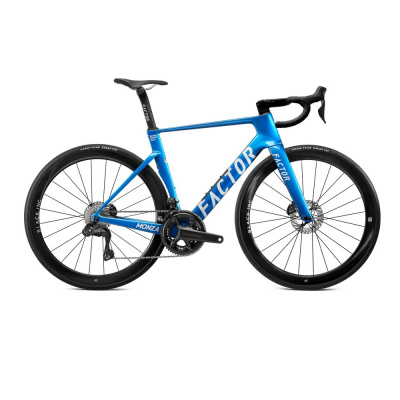
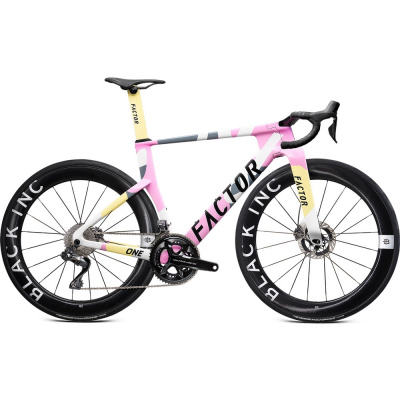
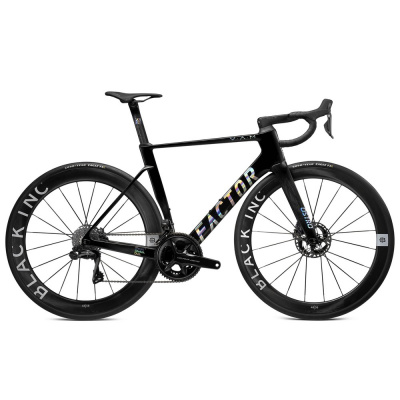
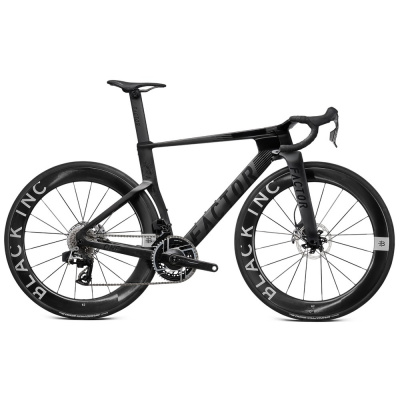
Prices and availability can change quickly. Delivery charges are not always included in listed prices.
Final price, stock status and delivery terms are set by retailer. We may receive a commission on purchases made.
Decoding the Factor Road Lineup
The VAM tag is the first thing to understand. It's not just a name - it anchors the O2 VAM and Ostro VAM firmly in Factor's highest-spec tier, where the carbon layup, the weight target, and the component integration are all dialled to a different standard than the broader range. Think of it as their signal that no corners were cut.
The O2 VAM is Factor's dedicated climbing bike. Geometry is aggressive and the frame is built around minimum mass - this is the one you reach for when the route card reads 1,500m of climbing before lunch. It's light enough that you feel it the moment the road kicks up, and stiff enough that power transfer stays crisp even when you're out of the saddle and hurting. No wasted energy. That's the deal.
The Ostro VAM takes a different angle. It brings deep aero tube profiles into the VAM tier without the weight penalty you'd usually accept for that kind of cross-section. It's the bike that makes sense across a wider spread of riding - flat to rolling, with enough speed on the flat to hold a wheel in a fast group and enough lightness to manage a drag up a Cat 3. Tyre clearance runs to 32mm, which matters more than it sounds when you're on UK roads (more on that shortly).
The ONE sits apart. Pure aero profile, built for flat roads and time-crunching speeds. Less versatile, completely focused. If your racing involves criteriums or pan-flat sportives, it deserves a look. For everything else, the Ostro VAM is the more practical choice without being any less serious.
What's Actually Going On Inside the Carbon
Factor's engineering story starts at the material level. The TeXtreme carbon layup used in the VAM models spreads fibres in a spread-tow tape format that reduces the crimp you get with woven fabric - less crimp means the fibres sit flatter, carry load more efficiently, and let you build a stiffer, lighter structure than conventional carbon allows. Alongside that, pitch-based carbon fibres add stiffness without brittleness, which is what stops a very light frame from feeling like it'll snap if you hit a pothole square on.
The Black Inc components - wheels, cockpit, headset - aren't afterthoughts bolted on for aesthetics. They're engineered alongside the frames, so the integration is genuine rather than cosmetic. The bar and stem system routes cables fully internally from the controls, which cleans up the front end aerodynamically and keeps the whole cockpit looking as though it was carved from one piece. Maintenance access is the trade-off; it takes more patience than a standard external setup. Worth knowing before you buy.
The Wide Stance Fork on the Ostro VAM is worth a specific mention. The fork blades are positioned wider than conventional designs, which pulls the tyre further from the down tube. The practical effect is that the turbulent air shed by the spinning front wheel has less contact with the frame - drag goes down, and stability in crosswinds improves. On an exposed Yorkshire moor or a coastal road with the wind coming sideways, that's a real-world gain rather than a wind-tunnel number.
The T47a asymmetric threaded bottom bracket replaces the press-fit standard that plagued a generation of carbon frames with creaking and premature wear. Threaded means it torques in cleanly, holds position under load, and doesn't work loose in wet conditions. Simple, reliable, and a genuine quality-of-life upgrade for anyone who's spent a winter ride trying to convince themselves that noise isn't what they think it is. You can also compare how Factor approach this against the engineering choices at Cervélo and BMC, both of whom have their own takes on BB standards at this level.
Running a Factor on British Roads
The Ostro VAM's 32mm tyre clearance is quietly one of its best features for UK riding. Most of the fast B-roads in this country are not smooth. The kind of surfaces you find threading through the Peaks or across the North Yorkshire Moors will shake a 25mm tyre loose from any semblance of comfort, and you lose more time picking lines around potholes than you'd ever lose to rolling resistance on a slightly wider rubber. Drop a 28mm or 30mm tyre in and the bike just gets on with it.
The T47a bottom bracket pays dividends specifically in British winters. Grit, water, and temperature swings are the enemy of press-fit bearing interfaces - the creaking starts, and it rarely stops without a full strip-down. The threaded shell on the Factor keeps the bearing seated properly regardless of what the road throws at it. If you're planning to ride through winter rather than wrap the bike in cotton wool from October to March, that reliability matters.
One thing to stay on top of: the integrated Black Inc headset bearings in the fully internal cable routing cockpit system need regular attention. Not unusual for a system at this integration level, but worth building into your maintenance routine rather than leaving it until the steering starts feeling gritty. A quick check and regrease every few months keeps things running cleanly. If you're considering frame-only and sourcing your own build, the Factor Frames page is a good starting point - and it's worth reading up on compatible cockpit options before you commit. Brands like Colnago take a different approach to integration that some riders find more workshop-friendly, so the comparison is useful context.
One last practical note: Factor's geometry runs aggressive. Stack numbers sit lower than endurance-oriented bikes at comparable reach, so if you're coming from a more upright position, factor in a bike fit before the build. It's not a bike that rewards guessing.
Factor Road Bikes FAQs
Are Factor bikes any good?
Yes, genuinely. Factor bikes are raced at WorldTour level by Israel-Premier Tech, which is about as honest a performance test as exists. The combination of TeXtreme carbon layups, in-house manufacturing, and integrated Black Inc components produces frames with exceptional stiffness-to-weight ratios. They're not built for casual riding - they're built to race.
What is the difference between the Factor O2 VAM and Ostro VAM?
The O2 VAM is Factor's pure climbing specialist - minimum weight, aggressive geometry, built for roads that go up and stay up. The Ostro VAM adds deep aero tube profiles to a similarly light platform, making it the more versatile race bike across mixed riding. The Ostro also takes up to 32mm tyres, which the O2 does not match.
Where are Factor bikes made?
Factor owns and operates its own carbon manufacturing facility in Taiwan. That's not standard practice - most brands at this price point outsource production to shared factories. Owning the facility gives Factor direct control over every stage of the carbon layup process, which is central to how they achieve the tolerances the VAM models demand.