
BTWIN MTB Wheels
BTWIN MTB wheels are the no-nonsense answer when you need a replacement wheel quickly, or when you want a dependable second set for winter without wincing at the cost. They're not chasing podiums. What they do is roll reliably, take a knock, and keep your bike moving when the trails are soaked and filthy - which, let's face it, describes most of the riding year in the UK.
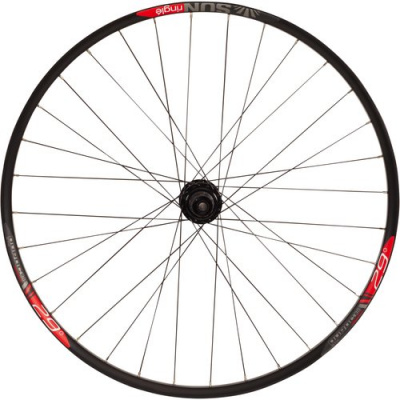
The range covers 27.5-inch and 29er formats, with options spanning basic leisure builds through to the more capable Rockrider-branded wheels that can handle proper trail use. Construction centres on double-wall alloy rims - aero-extruded for impact resistance - paired with hubs running either cup-and-cone or sealed cartridge bearings depending on the tier. Most rear wheels use a Shimano HG freehub, which means cassette compatibility isn't something you'll lose sleep over.
Before you buy, check three things: your frame's axle standard, your brake rotor mount type, and your current cassette speed. Get those right and a BTWIN wheel is usually a genuine drop-in fit. Get them wrong and you'll be back in the car park head-scratching.
Prices and availability can change quickly. Delivery charges are not always included in listed prices.
Final price, stock status and delivery terms are set by retailer. We may receive a commission on purchases made.
Compatibility: Axles, Freehubs, and Brake Mounts
This is where most buyers trip up, so it's worth slowing down. Entry-level BTWIN wheels are built around quick release (QR) axle standards - that's 9x100mm at the front and 10x135mm at the rear. These suit older hardtails and budget full-suspension frames where QR dropouts are still the norm. If your frame runs a thru-axle - common on anything trail-focused from roughly 2018 onwards - or uses Boost spacing (148mm rear, 110mm front), a standard BTWIN QR wheel won't fit without an adapter, and in most cases it simply won't fit at all. Measure your dropout spacing before clicking buy.
On the drivetrain side, virtually all BTWIN rear wheels use a Shimano HG spline freehub. That's broadly compatible with 8, 9, 10, and 11-speed cassettes from Shimano, and it'll also accept SRAM's NX and SX Eagle cassettes - so if you're running a budget one-by-twelve, you're covered. It won't accept Shimano's Micro Spline (12-speed) or SRAM XD/XDR bodies, so check your drivetrain spec if you're running anything higher-end.
Brake rotor fitment on BTWIN hubs is almost exclusively 6-bolt disc. Centerlock rotors won't bolt straight on without an adapter, so factor that in if your current rotors are Centerlock. If you're building a winter hack around one of these wheels and need to sort the rest of the setup, take a look at BTWIN mudguards while you're at it - worth fitting if you're going to be spending time in the grot. For spoke replacements or protective storage between rides, our Spokes and Nipples and Wheel Bags pages cover those needs separately.
How the BTWIN and Rockrider Wheel Range Breaks Down
Not all BTWIN wheels are built the same, and the difference between the bottom and middle of the range matters more than the price gap suggests. The most basic options use single-wall clincher rims - fine for light use on gravel paths or towpath loops, but they're not designed to absorb the kind of square-edge hits you'd encounter on Peak District gritstone or the rock gardens at BikePark Wales. Hit something sharp at speed and a single-wall rim will tell you about it immediately.
Step up to the Rockrider-branded wheels and you're into proper double-wall alloy construction, aero-extruded for added rigidity. The practical upside is a rim that can take repeated impacts without folding or developing a lateral wobble after a season's riding. You also tend to get wider internal rim widths - typically 25 - 30mm internal - which is meaningful because it allows you to run modern high-volume MTB tyres at the right profile. A 2.4-inch tyre on a narrow rim sits rounder and rides squirmer than the same tyre on a wider platform.
The other step-up you get with Rockrider wheels is better hub bearing quality. Entry-level hubs use cup-and-cone bearings that are serviceable but need attention. Rockrider-tier wheels tend toward sealed cartridge bearings, which resist contamination better and need less frequent intervention. For riders who do their cleaning in a hurry and don't always get round to a proper strip-down, sealed bearings buy you some extra time before things start sounding gritty. If you're considering pairing new wheels with a frame refresh, BTWIN frames are worth a look as a base for a budget build. And if a Rockrider wheelset feels like the right spec but you want to see what's available at the next level, Halo MTB wheels and Mavic MTB wheels both offer alloy options with wider rim widths and stronger spoke counts if your budget stretches.
Keeping BTWIN Wheels Rolling Through a UK Winter
UK trail conditions are hard on budget hubs. Abrasive grit suspended in standing water - the stuff you pick up through the Peaks or the Scottish Borders from October through March - works into unsealed cup-and-cone bearings faster than most riders expect. If you're running entry-level BTWIN hubs through a winter season, plan on stripping and repacking the bearings at least once mid-season. It's a twenty-minute job if you're familiar with it: pull the axle, clean out the contaminated grease, check the cones for pitting, and repack with a good-quality waterproof grease. Ignore it and the cones pit, the cups follow, and you're buying a new hub.
Wheels with sealed cartridge bearings are more forgiving - you can't repack them, but when they fail you just press out the old cartridge and press in a new one. Deep mud ingress is still an issue for the freehub pawls on any BTWIN rear wheel; cleaning and re-greasing the freehub body after particularly muddy rides keeps the engagement crisp and prevents the pawls from sticking in cold weather. That click-click on freewheeling that suddenly goes silent is a stuck pawl - fix it before the hub stops engaging altogether.
One more thing worth knowing: new wheels, especially budget alloy builds, benefit from a spoke tension check after the first 50 miles of trail riding. Spokes settle and can lose tension unevenly, which leads to the rim pulling out of true. A quick check with a spoke key at that point can prevent a progressive buckle developing over the following rides. It takes five minutes and saves you a frustrating mid-ride wobble. For a more comprehensive build, pairing these wheels with BTWIN suspension forks keeps the budget consistent across the front end. If you want to compare how BTWIN stacks up against the wider market at this price point, DT Swiss MTB wheels represent the upper end of what alloy construction can do, and are useful as a benchmark.
BTWIN MTB Wheels FAQs
Are BTWIN MTB wheels tubeless ready?
Most entry-level BTWIN wheels are clincher-only and need inner tubes - the rim beds aren't sealed for tubeless use. Higher-tier Rockrider wheelsets may support tubeless conversion, but you'll need to add rim tape, valves, and sealant, and verify the specific model is rated for it before committing.
What freehub body do BTWIN mountain bike wheels use?
BTWIN rear wheels predominantly use the standard Shimano HG spline freehub, which covers 8, 9, 10, and 11-speed cassettes from Shimano and is also compatible with SRAM NX and SX Eagle. It won't accept Shimano Micro Spline or SRAM XD bodies, so check your drivetrain before ordering.
Do BTWIN wheels come with quick-release skewers or thru-axles?
Entry-level BTWIN wheels are built around standard quick-release axles - 9mm QR at the front, 10mm at the rear. If your frame or fork uses a 12mm or 15mm thru-axle, or runs Boost spacing, these wheels won't fit directly. Always confirm your axle standard against the wheel spec before buying.