
Boss Mountain Bikes
Boss Mountain Bikes have carved out a clear space in the UK market for riders who want to get off-road without committing to a four-figure outlay. These are no-nonsense bikes aimed at casual weekend riders, teenagers finding their feet on trail, and anyone who fancies exploring canal towpaths or light woodland tracks without spending a small fortune. The focus is squarely on robust, heavy-duty construction - think thick hi-tensile steel frames built to take knocks - rather than chasing every gram off the scale.
What you get across the Boss lineup is consistent: Shimano gearing that's intuitive to use, mechanical disc brakes that keep working when the conditions turn properly foul, and suspension that takes the edge off the rough stuff. These aren't race bikes, and Boss doesn't pretend otherwise. They're practical, accessible, and genuinely solid for the kind of riding most beginners actually do. If you're kitting out the whole family at once, it's worth having a look at Boss Kids Bikes alongside whichever adult model catches your eye.
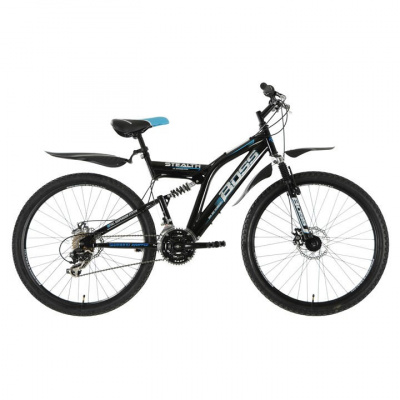
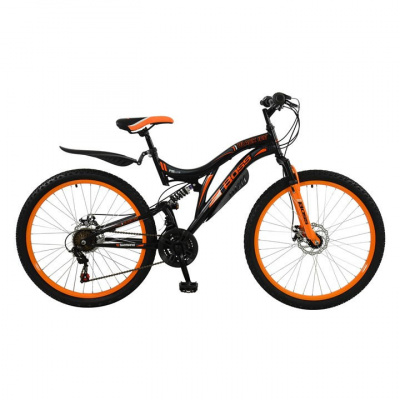
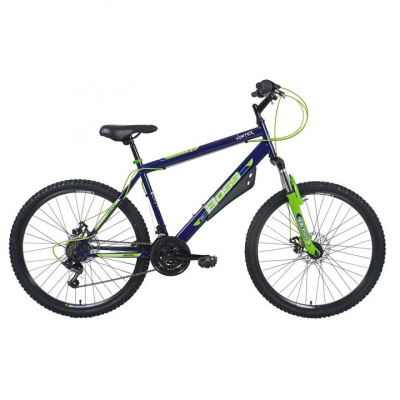
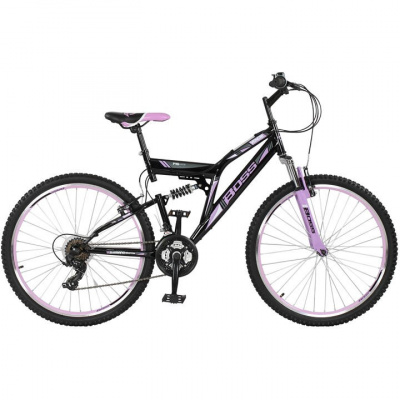
Prices and availability can change quickly. Delivery charges are not always included in listed prices.
Final price, stock status and delivery terms are set by retailer. We may receive a commission on purchases made.
Decoding the Boss Mountain Bike Lineup
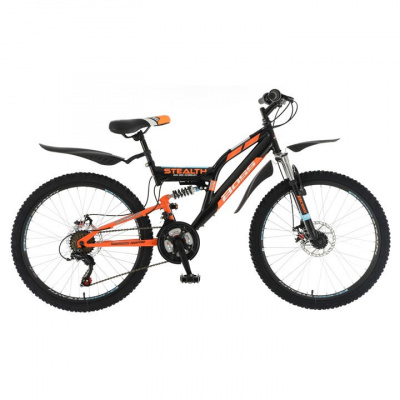
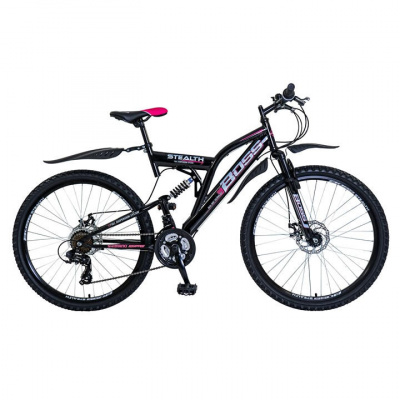
Boss runs two broad flavours of mountain bike - hardtail and full suspension - and knowing which suits you makes the decision straightforward. The Boss Stealth is the classic hardtail: front suspension only, efficient on smooth surfaces, and the better call if most of your riding happens on towpaths, packed gravel, or light woodland trails where you're not throwing yourself at big drops. Less moving parts, more pedalling efficiency. Simple.
Step up to the Boss Dominator or Boss Black Ice and you're into Y-frame full-suspension territory. These add a rear coil unit into the frame, which does a decent job of absorbing repeated small impacts - roots, ruts, the kind of chatter you'd get on a rough bridleway. Don't expect the rear suspension to perform like a trail bike from a premium brand; the travel is modest and the damping fairly basic. But for casual riders who want a more cushioned feel without going hardtail, it's a meaningful difference on a bumpy canal path or a rougher forest track.
Wheel sizes across the Boss range are either 26-inch or 27.5-inch (650b). The 26-inch setup feels nimble and flickable, easier to manoeuvre in tight woodland gaps. The 27.5-inch wheels roll over small obstacles with slightly less drama and suit taller riders better. Check the spec carefully before buying - Boss uses both depending on the model and price point. Compared to brands like Apollo mountain bikes or Carrera mountain bikes, the Boss lineup sits at a very similar entry-level price bracket, so the wheel size and suspension type often become the deciding factors rather than brand loyalty.
The Boss Tech Philosophy: Durability on a Budget
The hi-tensile steel Y-frame construction is the backbone of every Boss mountain bike, and it's worth understanding what that actually means. Steel is heavier than aluminium - no getting around that - but it's also genuinely tough. A hi-tensile steel frame will flex slightly rather than crack on impact, which makes it well-suited to riders who aren't yet confident at judging drops and landings. You might ding it, you might scrape it, but you're unlikely to fold it.
Gearing comes courtesy of Shimano Tourney and Revoshift twist-grip shifters. Revoshift is the rotating grip system where you twist the handlebar to change gear - intuitive for beginners who haven't developed the muscle memory for trigger shifters yet. The Tourney groupset isn't fast or precise by performance standards, but it indexes reliably when set up correctly and doesn't demand much from the rider in terms of maintenance knowledge. Keep it clean and it'll keep working.
The mechanical disc brakes are arguably the most practically useful feature on a Boss bike for UK conditions. Rim brakes shed stopping power fast when wet and muddy - disc brakes don't. Cable-actuated mechanical discs aren't as sharp or progressive as hydraulic systems, but they're consistent, easy to adjust at home, and work when the trails are soaked. If you've ever grabbed rim brakes on a wet descent and felt that spongy, delayed response, you'll understand immediately why this matters. For winter riding or wet-weather commuting, it's the right call at this price. Brands like Falcon mountain bikes operate in a similar space, though disc brake availability varies by model across that range too.
The Zoom front suspension forks handle the front-end compliance. They're basic, with limited adjustability, but they do take the sting out of sharp edges and potholes. Don't expect to tune them for trail riding - treat them as a comfort feature rather than a performance component.
Living with a Boss MTB in the UK
A Boss mountain bike in a British winter needs a bit of attention, not a lot. The hi-tensile steel frame will surface rust if you leave it caked in mud after every ride - give it a wipe down, dry the obvious water traps around the bottom bracket and chainstays, and it'll last considerably longer. A light spray of protective coating on the frame a couple of times a year is sensible. It takes five minutes and saves you from watching orange patches spread across the tubing by February.
The drivetrain wants regular lubrication, particularly through the wetter months. Wet chain lube, applied sparingly to a clean chain, makes a noticeable difference to how smoothly the Shimano Revoshift system indexes through the gears. A gunked-up chain on a budget groupset will skip and ghost-shift; a clean one works properly. It's worth building that habit early.
Weight is the honest trade-off with Boss bikes. Most adult models come in at 18kg or more - some closer to 20kg - which you'll feel on any prolonged climb. On a steep, muddy incline on the South Downs or a lumpy bridleway in the Peak District, drop into the lowest Shimano gear ratio early rather than grinding a harder gear. The gearing range is wide enough to cope, but the weight means you'll want to use it. This isn't a bike you'll carry far; plan routes accordingly.
For riders considering whether Boss is the right starting point or whether to stretch budget slightly, Huffy mountain bikes sit at a comparable entry level, while moving up to something like a Carrera from Halfords opens up alloy frames and a meaningful weight reduction if the climbing bothers you.
Boss Mountain Bikes FAQs
Are Boss mountain bikes any good?
For what they're designed to do, yes. Boss mountain bikes are solid entry-level bikes suited to light trails, canal paths, and casual off-road riding. They're built tough and priced accessibly. They're not designed for aggressive trail riding or downhill use - keep expectations matched to that and they deliver well.
How heavy is a Boss mountain bike?
Most Boss adult mountain bikes weigh between 18kg and 20kg. That's a consequence of the hi-tensile steel frame construction, which prioritises durability over low weight. It's noticeable on steeper climbs, so use the lower gears and plan routes that don't involve carrying the bike any distance.
What size Boss mountain bike do I need?
Most Boss adult models come in an 18-inch frame, which generally suits riders between 5'6" and 5'10". Beyond frame size, pay attention to wheel size - 26-inch suits smaller riders or those who prefer a nimbler feel, while 27.5-inch wheels work better for taller riders and roll more smoothly over rough ground.