
Bluey Balance Bikes
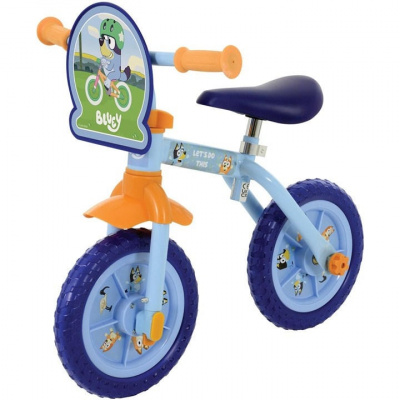
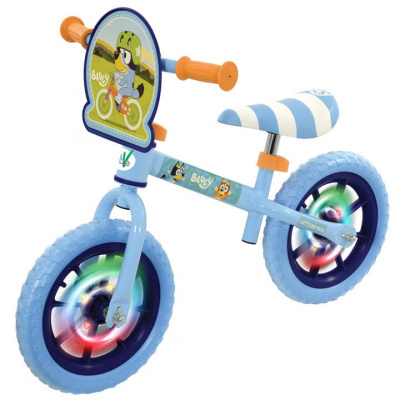
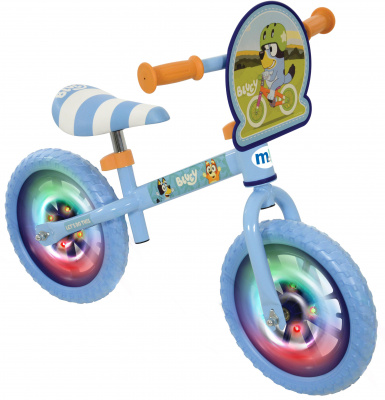
Bluey balance bikes turn an ordinary driveway into the kind of adventure that gets small legs moving and big smiles going. Designed from the ground up for toddlers who are still finding their feet - literally - these bikes strip everything back to what actually matters at this stage: a low enough standover height to plant both feet flat on the ground, a frame light enough that a two-year-old isn't wrestling the thing, and enough visual excitement to make the whole enterprise feel like their favourite show come to life.
The licensed Bluey frame graphics and handlebar plaques do the obvious job of winning over the kid. The engineering underneath does the job parents care about. Ultra-low standover geometry means early walkers can get on and off without help, while puncture-proof EVA foam tyres keep maintenance firmly off the agenda - no pumps, no patches, no Sunday morning faff. Adjustable saddle heights let the bike grow with your child rather than being outgrown in a season. Integrated steering limiters stop the bars spinning too far and pitching little riders forward. It's a considered package, and on wet British pavements and park paths, that zero-maintenance tyre setup is more practical than it might first sound.
Prices and availability can change quickly. Delivery charges are not always included in listed prices.
Final price, stock status and delivery terms are set by retailer. We may receive a commission on purchases made.
Decoding the Bluey Balance Bike Lineup
There are two broad decisions to make when you're choosing between Bluey balance bikes: wheel size and frame material. Get these right for your child's age and build and everything else falls into place.
The 10-inch wheel models are where most families start. They sit lower to the ground, suit children from around age two, and keep the weight down to a point where a toddler can actually manoeuvre the bike rather than just topple it. The standover height on these smaller frames is genuinely low - we're talking a minimum saddle height that accommodates inside legs of roughly 30cm, which covers most kids at that stage. The 12-inch variants open things up for slightly older or taller children, typically from age three upwards, giving a bit more stability at speed as confidence grows and strides lengthen.
On materials, the classic steel-framed Bluey balance bikes are the more widely available option. Steel adds a touch of weight but brings durability - these things get dropped, scraped along walls, and occasionally used as garden ornaments between sessions. The wooden variants have obvious aesthetic appeal and tend to be lighter, though they want a bit more care around wet weather storage, which we'll come to. Neither is the wrong answer; it's more about how much you want to think about looking after the bike versus how light you need it to be for your child to self-manage.
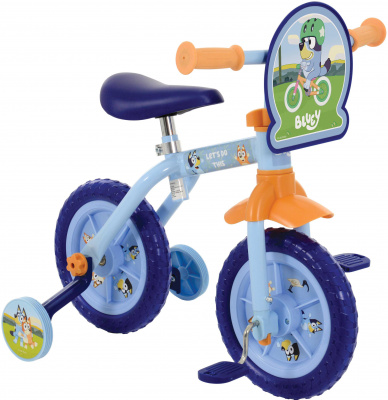
Once your child is confidently coasting and steering - feet off the ground, balance sorted - that's the cue to graduate them to pedals. At that point, take a look at the Bluey Kids Bikes range, which picks up where the balance bikes leave off.
The Geometry and Safety Kit That Actually Does the Work
The feature that doesn't get enough attention on Bluey balance bikes is the integrated steering limiter. It's a mechanical stop built into the headset area that prevents the handlebars from rotating more than roughly 45 degrees either side of centre. That might sound like a minor detail, but it's the difference between a wobbly toddler recovering their line and going over the bars because the front wheel snapped sideways. On a bike with no steering limiter, a sharp turn at any kind of pace is an instant crash. With one fitted, the geometry stays stable enough for small riders to correct themselves. Worth checking it's present if you're comparing against alternatives like Paw Patrol balance bikes or Peppa Pig balance bikes, as not every licensed character bike includes it as standard.
The flanged handlebar grips are another detail that earns its keep. The raised outer flange acts as a physical stop that keeps small hands from sliding off the end of the bar and scraping knuckles along a wall or fence post. On a balance bike where the child is pushing with their feet and not always gripping hard, hands tend to wander towards the grip ends. The flange catches them. Simple, effective.
Then there's the EVA foam tyre question. Solid EVA foam wheels will never puncture - not on driveway grit, not on broken glass, not on anything. The trade-off is that foam lacks the compliance and wet-surface grip of a proper pneumatic tyre. On a smooth wet pavement, EVA can feel a touch slippery compared to rubber. For a balance bike used at walking pace on park paths and driveways, this is rarely a meaningful issue - your child's feet are on the ground as much as the tyres are, after all. But it's worth knowing the limitation, particularly if you're comparing against brands like Frog balance bikes or Hornit balance bikes that sometimes spec pneumatic rubber on their entry-level models.
The adjustable saddle height is the feature that stretches the bike's useful life. A bolted seatpost clamp (some models use a quick-release) lets you raise the saddle incrementally as your child grows, keeping the geometry correct - feet flat on the ground, slight bend at the knee - rather than forcing them to tippy-toe or crouch. It's what makes the difference between a bike that lasts one season and one that covers two or three years of riding development.
Keeping a Bluey Bike Going Through a British Winter
A balance bike gets used in all sorts of conditions - damp autumn parks, muddy half-term mornings, drizzly school-run diversions. A bit of forward thinking keeps the bike in good shape and saves hassle later.
The EVA tyres don't need pumping, but they do benefit from a wipe-down after muddy park sessions. A thin layer of compacted mud on foam reduces what little grip the tyre has, particularly on wet tarmac. A damp cloth after each session takes thirty seconds and keeps the contact patch doing its job. Steel-framed models want dry storage - a shed or covered porch rather than left out on the lawn. The frame itself is usually powder-coated well enough to handle the odd splash, but the wheel nuts, seatpost clamp bolt, and any bare metal around adjustment points can pick up surface rust if left wet consistently. A quick wipe and a dab of light oil on the metal hardware once a month through winter is all it needs.
The wooden variants need even more respect around moisture. Prolonged damp can cause the wood to swell or the finish to lift, so indoor storage is the right call when the British weather is doing what it usually does between October and March.
Safety matters more than any of the above. Before your child heads out, make sure they're in a properly fitted helmet - the Bluey Kids Helmets range keeps the theme going and takes the argument out of getting one on their head. A helmet that a toddler actually wants to wear is worth a lot.
Bluey Balance Bikes FAQs
What age is a Bluey balance bike suitable for?
Most Bluey balance bikes are designed for toddlers aged 2 to 4 years old. That said, age is a rough guide - inside leg measurement is the one that actually matters. Your child needs to sit on the saddle at its lowest setting and place both feet flat on the ground. Check the manufacturer's minimum saddle height against your child's inside leg before buying.
Are the tyres on a Bluey balance bike puncture-proof?
Yes. Bluey balance bikes use solid EVA foam tyres rather than air-filled tubes, so there's nothing to puncture and nothing to pump. The trade-off is slightly less grip on wet surfaces compared to pneumatic rubber, but for driveway and park-path use at toddler speeds, it's a practical choice that removes maintenance from the equation entirely.
Can you adjust the seat height on a Bluey balance bike?
Yes - the saddle height is adjustable via a bolted or quick-release seatpost clamp. Raise it gradually as your child grows to keep the geometry correct: feet flat on the ground with a slight bend at the knee. This adjustability is what allows the bike to stay relevant across two or three years of development before they're ready to move on to pedals.