
Apollo Road Bikes
Apollo Road Bikes sit at the accessible end of drop-bar cycling, and that's entirely the point. If you've been eyeing up road cycling but can't justify spending four figures on your first bike, Apollo is where a lot of UK riders start - and there's no shame in that. These are bikes built around a simple brief: get more people riding, keep the price honest, and make something that'll still be rolling after two winters of British commuting.
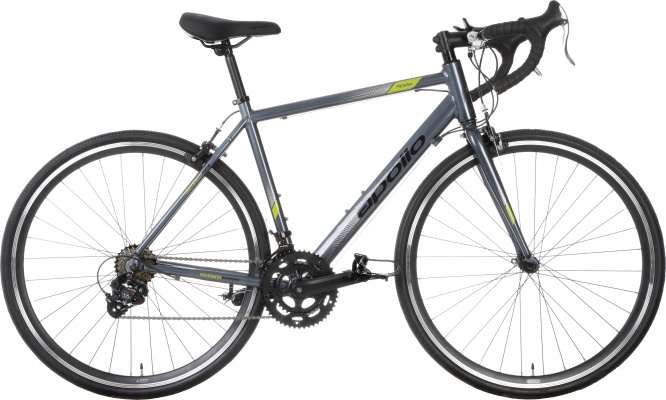
What you get is a robust alloy frame, standard 700c wheels, and Shimano gearing that covers enough range to handle a Surrey climb or a flat Cambridge commute without drama. The geometry leans upright rather than aggressive - a longer headtube means your back stays comfortable on the first few rides, which matters more than most beginners realise. Apollo isn't chasing Strava segments. It's giving you a functional, no-fuss foundation to find your legs on the road. Whether you're after an Apollo mens road bike, an Apollo womens road bike, or just the most sensible cheap Apollo road bike on the market right now, the range covers the bases without overcomplicating the decision.
Prices and availability can change quickly. Delivery charges are not always included in listed prices.
Final price, stock status and delivery terms are set by retailer. We may receive a commission on purchases made.
Decoding the Apollo Road Bike Lineup
Apollo keeps things deliberately simple. There's no sprawling range of sub-categories - you're choosing between their most basic hi-tensile steel-forked models and slightly more refined options built around lighter alloy tubing. The steel-forked bikes sit at the very floor of the budget drop-bar market, and they know it. They're heavier, they flex a touch more, but they're also nearly indestructible for the kind of riding most beginners actually do. The alloy-framed options trim a little weight and feel marginally crisper on the road, though don't expect the gap to be transformative at this price point.
All models roll on 700c wheels, which is standard road sizing - compatible with a wide range of replacement tyres and tubes you'll find in any UK bike shop. Compact chainsets are fitted across the range, meaning the gearing is forgiving on inclines rather than punishing. That's a deliberate choice aimed squarely at riders who aren't yet comfortable grinding up a 10% climb. If you later decide you want to dial in your fit further, Apollo saddles and Apollo spare parts are worth browsing - swapping the saddle alone can make a noticeable difference to comfort on longer rides.
Apollo also produces a solid hybrid bike range and mountain bikes if you find road cycling isn't quite the right fit - worth knowing before you commit.
The Apollo Tech Philosophy: Durability Over Grams
Apollo doesn't pretend to be a performance brand. The engineering brief here is robustness, and the component choices reflect that honestly. The alloy tubing used in the frame is thicker-walled than you'd find on a race-oriented bike - think of it less as a weight penalty and more as insurance against the kind of abuse a daily commuter takes. Kerb hops, loaded panniers, the occasional unplanned pothole at speed - the frame absorbs it.
The hi-ten steel forks fitted to most models are worth understanding properly. Steel has a natural compliance that alloy lacks, so those forks are doing real work dampening the high-frequency buzz you get off chip-seal and poorly patched tarmac. It's not the same as a carbon fork tuned for road feel, but it's genuinely effective at taking the edge off a rough B-road. That's the logic behind the beginner-focused endurance geometry too - a taller headtube positions you more upright, which reduces strain on your lower back and neck while you're still building riding fitness. Compared to an aggressive race geometry where your weight is pitched well forward, you'll feel far more in control in traffic or on an unfamiliar descent.
Shimano 14-speed drivetrains handle the shifting duties. Nothing exotic, but Shimano's Tourney-level components are reliable and widely serviceable - your local bike shop will have the parts. If you're comparing Apollo road bike vs Carrera at a similar budget, the component spec tends to be broadly comparable; where they differ is in geometry and frame finish. Carrera road bikes often run a slightly sportier position, which suits some riders and puts others off within the first mile. Apollo's more upright stance is the safer starting point for most beginners. Equally, Boardman road bikes step up in frame quality and ride refinement, but the price gap is significant - you're paying for it.
Living with an Apollo in the UK
Expect an Apollo road bike to come in at roughly 11 - 14kg depending on the model. That's heavier than anything a committed club rider would choose, but weight is relative to purpose. On a daily commuter road bike, that mass is structural confidence - these frames don't creak or flex nervously over rough surfaces. They just get on with it. Pothole-heavy British B-roads, the kind with the badly patched edges and the surprise ridges after resurfacing, are exactly what this build quality is suited to.
Rim brakes are standard across the Apollo road range. In dry conditions, they're perfectly adequate. In wet Welsh winters or on a damp Scottish descent, the stopping distances extend noticeably - that's not an Apollo-specific problem, it's a rim brake reality. Swapping the factory brake pads for a set of higher-compound alternatives is a cheap, easy upgrade that most riders can do at home, and it makes a meaningful difference. Don't skip it if you're commuting through autumn and winter.
The Shimano Tourney drivetrain is durable but not immune to neglect. Winter road salt is corrosive, and a basic drivetrain left uncleaned will deteriorate faster than you'd like. A regular wipe-down after wet rides and a light re-lube of the chain takes five minutes and keeps the shifting clean through the coldest months. It sounds obvious, but it's the single biggest factor in how long a budget drivetrain lasts. Keep it clean and it'll run reliably for years. Ignore it and you'll be replacing a cassette by spring.
Related searches:
Apollo Road Bikes FAQs
Are Apollo road bikes any good for beginners?
For complete beginners, yes - they're a genuinely sensible entry point. The relaxed, upright geometry means you're not fighting the bike before you've found your rhythm, and the durable components handle rough treatment well. Don't expect race-level performance, but as a first drop-bar bike to learn on before upgrading, Apollo delivers solid value.
How much does an Apollo road bike weigh?
Most Apollo road bikes weigh between 11kg and 14kg, depending on whether the frame is alloy or uses a hi-tensile steel fork. They're heavier than anything in the mid-market or above, but that weight reflects genuinely robust construction - reassuring on potholed urban roads rather than a sign of poor quality.
Can I use an Apollo road bike for daily UK commuting?
Easily. The sturdy frames and 700c wheels handle British road conditions without fuss. The main practical upgrade worth making is swapping the standard rim brake pads for better-compound alternatives - stopping performance in wet conditions improves noticeably, and it's a straightforward, low-cost change that pays off quickly through a UK winter.