
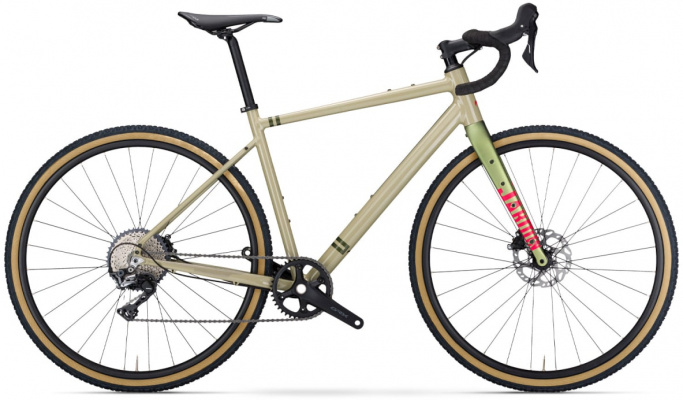
Wilier Jaroon
A versatile steel gravel bike that soaks up rough byways and loaded tours with calm confidence and classic durability.
- Steel frame with hidden internal welds for clean lines
- 42mm tyre clearance: float over ruts and rough gravel
- Rack and mudguard mounts for touring and commuting
- Shimano GRX hydraulic disc brakes: reliable all-weather stopping
- Stable geometry: confidence on loose surfaces and descents
- 27.2mm seatpost adds compliance on long mixed-terrain rides
Wilier Jaroon Deals

Prices and availability can change quickly. Delivery charges are not always included in listed prices.
Final price, stock status and delivery terms are set by retailer. We may receive a commission on purchases made.
Bikesy's Verdict
The Wilier Jaroon is a dependable, versatile steel gravel bike that prioritises comfort, durability, and real-world practicality over outright speed or weight savings. It's built for riders who want a single machine that'll handle long mixed-terrain adventures, loaded bikepacking trips, and all-weather commutes without forcing compromises. The steel frame delivers vibration-damping comfort and a classic aesthetic, while modern standards - thru-axles, hydraulic discs, generous tyre clearance - keep it relevant and capable on today's gravel routes.
It's not the lightest or the raciest option, and the frame is stiffer than some expect from chromoly, but those trade-offs buy you a bike that'll still be rideable in a decade and won't punish you after a full day in the saddle. If you're chasing Strava times or planning technical singletrack, look elsewhere. But if you want a go-anywhere, do-anything companion that rewards commitment and handles rough surfaces with calm confidence, the Jaroon delivers exactly that. It's a bike for exploring, not racing - and it's very good at its job.
Pros
- Steel frame with hidden welds delivers durability, compliance, and timeless looks
- 42mm tyre clearance and stable geometry excel on rough gravel and mixed terrain
- Extensive rack, mudguard, and bottle mounts make it ideal for touring and bikepacking
- Shimano GRX hydraulic discs and thru-axles bring modern reliability to a classic platform
- Comfortable geometry and 27.2mm seatpost suit long days in the saddle
Cons
- Heavier than carbon or lighter aluminium gravel bikes if you're chasing climbing speed
- Frame is stiffer than some expect from steel, sacrificing a touch of plush compliance
- Relaxed geometry feels less nimble on tight, twisty tarmac or technical singletrack
About the Wilier Jaroon
The Wilier Jaroon is a steel gravel bike that puts versatility front and centre. Built around a double-butted chromoly frame with Wilier's signature internal welding - where the joints are hidden inside the tubes for a seamless, uncluttered look - it's a machine designed to handle everything from tarmac commutes to rutted byways and multi-day bikepacking trips. The frame accepts tyres up to 42mm wide, and there's a forest of mounts for racks, mudguards, and multiple bottle cages. You're looking at a bike that doesn't force you to choose between road manners and off-road capability; it simply does both, with a bias towards comfort and durability over outright speed.
Steel frames have a reputation for soaking up road chatter, and the Jaroon leans into that with a slender 27.2mm seatpost that adds another layer of compliance. Yet the ride character isn't quite the plush, springy feel some expect from chromoly. The frame is surprisingly stiff - more so than many classic steel tourers - which translates to efficient power transfer but less of that languid, forgiving flex. It's a trade-off that suits riders who want steel's longevity and repairability without sacrificing responsiveness when you're pushing hard on gravel climbs or chasing mates along a fire road. The geometry is relaxed enough to keep you stable when the surface turns loose or corrugated, but not so slack that it feels ponderous on tarmac.
Modern standards underpin the package: thru-axles front and rear (12mm × 100mm up front, 12mm × 142mm at the back), flat-mount hydraulic disc brakes, and a tapered head tube. The Jaroon isn't chasing grams - complete bikes typically land around 10.4 to 11kg depending on build - but it's not a boat anchor either. What you get is a dependable, go-anywhere platform that'll still be rideable in a decade, with the kind of classic round-tube aesthetic that ages well and the practical touches that make long days in the saddle less of a chore.
Wilier Jaroon geometry
The Jaroon's geometry is pitched squarely at stability and all-day comfort rather than razor-sharp handling. Head and seat tube angles sit at 70 and 74 degrees respectively across the size range, which is relaxed by modern gravel standards. That slacker front end lengthens the wheelbase - over a metre even on the smaller sizes - and pushes the front contact patch further forward, so the bike tracks predictably through ruts and holds its line when you're descending loose gravel or navigating off-camber sections. You won't flick it through tight switchbacks with the same ease as a shorter, steeper race bike, but that's not what it's built for.
Reach and stack grow steadily as you move up the sizes, but the proportions keep you in a relatively upright position compared to a road race bike. That means less weight on your hands, which is a blessing when you're spending hours on rough surfaces or loaded up with bikepacking gear. The longer wheelbase also means the bike feels planted rather than twitchy, and the consistent 440mm chainstays across all sizes keep the rear end responsive enough for climbing without making the bike feel stretched out. Bottom bracket drop is a moderate 70mm, so you've got decent ground clearance for pedalling through technical sections without clipping rocks, but you're not perched so high that the bike feels tippy.
When you're seated and grinding up a long gravel climb, the geometry keeps your weight centred and your pedal stroke efficient. Stand up and the bike responds without feeling sluggish, though it's never going to dance like a lightweight race machine. On descents, the longer front centre and relaxed head angle mean you can let go of the brakes and trust the bike to stay composed, even when the surface gets choppy or you're carrying speed into a corner. It's a geometry that rewards commitment and suits riders who value predictability over playfulness.
Component choices & upgrades
The Jaroon typically arrives with Shimano GRX groupsets - either 1×11, 1×12, or 2×10 configurations depending on the build - and these are well-suited to the bike's character. GRX is Shimano's gravel-specific line, with clutch rear derailleurs that keep the chain quiet on rough ground and hydraulic disc brakes that offer consistent, powerful stopping in all conditions. Common gearing includes a 40-tooth chainring paired with an 11-42 or 10-45 cassette, which gives you enough range for steep gravel climbs without leaving you spinning out on fast descents or tarmac sections. If you're planning loaded tours or tackling particularly hilly terrain, you might want a smaller chainring or a wider-range cassette, but the stock ratios are sensible for most mixed-surface riding.
Wheels and tyres are where many riders look to upgrade first. Stock wheels are typically alloy rims on thru-axle hubs - solid and reliable, but not especially light or wide. If you're serious about gravel performance, a set of tubeless-ready rims with a 21 or 23mm internal width will let you run lower pressures for better traction and comfort without the pinch-flat risk. Tyres often come as 35 or 40mm options - Kenda Happy Medium or Panaracer Gravelking SK are common - and while they're decent all-rounders, you can tailor the ride significantly by swapping to something faster-rolling for road-biased routes or knobbier for loose, technical terrain. The frame clears 42mm, so you've got room to experiment.
The cockpit is functional rather than fancy: Promax alloy bars with a 12 to 16-degree flare, a matching stem, and a basic saddle. The flared drops are a smart choice for gravel, giving you extra control and leverage on rough descents, but if you're spending serious time in the saddle you'll likely want to upgrade the saddle to something that suits your sit bones and riding style. The 27.2mm alloy seatpost is a keeper - it adds compliance and is easy to replace if you want to experiment with setback or a suspension post for even more comfort. Beyond that, the stock build is well-sorted enough that you can ride it as-is and only upgrade when your skills, terrain, or ambitions demand more.
Where the Wilier Jaroon excels
The Jaroon is outstanding on long, mixed-terrain rides where comfort and versatility matter more than outright speed. If your typical weekend involves stringing together tarmac lanes, gravel byways, and the odd stretch of rutted bridleway - perhaps with a café stop or a wild camp in the middle - this bike will handle it all without complaint. The steel frame and compliant seatpost smooth out the worst of the chatter, the stable geometry keeps you confident when the surface turns loose or technical, and the generous tyre clearance means you can fit rubber that suits the conditions. It's also a natural for bikepacking and light touring: the rack and mudguard mounts are plentiful, the frame is tough enough to handle loaded weight, and the relaxed geometry won't punish you after a week in the saddle.
It does well on gravel climbs, too, especially with the wide-range cassettes that come on most builds. The bike's weight - around 10.5kg complete - means it's not the fastest up steep pitches, but the geometry keeps your weight centred and the gearing gives you enough low-end to spin comfortably even when you're tired or carrying gear. Descending is where the Jaroon really shines: the long wheelbase and slack head angle make it stable and predictable, so you can commit to corners and let the bike run without feeling like it's going to swap ends on you. The flared bars give you plenty of leverage, and the hydraulic discs haul you down reliably even in the wet.
Where it's less ideal is on fast, smooth tarmac or in situations where weight and agility are paramount. The Jaroon isn't slow on the road, but it's not a race bike - you'll feel the extra kilos on long climbs, and the relaxed geometry means it doesn't respond to quick direction changes with the same snap as a shorter, steeper machine. If your riding is mostly paved sportives or you're chasing Strava times on every segment, there are lighter, more road-focused options. Likewise, if you're planning serious singletrack or technical mountain bike trails, the rigid fork and gravel geometry will hold you back compared to a proper mountain bike. But for the vast middle ground - exploring, adventuring, commuting, touring - the Jaroon is a dependable, comfortable, and thoroughly capable companion.
Wilier Jaroon FAQs
What is the maximum tyre size for a Wilier Jaroon?
The steel-framed Jaroon clears tyres up to 42mm wide on 700c rims, which is generous enough for most gravel and light trail riding. Some aluminium variants are listed with clearance up to 45mm, and the discontinued Jaroon Plus model could fit 29+ tyres up to three inches wide. If you're planning to run wider rubber, check the specific frame variant you're considering.
Is the Wilier Jaroon a good bike for bikepacking?
Yes, it's an excellent choice for bikepacking. The frame has multiple mounts for racks, mudguards, and bottle cages, so you can carry plenty of gear without resorting to frame bags alone. The steel construction is durable and repairable, the geometry is stable under load, and the wide tyre clearance lets you fit rubber that'll handle varied terrain. It's built for long days and rough surfaces, which is exactly what bikepacking demands.
What kind of terrain is the Wilier Jaroon best suited for?
The Jaroon excels on mixed terrain: gravel byways, unpaved lanes, light trails, and tarmac sections strung together. It's stable and comfortable on rough, loose, or corrugated surfaces, and the wide tyre clearance means you can tailor the ride to the conditions. It's less suited to technical singletrack or fast road racing, but for exploring and adventure riding it's hard to fault.
Can you put fenders and racks on a Wilier Jaroon?
Absolutely. The frame has dedicated mounts for both front and rear mudguards and racks, making it straightforward to set up for commuting, touring, or all-weather riding. The generous tyre clearance means you can still fit wide rubber even with mudguards in place, which is a bonus if you're riding year-round.
What is the frame material of the Wilier Jaroon?
Most Jaroon models use a double-butted chromoly steel frame, which offers a balance of durability, compliance, and classic ride feel. Wilier uses an internal welding technique that hides the joints inside the tubes for a clean, seamless look. Some variants are listed with aluminium frames, so check the specific model if frame material is a priority for you.
Is the Wilier Jaroon comfortable for long rides?
Yes, comfort is one of its strengths. The steel frame absorbs road vibrations, the 27.2mm seatpost adds another layer of compliance, and the relaxed geometry keeps you in a less aggressive position that's easier on your back and hands over long distances. That said, the frame is stiffer than some classic steel bikes, so it's not quite as plush as you might expect - but it's still more forgiving than most aluminium or carbon gravel bikes.
What are the main differences between the steel and aluminium Wilier Jaroon models?
The steel models emphasise durability, compliance, and a classic aesthetic, with internal welding for clean lines and a slightly more forgiving ride. The aluminium variants are typically lighter and may offer slightly more tyre clearance (up to 45mm versus 42mm), but they sacrifice some of the vibration-damping qualities of steel. Both share the same relaxed geometry and versatile, adventure-ready design, so the choice comes down to whether you prioritise weight or ride feel.
Key Features & Benefits
- Double-butted chromoly steel frame with internal welding: Durable, repairable construction with a clean aesthetic and vibration-damping comfort for long mixed-terrain rides
- 42mm tyre clearance and stable 70° head angle: Confidence and traction on loose gravel, ruts, and rough descents; room to tailor rubber to conditions
- Extensive rack, mudguard, and bottle cage mounts: Versatile setup for bikepacking, touring, and all-weather commuting without compromising handling
- Shimano GRX hydraulic disc brakes and thru-axles: Reliable, powerful stopping in all conditions and secure wheel mounting for loaded or technical riding
- 27.2mm alloy seatpost and relaxed geometry: Added compliance and an upright, comfortable position that reduces fatigue on all-day adventures
Wilier Jaroon 2023, 2017 & 2016 differences
The 2023 Jaroon retained the steel frame construction and internal welding but was commonly specced with Shimano GRX 1×11 or 2×10 groupsets, often paired with 40mm tyre clearance and alloy wheels. Some builds featured external cable routing rather than the internal routing seen on earlier models. The 2017 model introduced SRAM Rival 1×11 and Shimano 105 build options alongside the steel frame, with tyre clearance up to 42mm and a focus on adventure and touring versatility. A distinct Jaroon Plus variant appeared around this time, featuring 29+ tyres (up to three inches wide), Boost 148mm rear spacing, and a 73mm bottom bracket - a significantly different machine aimed at riders wanting maximum tyre volume and off-road capability.
The 2016 Jaroon was an early iteration of the model, featuring the same double-butted chromoly steel frame with internal welding, SRAM Rival 1×11 or Shimano 105 drivetrains, and 40mm tyre clearance. Geometry was similar to later models, with a relaxed 70° head angle and stable handling, but component specs and finishing kit were more basic. Across all these years, the core philosophy remained consistent: a durable, comfortable steel platform with modern gravel standards and extensive mounts for racks and mudguards. The main changes have been incremental updates to groupsets, tyre clearance, and cable routing rather than wholesale redesigns.
Alternatives to Consider
Within the Wilier range, the Jena offers a carbon frame for riders chasing lighter weight and more race-oriented gravel performance, while the Adlar provides another steel or aluminium option with slightly different geometry and build specs. If you're drawn to the Jaroon's steel character but want to explore other brands, the Genesis Croix de Fer is a direct rival with a similar touring and adventure focus, generous tyre clearance, and a reputation for bombproof reliability. The Kona Sutra leans even further into loaded touring with a more relaxed geometry and even more mounts, though it sacrifices some on-road liveliness. For a lighter, more playful steel option, the All-City Space Horse delivers classic looks and nimbler handling, but with less tyre clearance and fewer bikepacking provisions.
If you're open to aluminium, the Cannondale Topstone offers a lighter frame, clever rear suspension on some models, and a more modern, race-influenced geometry that's quicker on tarmac but less forgiving on rough gravel. The Specialized Diverge in aluminium spec brings Future Shock front suspension for added comfort and a slightly more aggressive ride position, making it a strong choice if you're mixing fast road rides with gravel exploration. The Trek Checkpoint aluminium models split the difference with stable geometry, good tyre clearance, and a wide range of builds, though they lack the steel frame's classic aesthetic and long-term durability. The Salsa Vaya is another steel contender with a touring pedigree, offering similar versatility and comfort but with a slightly more upright position and a focus on loaded riding over outright gravel speed.
Reviews
Generous tyre clearance and a long wheelbase give the Jaroon a planted, reassuring feel on loose or corrugated surfaces. The bike tracks predictably through ruts and holds its line when you're carrying speed into corners, which builds confidence quickly. While the steel frame is stiffer than some expect - less of that languid, springy flex and more direct power transfer - it still smooths out road chatter better than aluminium or carbon, especially when paired with the slender 27.2mm seatpost. That stiffness means you're not losing watts when you're grinding up a gravel climb, but it also means the ride isn't quite as plush as classic steel tourers.
When the gradient kicks up, the wide-range cassettes (typically 11-42 or 10-45) give you enough low-end to spin comfortably even when you're tired or carrying gear. The bike's weight - around 10.5kg complete - is noticeable on steeper pitches, but the geometry keeps your weight centred and the gearing is well-judged for mixed terrain. Descending is where the Jaroon really impresses: the slack head angle and long front centre make it stable and predictable, so you can commit to corners and let the bike run without feeling like it's going to swap ends. Hydraulic discs haul you down reliably, and the flared bars give you plenty of leverage when the surface gets rough.
Because the frame accepts racks, mudguards, and multiple bottle cages without compromising handling, it's a natural for loaded riding. We've seen builds that handle multi-day bikepacking trips and commuter setups with full mudguards and panniers, and the bike remains composed under load. On tarmac it's less sparky - the relaxed geometry and extra weight mean it doesn't respond to quick direction changes with the same snap as a shorter, steeper machine - but it's never sluggish, and the modern standards (thru-axles, flat-mount discs) keep it feeling current rather than retro. Stock wheels and tyres are functional rather than inspiring, so many riders upgrade to lighter rims and more aggressive or faster-rolling rubber depending on their terrain. The clean aesthetic from the internal welding is a bonus: it's a bike that looks as good leaning against a café wall as it does covered in mud at the end of a long gravel ride.
Full Specification
| Spec | Value |
|---|---|
| Frame | Double butted Chromoly steel |
| Frame Construction | Round tubes with proprietary internal welding |
| Frame Features | Slightly sloped top tube; dropped seatstays; internal or external cable routing depending on model |
| Tyre Clearance | Up to 42mm (700c) |
| Standards (BB) | 68mm English thread (BSA) |
| Standards (Rear Axle) | 12mm x 142mm thru-axle |
| Fork | Full carbon monocoque; rigid; tapered steerer |
| Drivetrain | Shimano GRX 1x11, 1x12, or 2x10; SRAM Rival 1x11 |
| Shifters | Shimano GRX (ST-RX400, ST-RX600, ST-RX610) or SRAM Rival (RS505) |
| Rear Derailleur | Shimano GRX (RD-RX400, RD-RX812, RD-RX822-GS) or SRAM Apex/Rival |
| Front Derailleur | Shimano GRX FD-RX400 (2x configurations) |
| Crankset | FSA Omega Adventure (40T or 46-30T); Shimano GRX FC-RX610-1 or FC-RX600 (40T); SRAM NX1 Boost (32T); Shimano 105 (46/36T) |
| Cassette | Shimano SLX CS-M7100 (10-45T); Shimano SLX M7000 (11-42T); Shimano CS-HG500 (11-34T); SRAM Powerglide 1130 (11-42T) |
| Chain | Shimano 11-speed; SRAM PC1110; FSA 11-speed |
| Brakes | Hydraulic disc brakes |
| Brake Levers | Shimano GRX (ST-RX600, ST-RX610) or Shimano RS505 or SRAM Rival |
| Calipers | Shimano GRX BR-RX400 or Shimano RS505 or SRAM Rival |
| Rotors (Front) | 160mm |
| Rotors (Rear) | 140mm or 160mm |
| Wheels | 700c thru-axle compatible |
| Rims (IW) | Wilier DD28 (700c); Jalco alloy (700c, 19mm IW); WTB alloy (700c); tubeless-ready |
| Hubs (Front) | 12mm x 100mm thru-axle |
| Hubs (Rear) | 12mm x 142mm thru-axle |
| Tyres (Front) | Kenda Happy Medium 700x40mm; Panaracer Gravelking SK 700x35mm; WTB 700x40C |
| Tyres (Rear) | Kenda Happy Medium 700x40mm; Panaracer Gravelking SK 700x35mm; WTB 700x40C |
| Handlebar | Promax drop bar with 12-16 degree flare (HB-3053DB); 48cm at drops |
| Stem | Promax (DA-250, DA-269, DA-296) |
| Headset | FSA Integrated tapered or Ritchey Tapered |
| Seatpost | Alloy; 27.2mm diameter |
| Saddle | Velo VL1319 or Velo ergonomic design |
| Mounts | Fender mounts; front and rear rack mounts; multiple bottle cage mounts |
| Weight (Approx) | 10.4 - 11.1 kg complete bike |