
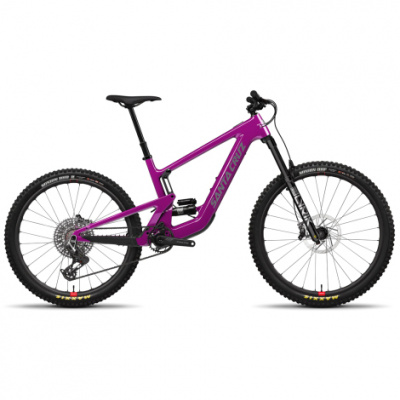
Santa Cruz Heckler
Ride trails like a proper mountain bike, with just enough electric help to extend your fun.
- Fazua Ride 60 motor: quiet, balanced, natural feel
- VPP suspension: plush control, pedals efficiently
- MX wheels: 29" front rollover, 27.5" rear agility
- Lightweight carbon frame: nimble, playful handling
- 430 Wh battery: solid range for trail tours
- Flip chip: fine-tune geometry and leverage
Santa Cruz Heckler Deals
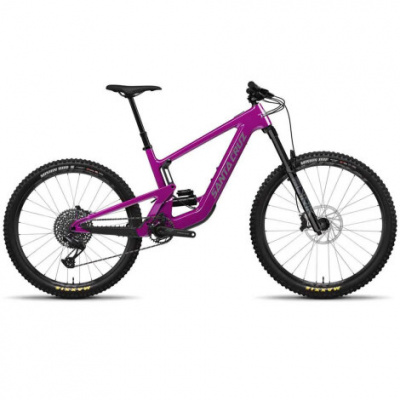

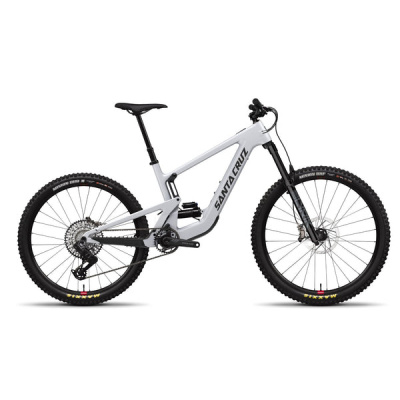
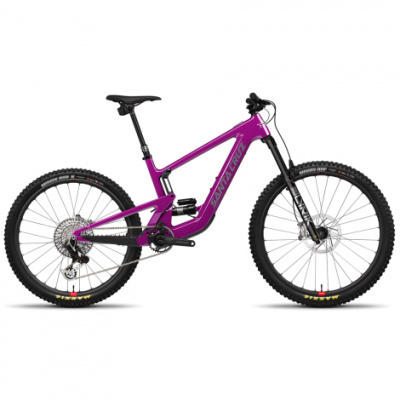
Prices and availability can change quickly. Delivery charges are not always included in listed prices.
Final price, stock status and delivery terms are set by retailer. We may receive a commission on purchases made.
Bikesy's Verdict
The Heckler is what happens when a brand that knows how to build trail bikes decides to add a motor without compromising the ride. It's light, nimble, and playful, with handling that rewards an active riding style and suspension that soaks up rough terrain without feeling wallowy or vague. The Fazua motor is quiet, smooth, and delivers power in a way that feels natural - there's no lurching surge, just a gentle amplification of your effort. It's not the most powerful e-bike on the market, but it's one of the most engaging.
If you want to cover more ground, ride longer loops, or tackle steeper terrain without arriving home wrecked - but you still want the bike to feel like a bike - the Heckler makes a compelling case. It's a trail bike with a motor, not a moped with pedals, and that distinction matters. Worth the price if you value ride quality, handling, and that intangible sense of connection to the trail.
Pros
- Natural, intuitive ride feel that closely mimics a traditional trail bike
- Exceptional handling and agility; playful, responsive, and confidence-inspiring on descents
- Plush, controlled VPP suspension that pedals efficiently and soaks up rough terrain
- Lightweight carbon frame (19 - 20 kg) makes it nimble and easy to manoeuvre
- Quiet, smooth Fazua Ride 60 motor with balanced power delivery
- Mixed-wheel setup balances rollover confidence and rear-end agility
Cons
- Fazua motor's 60 Nm feels modest on very steep, sustained climbs if you're used to full-power systems
- 430 Wh battery offers solid range for most rides, but shorter than full-power e-bikes if you're tackling all-day epics
- High price point when compared to traditional trail bikes or entry-level e-bikes
About the Santa Cruz Heckler
The Heckler has always been Santa Cruz's answer to the question nobody quite asked: what if an e-bike felt like a real bike? Not a moped with knobbly tyres, not a battery-laden beast that climbs like a tractor and corners like one too, but a trail bike that happens to have a motor tucked inside. The latest iteration doubles down on that philosophy. Where the original Heckler leaned on Shimano's full-power EP8 motor and a hefty 720 Wh battery, this generation strips back to Fazua's Ride 60 system - a 60 Nm mid-power unit paired with a 430 Wh pack - and sheds kilos in the process. You're looking at a bike that weighs around 19 to 20 kg, light enough to flick through tight singletrack, heavy enough to remind you there's still a motor and battery aboard.
It's a sneaky thing, this Heckler. The carbon frame hides the battery low and central, the motor whispers rather than whines, and the mixed-wheel setup - 29-inch front, 27.5-inch rear - gives you rollover confidence up front and playful snap out back. VPP suspension, mounted low on the linkage, delivers that familiar Santa Cruz blend of pedalling efficiency and plush, controlled descending. This isn't a bike that begs you to mash the throttle and let the watts do the work; it rewards an active riding style, asking you to lean into corners, pop off lips, and generally ride like you would on any other trail bike. The motor's there to flatten the climbs and extend your range, not to redefine what riding feels like.
Who's it for? Trail riders who want to cover more ground without arriving at the top gasping, all-mountain enthusiasts chasing longer loops, and - perhaps most tellingly - e-bike sceptics who've dismissed the category as cheating. The Heckler makes a compelling case that assistance and engagement aren't mutually exclusive.
Santa Cruz Heckler geometry
Reach sits in the mid-430s for a small, climbing through the 450s, 470s, and 490s as you step up through medium, large, and extra-large, topping out around 520 mm for the double-XL. That's progressive without being extreme, giving you room to move your weight back on descents while keeping the cockpit compact enough to feel connected on tighter trails. The head angle hovers around 64.5 degrees, slack enough to inspire confidence when the trail pitches down but not so laid-back that you're wrestling the front end through switchbacks. Seat angle is steep - close to 77 degrees - which plants you over the bottom bracket and keeps your weight forward when the gradient kicks up. You'll feel centred rather than perched, and that makes a difference when you're grinding through technical climbs or threading roots at speed.
Chainstays are short for an e-bike, sitting in the mid-440s to low-460s depending on size and flip-chip setting. That brevity translates to a bike that pivots around its centre, rewarding quick weight shifts and encouraging you to play with line choice. The wheelbase stretches out enough to keep things stable at speed - you won't feel twitchy on fast, open descents - but it's not so long that you're planning your turns three corners in advance. Bottom bracket drop is moderate, giving you clearance over trail furniture without leaving you feeling like you're riding a stilted giraffe. The flip chip lets you tweak head angle and BB height by half a degree or so, nudging the bike's character toward either composed stability or snappy agility depending on your local trails and riding style.
On the bike, this geometry translates to a posture that's upright enough for all-day comfort but forward enough to weight the front wheel when you need grip. You'll feel planted on rough descents, nimble through tight sections, and surprisingly natural when you're out of the saddle grinding up a loose climb. It's a geometry that doesn't shout about any one dimension - it just works.
Component choices & upgrades
The stock builds are well-sorted. You'll find Fox suspension front and rear - typically a 36 Float up front with 160 mm of travel and a Float X shock out back - paired with SRAM's GX Eagle AXS wireless shifting. Brakes range from SRAM Code Silver Stealth on more accessible builds to Maven Bronze on pricier variants, with 200 mm rotors all round. Wheels are often Reserve 30|HD alloy hoops or WTB ST i30 rims, both wide enough to support trail tyres in the 2.5-inch range. Schwalbe Alberts are a common tyre choice, offering a good balance of grip and rolling speed, though some builds ship with Maxxis rubber. Cockpit is typically an 800 mm Santa Cruz carbon bar or a OneUp alloy option, paired with a short stem - 42 mm Burgtec or 40 mm e.thirteen - and a dropper post from SDG, OneUp, or RockShox depending on spec level.
It's a package that works straight out of the box for most trail riders. The suspension is plush and controlled, the drivetrain shifts cleanly, and the brakes have enough power to haul you down steep, loose descents without drama. If you're riding within the bike's intended envelope - flowing trail centres, all-mountain loops, the occasional enduro stage - you won't feel shortchanged.
That said, if your local trails are particularly steep, loose, or littered with sharp rocks, a few targeted upgrades can sharpen the Heckler's edge. Swapping the Schwalbe Alberts for a burlier front tyre - something like a Maxxis Assegai or a Michelin Wild Enduro - will give you more bite in loose, off-camber corners. If you're riding aggressively and finding the stock brakes fade on long descents, stepping up to SRAM Maven Silvers or Bronzes adds power and modulation. The Fox 36 is a capable fork, but if you're pushing hard and bottoming out regularly, a coil conversion or an upgrade to a 38 might be worth considering, though that adds weight. Similarly, if you're a heavier rider or prefer a more planted, less lively feel, a coil shock in place of the air Float X will give you more support and traction through rough sections, though you'll sacrifice some of the bike's playful pop.
Wheels and tyres are often the first place to look. The stock alloy rims are tough, but if you're chasing grams or want a bit more compliance, a set of carbon hoops will shave weight and smooth out trail chatter. Tyre choice is personal - if you're riding drier, hardpack trails, you might prefer something faster-rolling; if it's wet and rooty, go grippier and softer. The beauty of the Heckler's stock spec is that it's a solid foundation. Upgrades are about tailoring the bike to your specific needs, not fixing flaws.
Where the Santa Cruz Heckler excels
This is a trail bike first, an e-bike second. It excels on flowing singletrack, technical all-mountain loops, and long trail tours where you want to cover more ground without arriving home wrecked. The Fazua motor is quiet, smooth, and delivers power in a way that feels intuitive - there's no lurching surge when you start pedalling, just a gentle amplification of your effort. In Rocket mode, it'll flatten moderate climbs and take the sting out of steep pitches, though it won't haul you up near-vertical fire roads with the same brute force as a full-power Bosch or Shimano system. That's a trade-off, not a flaw. The Heckler rewards riders who want to pedal, not passengers who want to be carried.
Descending is where the bike really shines. The VPP suspension is plush and controlled, soaking up square-edged hits and staying composed through rough, high-speed sections. The mixed-wheel setup gives you the best of both worlds: the 29-inch front wheel rolls over obstacles and holds a line through loose corners, while the 27.5-inch rear keeps the bike nimble and encourages you to pop off trail features. It's a bike that invites you to ride actively - lean into berms, pump transitions, drift the rear wheel through flat corners. The lightweight frame and short chainstays make it feel responsive and playful, more like a 140 mm trail bike than a 150 mm e-bike.
It's also a strong choice for riders who want to extend their range without committing to a full-power e-bike. The 430 Wh battery won't last as long as a 720 Wh pack, but it's enough for most trail rides - expect somewhere in the region of two to three hours of mixed terrain riding, depending on how much you lean on the motor and how steep your local trails are. If you're the sort of rider who prefers shorter, punchier rides or who's happy to pedal without assistance on flatter sections, the Heckler's range is more than adequate.
Where it's less ideal: if you're tackling extremely steep, sustained climbs - think Alpine fire roads or long, grinding ascents - the Fazua motor's 60 Nm of torque will feel modest compared to the 85 Nm you'd get from a Bosch CX or Shimano EP8. It'll get you up, but you'll be working harder. Similarly, if you're a heavier rider or you're carrying a pack full of camping gear, a full-power e-bike with a bigger battery will be a more comfortable choice. And if you're chasing outright downhill performance - big hits, high speeds, aggressive enduro stages - you might want something with more travel and a burlier build kit. The Heckler is versatile, but it's not trying to be all things to all riders. It's a trail bike with a motor, not a mini-moto with pedals.
Santa Cruz Heckler FAQs
What is the range of the Santa Cruz Heckler?
Expect around two to three hours of mixed-terrain riding from the 430 Wh battery, depending on terrain, rider weight, and how much you lean on the motor. Rocket mode drains the battery faster; Breeze mode stretches it further. If you're riding flatter trails or happy to pedal unassisted on easier sections, you'll get more.
How does the Fazua Ride 60 motor compare to full-power eMTB motors?
It's quieter, lighter, and more natural-feeling, but it delivers less outright torque - 60 Nm versus 85 Nm for a Bosch CX or Shimano EP8. On moderate climbs it feels intuitive and balanced; on very steep, sustained ascents you'll notice the difference. It's a mid-power system designed for riders who want assistance, not domination.
Is the Santa Cruz Heckler good for climbing?
Yes, especially on technical, varied climbs where agility and traction matter more than raw power. The steep seat angle keeps your weight forward, the VPP suspension pedals efficiently, and the motor takes the sting out of steep pitches. On extremely steep, grinding fire roads, a full-power e-bike will feel stronger, but for most trail climbing the Heckler is more than capable.
What kind of riding is the Santa Cruz Heckler best suited for?
Flowing singletrack, technical all-mountain loops, long trail tours, and playful, engaging trail riding. It's ideal for riders who want to cover more ground, ride longer loops, or tackle steeper terrain without arriving home exhausted, but who still want the bike to feel like a bike. It's not built for extreme enduro or Alpine epics, but it's versatile enough for most trail riding.
How does the Santa Cruz Heckler handle on descents?
Exceptionally well. The VPP suspension is plush and controlled, the mixed-wheel setup balances stability and agility, and the lightweight frame encourages an active riding style. It feels nimble through tight sections, composed at speed, and playful when you want to pop off trail features. It's a bike that rewards good technique and invites you to ride with confidence.
What are the pros and cons of the Santa Cruz Heckler?
Pros: natural ride feel, exceptional handling, plush VPP suspension, lightweight for an e-bike, quiet motor, playful and engaging. Cons: Fazua motor lacks the raw power of full-power systems on very steep climbs, some reports of motor reliability concerns, high price point, and stock components may not suit the most aggressive riders.
What is the weight of the Santa Cruz Heckler?
Around 19 to 20 kg for the complete bike, depending on build spec. That's light for an e-bike, contributing to its nimble, responsive handling and making it easier to manoeuvre through tight trails or lift over obstacles.
Can you fit a water bottle on the Santa Cruz Heckler?
Yes, there's one water bottle mount on the frame. It's not as generous as a traditional trail bike - the motor and battery take up space - but you can carry a bottle, and most riders supplement with a hip pack or frame bag for longer rides.
Key Features & Benefits
- Fazua Ride 60 motor (60 Nm, 430 Wh battery): Quiet, balanced assistance that amplifies your effort without overwhelming the ride; light weight extends range and keeps the bike feeling natural
- VPP suspension with lower-link mount: Plush, controlled descending and efficient pedalling; soaks up square-edged hits while staying composed at speed
- Mixed-wheel (MX) setup: 29" front, 27.5" rear: Front wheel rolls over obstacles and holds lines; rear wheel keeps the bike nimble, playful, and easy to flick through tight sections
- Lightweight carbon frame (~19 - 20 kg complete): Nimble handling and responsive feel; easier to manoeuvre on technical trails and less fatiguing on long rides
- Flip chip for geometry adjustment: Fine-tune head angle and BB height to match your local trails and riding style, balancing stability with agility
Santa Cruz Heckler 2024 and 2023 differences
The 2024 and 2023 Heckler models used Shimano's EP801 (or EP8 in earlier builds) motor paired with a much larger 720 Wh battery, delivering more outright power and longer range than the current Fazua-equipped bike. Travel remained at 150 mm rear and 160 mm front, and the geometry was broadly similar, though the heavier motor and battery pushed the complete bike weight higher - typically into the low-to-mid 20 kg range. Builds included the Heckler R, S, GX AXS, X0 AXS RSV, and XX AXS RSV, with component specs ranging from solid trail kit to high-end carbon and wireless drivetrains.
The 2022 model year brought significant updates: a mullet wheel option (29-inch front, 27.5-inch rear), the larger 720 Wh battery, and a flip-chip for geometry adjustment. Compatibility with coil shocks was also added, giving riders more suspension tuning options. The 2020 Heckler - Santa Cruz's first e-bike - featured a Shimano motor (likely the EP800) and a smaller 504 Wh battery, with 150 mm of travel and a more conservative geometry. The shift to the Fazua Ride 60 system for the current generation represents a clear pivot toward lighter weight, more natural ride feel, and a focus on trail agility over outright power and range.
Alternatives to Consider
Within Santa Cruz's own stable, the Bronson shares a similar platform and travel but strips away the motor - if you're curious whether you actually need the assist, it's the natural comparison. For more power and battery capacity, the Vala steps up to a full-power Bosch motor with 150 mm of travel, though it sacrifices some of the Heckler's playful agility. If you want even more descending capability, the Nomad offers longer travel and a burlier build, but it's a different beast entirely.
Cross-brand, the Specialized Levo SL is the Heckler's closest rival, sharing the same lightweight, mid-power philosophy and a similar focus on natural ride feel. The Trek Fuel EXe is another strong contender, praised for its balanced geometry and intuitive motor delivery. The Rocky Mountain Instinct Powerplay SL leans on a Dyname motor and aims for an even lighter package, though it's less common in UK showrooms. For riders who prefer Bosch's refinement, the Merida eOne-Sixty SL pairs the compact SX motor with capable trail geometry and a competitive spec. Each offers a slightly different take on the lightweight e-bike formula - some prioritise outright weight savings, others lean toward more power or longer travel - but all share the Heckler's core belief that an e-bike should still feel like a bike.
Reviews
Handling is the headline. Longer reach and a calmer front centre bring poise on fast, rough descents, while short chainstays and the 27.5-inch rear wheel keep the bike snappy through tight, technical sections. We rate the way it pivots around its centre, rewarding quick weight shifts and encouraging you to play with line choice. When you lean into a berm or pop off a lip, the Heckler responds with the sort of immediacy you'd expect from a traditional trail bike, not an e-bike carrying a motor and battery.
VPP suspension delivers that familiar Santa Cruz blend: plush over square-edged hits, controlled through rough, high-speed chatter, and efficient when you're pedalling hard. The lower-link mount improves sensitivity without sacrificing support, so the bike stays composed whether you're grinding up a loose climb or charging down a rock garden. Fazua's Ride 60 motor is quiet - genuinely quiet - and its power delivery feels intuitive. Rocket mode flattens moderate climbs and takes the sting out of steep pitches; Breeze mode stretches the battery and keeps things natural. On extremely steep, sustained fire roads, the 60 Nm of torque feels modest compared to full-power systems, but for most trail riding it's more than adequate.
Because the bike weighs around 19 to 20 kg, it feels nimble and responsive in a way that heavier e-bikes simply don't. You can flick it through switchbacks, manual over roots, and generally ride with the sort of active, engaged style that makes trail riding fun. The mixed-wheel setup works brilliantly: the 29-inch front wheel rolls over obstacles and holds a line through loose corners, while the 27.5-inch rear keeps the bike playful and encourages you to drift, pump, and pop. It's a bike that invites you to ride, not just sit and let the motor do the work.
Full Specification
| Spec | Value |
|---|---|
| Frame Material | Carbon C / Carbon CC |
| Frame Design | Full suspension, lower-link mounted VPP® |
| Frame Features | Internal cable routing, one water bottle mount |
| Rear Axle | 12x148mm Boost |
| Suspension Platform | VPP™ (Virtual Pivot Point) |
| Fork | Fox 36 Float Performance Elite / Fox 36 Performance GRIP |
| Fork Travel | 160mm |
| Rear Shock | Fox Float X Performance Elite / Fox Float X Performance / RockShox Super Deluxe Select+ |
| Rear Travel | 210x55 |
| Drivetrain | 1x12 speed |
| Shifters | SRAM AXS Pod Bridge / SRAM GX Eagle AXS |
| Rear Derailleur | SRAM GX Eagle AXS T-Type, 12-speed |
| Crankset | Race Face Aeffect R / Praxis eTor AL / e*thirteen Helix eSpec |
| Crank Length | 165mm |
| Cassette | SRAM GX Eagle T-Type 10-52t / SRAM XG1275 Eagle 10-50t |
| Chain | SRAM GX Eagle T-Type Flattop, 12-speed / SRAM GX Eagle, 12-speed |
| Brakes | Hydraulic disc |
| Brake Calipers | SRAM Maven Bronze Stealth / SRAM DB8 Stealth / SRAM Code Silver Stealth |
| Rotors | 200mm (SRAM HS2 / Avid Centerline) |
| Rims | WTB ST i30 TCS 2.0 29" / Reserve 30|HD AL / Raceface ARC 30 HD |
| Hubs (Front) | SRAM MTH 716, 15x110, 6-Bolt, 32h / E13 SL, 15x110, 6-Bolt, 32h |
| Hubs (Rear) | SRAM MTH 746, 12x148, HG, 6-Bolt, 32h / E13 SL E-Spec, 12x148, XD, 6-Bolt, 32h |
| Tyres (Front) | Schwalbe Albert 29x2.5 Trail Radial Ultra Soft |
| Tyres (Rear) | Schwalbe Albert 27.5x2.5 Trail Radial Soft |
| Handlebar | Santa Cruz e35 Carbon Bar 800mm / OneUp Aluminum Bar 35mm Rise 800mm |
| Stem | Burgtec Enduro MK3 42mm / e.13 Base 40mm / RaceFace Chester 40mm |
| Headset | Cane Creek 50 IS / FSA IS-2/47/42 ACB / Cane Creek 10 IS / Chris King DropSet 3 |
| Seatpost | SDG Tellis Dropper 31.6 / OneUp V2 Dropper Post 31.6 / RockShox Reverb Stealth 1x Lever MatchMaker |
| Saddle | SDG Bel-Air V3 Max Steel / SDG Bel-Air V3 Max Lux-Alloy / WTB Volt / WTB Silverado Team / WTB Silverado Medium Ti |
| Motor | Fazua Ride 60, 60 Nm |
| Battery | Fazua 430 Wh integrated |
| Wheel Configuration | Mixed Wheel (MX): 29" front, 27.5" rear |
| Weight (Approx) | 19 - 20 kg |