
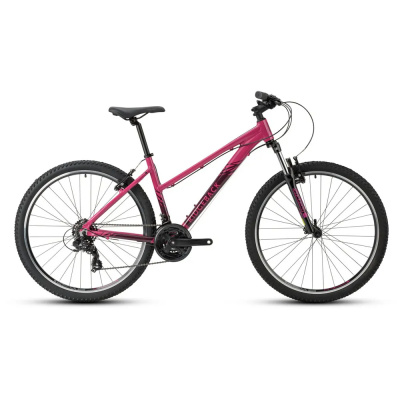
Ridgeback Terrain 2
Get off-road confidently with forgiving suspension, wide gearing, and durable build that won't punish your wallet or your learning curve.
- 100mm SR Suntour fork smooths trail chatter
- 21-speed Shimano drivetrain for varied terrain
- 27.5 x 2.1" knobbly tyres grip loose surfaces
- Double-butted alloy frame balances strength and weight
- External cable routing simplifies home maintenance
- Available in standard and open frame options
Ridgeback Terrain 2 Deals

Prices and availability can change quickly. Delivery charges are not always included in listed prices.
Final price, stock status and delivery terms are set by retailer. We may receive a commission on purchases made.
Bikesy's Verdict
The Ridgeback Terrain 2 is an honest, capable entry ticket to off-road riding that prioritises comfort and confidence over flashy specs. You're getting a durable alloy frame, enough suspension to smooth trail bumps, and a wide-ranging drivetrain that'll handle varied terrain without leaving you stranded halfway up a climb. It's not trying to be a race bike or a technical trail weapon - it's built to get you hooked on exploring bridleways, fire roads, and gentle singletrack without demanding specialist knowledge or deep pockets.
The V-brakes and basic fork are the trade-offs for the accessible price, and they're reasonable ones if you're riding moderate terrain in mostly dry conditions. When your skills progress and you start chasing steeper, rougher trails, you'll outgrow the Terrain 2's capabilities - but by then you'll know exactly what you want from your next bike. For now, this is a dependable, low-maintenance platform that'll let you focus on learning to read trails, corner smoothly, and build the fitness that makes everything else easier. It's the bike that gets you started, and that's worth more than any spec sheet.
Pros
- Affordable entry point for off-road riding with suspension and wide gearing
- Comfortable, stable geometry builds confidence on loose and uneven terrain
- External cable routing and simple components make home maintenance straightforward
- Double-butted alloy frame balances durability with reasonable weight
- Available in open frame option for easier mounting
Cons
- V-brakes lack the wet-weather bite and modulation of hydraulic discs when trails turn greasy
- Basic SR Suntour fork feels harsh on rougher, faster descents compared to air-sprung alternatives
- 19kg weight makes climbs harder work if you're chasing fitter riders or tackling long ascents
About the Ridgeback Terrain 2
The Ridgeback Terrain 2 sits squarely in the entry-level hardtail space, built for riders taking their first proper steps off tarmac. It's not trying to be a race weapon or a technical trail shredder - instead, it offers a comfortable, confidence-building platform for exploring fire roads, bridleways, and gentle singletrack without demanding a second mortgage. The double-butted alloy frame keeps weight reasonable whilst the 100mm SR Suntour fork takes the sting out of roots and rocks, letting you focus on line choice rather than bracing for impact.
You'll find a 21-speed Shimano drivetrain that offers enough range to spin up modest climbs and cruise flat sections without spinning out, paired with Alhonga V-brakes that deliver dependable stopping power in the dry. The 27.5-inch wheels strike a balance between nimbleness and roll-over capability, wrapped in knobbly Deli rubber that grips loose surfaces well enough to keep you upright when the trail turns dusty or damp. It's a bike that prioritises accessibility and durability over cutting-edge tech, and that's precisely the point.
Ridgeback has kept things straightforward here - external cable routing means you can fettle the gears in your shed without specialist tools, and the geometry leans towards stability rather than razor-sharp handling. If you're after a bike that'll let you explore the countryside at weekends, handle the occasional towpath commute, and generally get you hooked on off-road riding without breaking the bank, the Terrain 2 makes a sensible case for itself. It's honest, unpretentious, and built to last longer than your initial enthusiasm for cleaning mud off the frame.
Ridgeback Terrain 2 geometry
The Terrain 2's geometry is drawn with beginner confidence in mind. A 67-degree head angle keeps the front end calm and predictable rather than twitchy, so when you're navigating loose gravel or picking through rutted tracks you're not fighting the bike for control. The reach figures grow steadily across the size range - from 393mm on the XS to 464mm on the XL - giving you enough room to shift your weight back on descents without feeling cramped, though it's not stretched out enough to feel intimidating if you're new to mountain biking.
Stack heights rise in step with reach, maintaining a relatively upright riding position that takes pressure off your wrists and lets you scan the trail ahead without craning your neck. The 73-degree seat angle plants you over the pedals efficiently enough for steady climbs, though it's not steep enough to feel aggressive. Chainstays and wheelbase aren't published in full detail, but the overall package suggests a bike that favours stability over playfulness - you'll track straight through ruts and hold your line on loose surfaces, but quick direction changes and tight switchbacks will require a bit more effort than on a shorter, snappier hardtail.
Bottom bracket drop is modest, keeping the centre of gravity low enough for planted cornering without risking pedal strikes on technical terrain (though you're unlikely to be tackling gnarly rock gardens on this bike anyway). The geometry works in concert with the 100mm fork to deliver a ride that's reassuring rather than exciting, which is exactly what you want when you're still learning to read trail surfaces and judge braking points. It's a setup that encourages you to ride more, not one that punishes mistakes.
Component choices & upgrades
The stock build on the Terrain 2 is well-judged for its intended audience. The Shimano 3x7 drivetrain - comprising ST-EF41 shifters, a Prowheel triple crankset, and a 12-32T cassette - delivers 21 gears that cover most situations a beginner will encounter. It's not the slickest shifting you'll experience, but it's reliable and easy to maintain. The Alhonga V-brakes offer adequate stopping power in dry conditions and are simple to adjust, though they lack the modulation and wet-weather bite of hydraulic discs. For your first season or two of trail riding, this setup will serve you well.
When your skills progress and you start tackling steeper, rougher terrain, you might find the SR Suntour XCE fork's coil spring and basic damping a bit overwhelmed. A fork upgrade to something with an air spring and adjustable rebound would sharpen the bike's trail manners considerably, though you'd be spending a fair chunk of the bike's original value. Similarly, if you find yourself riding in wet conditions regularly, swapping to mechanical disc brakes (the frame and fork would need compatible mounts, so check compatibility first) would boost confidence on descents. Tyres are an easier win - the stock Deli rubber is functional, but a set of Schwalbe Rocket Rons or Maxxis Ikons would roll faster and grip better without breaking the bank.
That said, resist the urge to throw money at upgrades too early. The Terrain 2's components are matched to the frame's capabilities and the bike's intended use. If you're outgrowing the bike's performance envelope, you're probably ready for a step-up model rather than sinking upgrade costs into an entry-level platform. Spend your money on riding skills coaching or trail centre passes instead - you'll get more benefit from better technique than from marginal component gains.
Where the Ridgeback Terrain 2 excels
The Terrain 2 is outstanding at one thing: getting new riders off-road without intimidation or financial stress. It's the bike for Saturday morning forest loops, canal towpath explorations, and gentle singletrack sessions where you're still learning to weight the front wheel over roots and modulate braking into corners. The suspension fork and knobbly tyres soak up trail chatter well enough to keep you comfortable over a couple of hours, and the wide gear range means you won't be walking up every modest climb. It's also a solid choice for light commuting duties if your route mixes tarmac with gravel tracks - the upright position and durable frame handle daily use without complaint.
It does gravel byways and fire roads particularly well, where the stable geometry and decent tyre volume let you maintain a steady pace without worrying about losing traction in loose corners. The external cable routing means you can keep it running smoothly with basic tools and a YouTube tutorial, which matters when you're still building mechanical confidence. The open frame option also makes it accessible for riders who prefer easier mounting and dismounting, broadening its appeal beyond the standard diamond frame crowd.
Where it's not ideal: technical singletrack with steep descents, rock gardens, or tight switchbacks. The V-brakes lack the power and modulation for sustained steep descents, especially in the wet, and the basic fork will feel harsh and uncontrolled on rough, fast terrain. The bike's weight - nudging 19kg - also makes it a slog if you're chasing Strava times or tackling long, steep climbs. It's not a bike for racing, and it's not a bike for pushing your limits on gnarly trails. But if you're after a dependable, comfortable introduction to off-road riding that won't punish your wallet or your confidence, the Terrain 2 hits the mark squarely.
Ridgeback Terrain 2 FAQs
What is the best entry-level mountain bike for beginners?
The best entry-level mountain bike depends on your budget and intended terrain, but the Ridgeback Terrain 2 offers a solid balance of comfort, durability, and affordability for new riders. Look for bikes with front suspension, a wide gear range, and reliable brakes - hydraulic discs are preferable, but V-brakes work fine for gentler trails. Prioritise fit and comfort over flashy components, and consider models from established brands with good dealer support.
Is a hardtail mountain bike good for trails?
Yes, hardtails are excellent for trails, especially for beginners and on less technical terrain. They're lighter, simpler to maintain, and more efficient on climbs than full-suspension bikes. A hardtail like the Terrain 2 handles fire roads, gravel byways, and moderate singletrack confidently, though it won't offer the same comfort or control as a full-suspension bike on rough, technical descents. For learning skills and building fitness, a hardtail is often the smarter choice.
How much travel should a beginner mountain bike fork have?
For a beginner hardtail, 80 - 100mm of fork travel is ideal. The Terrain 2's 100mm SR Suntour fork provides enough cushioning to smooth trail bumps and build confidence without adding excessive weight or complexity. More travel (120mm+) is better suited to aggressive trail riding or enduro use, which most beginners won't need initially. Focus on fork quality and adjustability over raw travel numbers - a well-damped 100mm fork outperforms a flexy 120mm coil spring every time.
Are V-brakes good enough for mountain biking?
V-brakes are adequate for entry-level mountain biking on moderate terrain and in dry conditions, offering reliable stopping power and simple maintenance. However, they lack the modulation, power, and wet-weather performance of disc brakes, which can be limiting on steep descents or in muddy conditions. If you're riding gentle trails and fire roads, V-brakes like those on the Terrain 2 will serve you fine. As your riding progresses, you'll likely want to upgrade to a bike with hydraulic discs.
What is the difference between Ridgeback Terrain 1 and Terrain 2?
The Terrain 1 typically features a rigid fork rather than the Terrain 2's 100mm suspension fork, making it lighter and more affordable but less capable on rough trails. The Terrain 2 offers better comfort and control on uneven surfaces thanks to its front suspension, making it the better choice if you plan to ride off-road regularly. Both share similar frame construction and drivetrain components, so the fork is the primary differentiator.
How to maintain a hardtail mountain bike?
Regular maintenance keeps a hardtail running smoothly: clean and lube the chain after muddy rides, check tyre pressures before each outing, and inspect brake pads and cables for wear monthly. The Terrain 2's external cable routing makes gear adjustments straightforward - learn to index your gears and true minor wheel wobbles at home. Service the fork annually (or more often if you ride frequently), and keep bolts torqued to spec. A well-maintained hardtail will outlast neglected full-suspension bikes costing twice as much.
What tyre pressure should I use for 27.5 x 2.1" tyres?
For 27.5 x 2.1" tyres on a bike like the Terrain 2, start around 30 - 35 PSI and adjust based on rider weight, terrain, and feel. Lighter riders can run lower pressures for better grip and comfort, while heavier riders need higher pressures to avoid pinch flats. Lower pressures (25 - 30 PSI) suit loose, technical trails; higher pressures (35 - 40 PSI) work better for hard-packed surfaces and reduce rolling resistance. Experiment to find the sweet spot where you're not bouncing off trail features but aren't risking rim damage on rocks.
Can I fit wider tyres on a Ridgeback Terrain 2?
The Terrain 2 comes with 27.5 x 2.1" tyres, and you can likely fit slightly wider rubber - up to 2.25" or possibly 2.35" - depending on frame and fork clearance, though exact maximum clearance isn't published. Check clearance at the chainstays, seatstays, and fork crown before buying wider tyres, and remember that mud clearance matters more than static clearance if you ride in wet conditions. Wider tyres add grip and comfort but also weight and rolling resistance, so consider your typical terrain before upgrading.
Key Features & Benefits
- 100mm SR Suntour XCE fork with lockout: Smooths trail chatter and roots on moderate terrain whilst letting you firm up for tarmac or smooth fire roads, keeping you comfortable and in control.
- Shimano 21-speed drivetrain with 42/34/24T triple crankset: Wide gear range tackles varied terrain from steep climbs to flat sections without leaving you spinning out or grinding to a halt, ideal for mixed routes.
- 27.5 x 2.1" knobbly Deli tyres: Grip loose gravel, mud, and dirt confidently whilst offering enough volume to cushion bumps and maintain traction through corners.
- Double-butted ALX8 aluminium frame: Delivers a durable, stiff platform that'll handle years of trail riding and daily use without excessive weight penalty for an entry-level bike.
- External cable routing: Makes gear adjustments, cable replacements, and general maintenance simple enough to tackle at home with basic tools, saving time and money.
Ridgeback Terrain 2 2024, 2022 & 2021 differences
The Terrain 2 has remained remarkably consistent across recent model years, with the 2024 and 2025 versions retaining the same core specification: SR Suntour SF19 XCE28 DS fork with 100mm travel, Shimano 3x7 drivetrain, Alhonga V-brakes, and Deli 27.5 x 2.1" tyres. The double-butted ALX8 aluminium frame construction has carried over unchanged, as has the geometry across the size range.
The 2022 model featured an identical specification to the 2024/2025 bikes, maintaining the SR Suntour suspension fork, Shimano drivetrain, and V-brake setup. The 2021 version likewise shared the same fundamental build, confirming that Ridgeback has kept the Terrain 2's formula stable for several years. This consistency means used examples from 2021 onwards offer essentially the same ride experience as the current model, making them sensible secondhand options if you find one in good condition. The lack of year-on-year changes also suggests Ridgeback is confident in the spec and hasn't felt pressure to chase component upgrades in this price bracket.
Alternatives to Consider
Within Ridgeback's own range, the Terrain 1 strips out the suspension fork for a rigid setup, saving weight and cost if you're sticking to smoother gravel and towpaths. The Terrain 3 steps up with slightly better components, though the gains are incremental rather than transformative. If you're committed to off-road riding and can stretch the budget, look beyond the Ridgeback stable.
The Vitus Nucleus VR and Vitus Nucleus VRS offer hydraulic disc brakes and often better fork specs at similar price points, making them sharper tools for technical trails. The Giant Talon 3 and Trek Marlin 5 are direct peers with comparable builds, though the Trek often edges ahead on frame refinement and dealer support. For a bit more money, the Specialized Rockhopper delivers noticeably better suspension and braking, whilst the Marin Bolinas Ridge 1 offers a more trail-focused geometry if you're planning to progress quickly. Each of these alternatives trades off slightly different strengths - fork quality, brake type, frame stiffness - so match your choice to the terrain you'll ride most and the skills you're aiming to develop.
Reviews
Comfortable ride quality stands out immediately, with the 100mm fork and knobbly tyres absorbing trail imperfections well enough to keep your hands and backside happy over a couple of hours. Stable geometry inspires confidence on loose gravel and gentle singletrack, tracking straight through ruts without demanding constant corrections. The 21-speed Shimano drivetrain offers sufficient range for most beginner terrain, shifting reliably if not particularly crisply.
V-brakes deliver dependable stopping power in dry conditions, though modulation suffers compared to hydraulic discs and wet descents demand earlier, firmer lever pulls. Weight is noticeable on longer climbs - you'll feel every one of those 19 kilograms when the gradient kicks up. When trails turn rougher or faster, the basic SR Suntour fork starts to feel overwhelmed, lacking the damping control to keep the front wheel planted through chatter.
Because it's built for accessibility rather than performance, the Terrain 2 shines brightest on fire roads, bridleways, and moderate singletrack where comfort and stability matter more than outright speed. External cable routing makes home maintenance genuinely straightforward, which matters when you're still learning to index gears. We appreciate the open frame option for riders who value easier mounting, and the overall durability suggests this bike will outlast your beginner phase without complaint. It's honest, unpretentious kit that does exactly what it promises - gets you off-road without drama or expense.
Full Specification
| Frame Material | ALX8 6066/6061-T6 Double-Butted Aluminium |
| Fork | SR Suntour SF19 XCE28 DS 27.5, 100mm travel, coil spring with lockout |
| Shifters | Shimano ST-EF41 |
| Rear Derailleur | Shimano RD-TY300 |
| Front Derailleur | Shimano FD-TZ500 DM6 |
| Crankset | Prowheel TA-CQ68, 42/34/24T, 170mm |
| Cassette | Shimano CS-HG200-7, 12-32T |
| Chain | KMC HV-500 |
| Brakes | Alhonga V-Brake calipers with Shimano ST-EF41 levers |
| Rims | JHT HLQC-02AB |
| Hubs | Joytech JY-751DSE (front) / F362TSE (rear), quick-release |
| Spokes | Steel 14g |
| Tyres | Deli 27.5 × 2.1" knobbly off-road |
| Handlebar | Ridgeback Alloy Riser Bar, 720mm width, 18mm rise |
| Stem | Ridgeback Alloy, 75mm |
| Headset | Feimin FP-H863 |
| Seatpost | Alloy, 27.2mm diameter, 400mm length (350mm on XS/S) |
| Saddle | Ridgeback |
| Pedals | NW-303 |
| Bottom Bracket | 68mm BSA (English Threaded) |
| Gearing | 21-speed |
| Approximate Weight | 19.1 - 19.3 kg |