
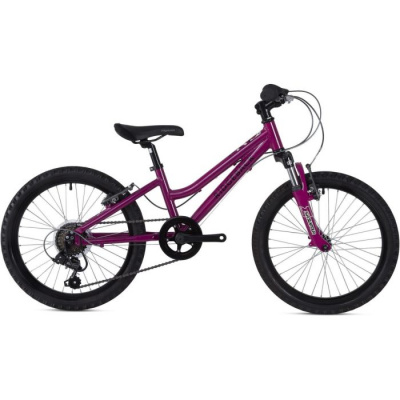
Ridgeback Harmony 20
Light, adjustable, and confidence-building - the perfect first proper bike for young riders ready to explore beyond the park.
- Lightweight aluminium frame builds confidence fast
- Adjustable bars and post grow with your child
- Small-hand brake levers for proper control
- 6-speed Shimano drivetrain keeps hills manageable
- Weighs just 11.12 kg for easy handling
- Multi-terrain tyres handle park and trail alike
Ridgeback Harmony 20 Deals

Prices and availability can change quickly. Delivery charges are not always included in listed prices.
Final price, stock status and delivery terms are set by retailer. We may receive a commission on purchases made.
Bikesy's Verdict
The Ridgeback Harmony 20 is a properly thought-out kids' bike that prioritises the things that actually matter: light weight, adjustable fit, and components that work reliably without needing constant fettling. At 11.12 kg it's light enough for a six-year-old to wrestle into the shed, and the adjustable stem and seatpost mean it'll still fit them three years later. The upright geometry builds confidence fast, the small-hand brake levers give them proper control, and the six-speed Shimano drivetrain is simple enough to master in an afternoon.
This isn't a bike for racing or tackling black-grade trails, but that's not the point. The Harmony 20 excels at making cycling fun, accessible, and sustainable - it'll handle the school run, survive the park, and follow you down a fire road without complaint. It's tough enough to take a beating, practical enough for daily use, and adjustable enough to stretch across multiple birthdays. If you want a bike that'll teach your child to ride properly and keep them smiling for years, the Harmony 20 delivers exactly that.
Pros
- Lightweight 6061 aluminium frame makes handling easy and builds confidence quickly
- Adjustable stem and seatpost extend usability across multiple years and growth spurts
- Small-hand brake levers and intuitive twist shifter suit developing coordination
- Durable alloy wheels and multi-terrain tyres handle park, path, and light trail use
- Upright geometry offers stability and visibility for safer, more confident riding
Cons
- V-brakes offer less stopping power than discs if your child tackles steep or wet trails regularly
- Fork specification varies between model years - some 2025 bikes may have rigid forks rather than suspension
- Basic component spec is perfect for learning but won't satisfy a child already riding technical singletrack
About the Ridgeback Harmony 20
The Harmony 20 is Ridgeback's answer to the question every parent asks: how do you build a bike that's light enough for a seven-year-old to wrestle into the shed, tough enough to survive a summer of kerb-hopping, and adjustable enough to last until they're ready for something bigger? Heat-treated 6061 aluminium keeps the frame stiff where it counts and light where it matters - 11.12 kg all-in means your child can actually pick the thing up when they've dumped it in the hedge. The crossbar design sits them upright, which translates to better sight lines, less wobble, and more time looking where they're going rather than at the front tyre.
This isn't a toy with knobblies bolted on. The Harmony 20 rolls on proper alloy rims laced to sealed hubs, shifts through six Shimano gears via a twist grip that won't baffle small fingers, and stops with V-brakes whose levers are sized for hands that still struggle with crisp packets. Ridgeback's fitted Vee multi-terrain rubber - wide enough to float over gravel, knobbly enough to bite on grass, and supple enough not to rattle fillings loose on tarmac. The result is a bike that'll handle the school run, survive the park, and follow you down a fire road without complaint.
Where the Harmony 20 really earns its keep is in the details that stretch its lifespan. The alloy stem and seatpost adjust through a generous range, so the bike that fits a 120 cm six-year-old in September will still work for a 140 cm nine-year-old three summers later. Ridgeback's specced diamond-file comfort grips and a junior saddle with enough padding to take the sting out of tree roots, and the 540 mm bar offers enough width for stable steering without forcing an awkward reach. It's a bike designed to make cycling feel natural rather than a battle with geometry.
Ridgeback Harmony 20 geometry
Ridgeback hasn't published reach and stack figures for the Harmony 20 - kids' bikes rarely warrant that level of granularity - but the frame's proportions tell the story. The upright position keeps weight centred over the bottom bracket, which means less tippiness when they're learning to balance through corners and more confidence when they're threading between bollards. The 20-inch wheels strike the sweet spot for this age bracket: small enough to accelerate quickly and light enough not to feel like anchors, but large enough to roll over bumps without pitching the rider forward.
The 140 mm crank arms are shorter than you'd find on an adult bike, which suits shorter legs and reduces the risk of pedal strikes when they're wobbling through tight turns. The 60 mm stem and 30 mm bar rise combine to put the grips within easy reach without forcing a hunched posture, so your child can ride for an hour without complaining their back hurts. The 25.4 mm bar clamp is an older standard, but it's robust and keeps costs down - and frankly, a seven-year-old isn't going to notice the difference between that and a modern 31.8 mm setup.
What you will notice is how planted the bike feels at low speeds. The wheelbase is short enough to make tight turns manageable, but not so twitchy that every steering input sends them veering into the verge. When they're coasting down a gentle slope, the geometry keeps the front wheel tracking straight rather than wandering, which builds the kind of confidence that turns hesitant pedallers into proper riders.
Component choices & upgrades
The Harmony 20 arrives with a sensible, durable spec that's already well-matched to its brief. The Shimano six-speed drivetrain - 14-28T freewheel paired with a 34T chainring - offers enough range for gentle climbs without overwhelming a child who's still mastering the concept of shifting. The Revoshift twist grip is intuitive (twist forward to go easier, twist back to go harder) and doesn't require the thumb strength or coordination that a trigger shifter demands. For the vast majority of young riders, this setup will be spot-on for years.
The Promax V-brakes and Tektro small-hand levers are the real highlight. Rim brakes get a bad rap in the adult world, but for a kids' bike they make perfect sense: they're light, simple to adjust, and easy to service. More importantly, the Tektro JL-510TS levers are sized so that small fingers can actually reach them and generate enough leverage to stop confidently. If your child is riding in consistently wet conditions or tackling steeper trails, you might eventually consider a bike with mechanical disc brakes - but for park loops, bridleways, and the daily commute, these V-brakes are more than adequate.
The Vee VRB 185 tyres are a solid all-rounder: 1.95 inches wide with a tread pattern that grips on loose surfaces without dragging on tarmac. If your child graduates to more technical trails, a slightly knobbier tyre might offer extra bite, but that's a tweak for later. The alloy rims and Joytech hubs are built to take a beating - steel spokes and a 36-hole lacing pattern mean this wheelset will survive kerb drops and the occasional collision with a fence post.
Upgrades? Honestly, you're better off riding this bike as-is and saving your money for the next size up. The one exception might be pedals: the stock resin platforms are fine, but if your child's feet are slipping in wet weather, a set of junior flat pedals with better pins will improve grip. Beyond that, focus on fit adjustments - raising the saddle as they grow, tweaking the bar angle - and keeping the drivetrain clean. This isn't a bike that needs carbon bits or exotic bearings; it needs regular chain lube and brake pad checks.
Where the Ridgeback Harmony 20 excels
The Harmony 20 is outstanding at being a first proper bike. It's light enough for a child to control, robust enough to survive their learning curve, and adjustable enough to last through multiple growth spurts. If your weekends involve family rides on canal towpaths, loops around the local park, or gentle off-road trails where the surface is more packed gravel than rock garden, this bike will handle it all with ease. The upright position and stable geometry make it ideal for building confidence - your child will spend more time looking ahead and less time wobbling.
It's also excellent for the daily grind. The school run, trips to the shops, rides to a friend's house - the Harmony 20 is practical, predictable, and tough enough to live outside under a cover without falling apart. The multi-terrain tyres mean it won't get bogged down if they cut across a muddy field, and the six-speed drivetrain offers enough gears to tackle the kind of gentle hills you'll find in most neighbourhoods.
Where it's not ideal: aggressive trail riding. The V-brakes and basic suspension fork (or rigid fork, depending on the year) mean this isn't a bike for steep descents, rooty singletrack, or anything that demands serious stopping power or suspension travel. If your child is already railing berms and asking for jumps, they'll outgrow the Harmony 20's capability quickly. It's also not the lightest option on the market - 11.12 kg is respectable for a steel-componented kids' bike, but there are pricier aluminium models that shave another kilo or two.
In short: the Harmony 20 excels at making cycling fun, accessible, and sustainable for children aged six to nine. It's a bike that'll teach them to ride properly, survive their mistakes, and grow with them until they're ready for 24-inch wheels. It won't win races or tackle black-grade trails, but that's not the point. The point is getting them outside, building their skills, and making sure they're still smiling when they get home.
Ridgeback Harmony 20 FAQs
What size bike does a seven-year-old need? Most seven-year-olds fit a 20-inch wheel bike, though it depends on their height - the Harmony 20 suits riders between 120 cm and 140 cm. If your child is at the taller end of that range, check that the saddle and bars can be raised enough to give them room to grow. A proper fit means they can touch the ground with both feet when seated and reach the bars without stretching.
How much should a 20-inch kids' bike weigh? A decent 20-inch bike should weigh between 10 kg and 12 kg; the Harmony 20's 11.12 kg sits right in the sweet spot. Lighter is better for handling and control, but not if it means fragile components or a frame that'll buckle the first time they drop it. Weight matters more for kids than adults - every extra kilo is a bigger percentage of their body weight - so this figure is genuinely impressive for a bike at this price point.
Is a suspension fork necessary on a kids' mountain bike? Not really. A basic suspension fork like the SR Suntour M3010A (fitted to some model years) adds a bit of comfort on bumpy paths, but it also adds weight and complexity. A rigid fork - which some 2025 Harmony 20s appear to have - is lighter, simpler, and teaches better bike handling because your child learns to pick lines and absorb bumps with their body. For the kind of riding most kids do, rigid is perfectly adequate.
What is the best brake type for a kids' bike? V-brakes are ideal for most young riders. They're light, easy to adjust, and simple to service, and the Tektro small-hand levers on the Harmony 20 mean your child can actually reach them and generate enough force to stop safely. Disc brakes offer more power and work better in the wet, but they're heavier, more expensive, and often overkill for a six-year-old riding to school. V-brakes are the right call here.
How do I adjust the saddle and handlebars on a Ridgeback Harmony 20? The saddle height adjusts via a quick-release or bolt on the seatpost clamp - loosen it, slide the post up or down, and retighten. The bars can be angled by loosening the stem's faceplate bolts, and the stem itself can be raised or lowered on the steerer tube (though there's usually limited range). As your child grows, raise the saddle first; once it's at maximum height, consider raising the bars to keep the reach comfortable.
What maintenance does a kids' bike need? Keep the chain clean and lubed - wipe off grime with a rag, apply a drop of lube to each link, and wipe off the excess. Check the brake pads for wear and make sure the wheels spin freely without rubbing. Inflate the tyres to the recommended pressure (usually printed on the sidewall), and give the bolts a quick check every few weeks to make sure nothing's worked loose. A well-maintained Harmony 20 will last for years.
Can a 20-inch bike be used for trails? Yes, but keep expectations realistic. The Harmony 20 will handle packed gravel trails, gentle forest paths, and smooth singletrack without complaint. The multi-terrain tyres offer decent grip, and the frame is tough enough to survive the odd root or rock. But steep descents, technical rock gardens, or anything that demands serious suspension and braking power are beyond its remit. Think family-friendly trails rather than mountain bike centres.
Key Features & Benefits
- Heat-treated 6061 aluminium frame: Keeps weight down to 11.12 kg so your child can manoeuvre, lift, and control the bike confidently without fighting excess bulk.
- Adjustable stem and 250 mm seatpost: Grows with your child from 120 cm to 140 cm height, stretching the bike's lifespan across three or four years and multiple birthdays.
- Tektro JL-510TS small-hand brake levers: Sized for smaller fingers so your child can reach and pull with enough force to stop safely, building braking confidence from day one.
- Shimano 6-speed Revoshift drivetrain: Intuitive twist-grip shifting and a 14-28T range make hills manageable without overwhelming a rider still learning to change gear.
- Vee VRB 185 multi-terrain tyres (20 × 1.95″): Wide, knobbly tread grips on grass and gravel while rolling smoothly on tarmac, so one bike handles school runs and weekend trail adventures.
Ridgeback Harmony 20 2024 and 2022 differences
The 2025 Harmony 20 shows some variation in fork specification compared to earlier model years. The 2022 version consistently featured an SR Suntour M3010A suspension fork with modest travel, offering a touch of compliance on bumpy paths. Some 2025 models appear to have switched to a rigid alloy fork, which shaves a bit of weight and simplifies maintenance but removes the suspension element. The core spec - 6061 aluminium frame, Shimano 6-speed drivetrain, Promax V-brakes, and Tektro small-hand levers - remains unchanged across both years, as does the 11.12 kg weight and the adjustable stem and seatpost design. Colour options and graphics have been refreshed for 2025, but the fundamental geometry and component choices are consistent. If you're choosing between a 2022 and a 2025 model, the main consideration is whether you value the suspension fork's added comfort or the rigid fork's lighter weight and simplicity.
Alternatives to Consider
Within Ridgeback's own range, the Ridgeback Melody drops down to 16-inch wheels for younger or smaller riders, while the Ridgeback Dimension 24 steps up to 24-inch wheels and a more trail-focused spec for older children ready for longer rides and rougher terrain. Both share the Harmony's philosophy of adjustable, durable builds designed to last.
Cross-brand, the Specialized Jett 20 offers a similar aluminium frame and 6-speed drivetrain but often comes with slightly lighter componentry and a more refined ride feel - though you'll pay a bit more for the Specialized badge. The Trek Wahoo 20 is another close match, with a lightweight Alpha aluminium frame, easy-shift gearing, and a reputation for bombproof durability. The Giant XtC Jr 20 leans slightly more towards trail capability with a touch more aggressive geometry and often a basic suspension fork, making it a good pick if your child is already confident off-road. Finally, the Cannondale Trail 20 offers a SmartForm aluminium frame and a similar V-brake setup, with a slightly sportier ride character that suits kids who are already pushing the pace. All five alternatives sit in the same weight and capability bracket, so your choice will come down to fit, availability, and whether your child prefers a more upright or forward-leaning position.
Reviews
Lightweight aluminium and sensible geometry combine to deliver a bike that feels stable without being sluggish. The upright position keeps young riders balanced and confident, especially when they're still mastering slow-speed manoeuvres or threading through tight gaps. We appreciate how the 140 mm cranks and 60 mm stem work together to keep the cockpit compact and manageable - there's no awkward reach or toe overlap to trip up a beginner.
Shimano's 6-speed drivetrain is simple enough that children grasp it quickly, and the Revoshift twist grip is intuitive: twist one way to make pedalling easier, twist the other to go faster. The gear range handles gentle climbs without forcing a grind, and the 34T chainring keeps cadence reasonable on the flat. Shifting isn't always crisp under load, but that's typical of entry-level Shimano kit and rarely bothers a seven-year-old.
Braking inspires confidence. The Tektro small-hand levers are the standout here - properly sized so that small fingers can wrap around them and generate enough leverage to stop decisively. Promax V-brakes offer adequate power for the speeds and terrain this bike sees, and they're easy to adjust when the pads wear. In the wet they're less effective than discs, but for park loops and bridleways they're more than sufficient.
Ride quality is forgiving. The Vee multi-terrain tyres soak up small bumps and grip well on loose surfaces, and the 1.95-inch width offers enough float to keep the bike tracking straight on gravel. Some model years feature an SR Suntour suspension fork that adds a touch of compliance on rough paths; others come with a rigid fork that's lighter and simpler. Either way, the bike handles roots and ruts without rattling the rider's confidence.
Durability impresses. The alloy rims and sealed Joytech hubs survive kerb drops and the occasional collision, and the steel spokes are robust enough to take a beating. After a summer of daily use - school runs, park rides, the odd muddy trail - the Harmony 20 still rolls true and shifts cleanly. It's a bike built to last until your child outgrows it, not until the first component fails.
Full Specification
| Spec | Value |
|---|---|
| Frame Material | 6061 Heat Treated Aluminium |
| Frame Design | Crossbar frame |
| Wheel Size | 20 inch |
| Fork | SR SUNTOUR M3010A |
| Drivetrain | 6-speed Shimano |
| Shifters | Shimano SL-RS35 Revoshift 6 Speed (twist shifter) |
| Rear Derailleur | Shimano RD-TY21 |
| Crankset | Steel 34T chainring with 140 mm crank arms |
| Cassette | Shimano MF-TZ500 Freewheel 14-28T |
| Chain | KMC Z7 |
| Brakes | V-Brake / Rim Brake |
| Brake Levers | Tektro JL-510TS (designed for small hands) |
| Brake Calipers | Promax TX-107C V-Brake |
| Rims | LA-05 20 inch 36h Alloy |
| Hubs (Front) | Joytech JY-433 |
| Hubs (Rear) | Joytech JY-434 |
| Spokes | Steel 14g |
| Tyres (Front) | Vee VRB 185 20 x 1.95 inch |
| Tyres (Rear) | Vee VRB 185 20 x 1.95 inch |
| Handlebar Width | 540 mm |
| Handlebar Rise | 30 mm |
| Handlebar Clamp Diameter | 25.4 mm |
| Stem | Alloy 60 mm 1 1/8 inch 25.4 mm clamp |
| Headset | Ridgeback Alloy 1 1/8 inch Sealed |
| Grips | Ridgeback Diamond File Comfort grips |
| Seatpost | Alloy 27.2 x 250 mm |
| Saddle | Ridgeback junior comfort saddle |
| Pedals | Resin Junior pedals |
| Bottom Bracket | B8882 68/124.5 mm |
| Weight (Approx) | 11.12 kg |