
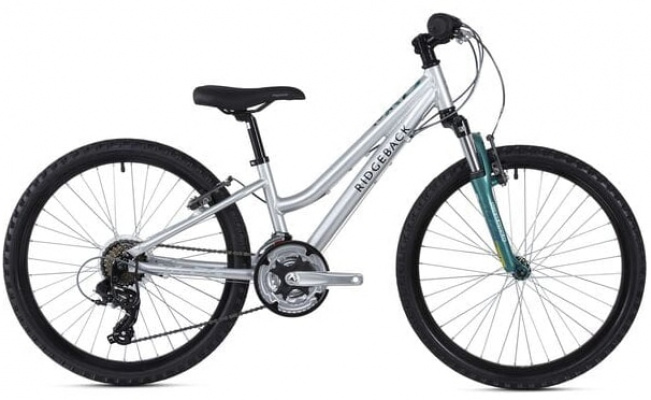
Ridgeback Destiny 24
Build confidence and skills on mixed terrain with a lightweight, stable junior bike that grows with your rider.
- Lightweight 6061 aluminium frame for easy handling
- Confidence-building upright geometry for young riders
- Shimano 21-speed drivetrain tackles varied terrain
- Child-sized brake levers for better control
- Adjustable saddle and bars grow with rider
- 24-inch wheels suit riders 140 - 150 cm tall
Ridgeback Destiny 24 Deals

Prices and availability can change quickly. Delivery charges are not always included in listed prices.
Final price, stock status and delivery terms are set by retailer. We may receive a commission on purchases made.
Bikesy's Verdict
The Ridgeback Destiny 24 does exactly what a junior mountain bike should: it gets out of the way and lets young riders build skills, confidence, and a love of riding. The lightweight aluminium frame, stable geometry, and adjustable contact points deliver a bike that fits properly, handles predictably, and grows with your child across two or three seasons. Shimano gears shift cleanly, V-brakes stop reliably, and the suspension fork smooths the ride enough to keep arms fresh on longer outings.
It's not a race bike, and it won't tackle gnarly descents with the poise of a full-suspension rig. But for the child who wants to follow you down a bridleway, explore the woods, or simply ride to school without worrying about kerbs and potholes, the Destiny 24 is a brilliant choice. Ridgeback's reputation for practical, durable bikes shines through, and the spec is sensible enough to avoid constant fettling. If you're after a bike that builds confidence without breaking the bank - or your back when you're lifting it - this is it.
Pros
- Lightweight aluminium frame makes handling and lifting easy for young riders
- Upright, stable geometry builds confidence on varied terrain
- Adjustable saddle and bars extend usable lifespan across growth spurts
- Child-sized brake levers suit smaller hands for better control
- Shimano 21-speed drivetrain offers sensible range for hills and flats
Cons
- Heavier than premium junior bikes if weight is a priority for racing or long tours
- Basic suspension fork has limited performance on rougher, more technical trails
- V-brakes require more maintenance in wet, muddy conditions compared to disc setups
About the Ridgeback Destiny 24
The Ridgeback Destiny 24 is built around a simple idea: give young riders a bike that doesn't fight them. Ridgeback's 6061 aluminium frame keeps weight down to 12.85 kg, so when your nine- or ten-year-old hauls it up a kerb or wrestles it into the shed, they're not battling a lump of pig iron. The crossbar design and upright geometry put the rider in a stable, see-everything position that builds confidence fast - whether they're threading through the school gates or eyeing up their first proper trail.
This isn't a toy with knobblies; it's a proper junior mountain bike with a suspension fork, Shimano gears, and V-brakes that work. Ridgeback has been building practical, no-nonsense bikes for UK riders since 1983, and the Destiny 24 slots neatly into that tradition: durable, sensible, and ready for the kind of mixed-surface riding that defines childhood cycling in Britain. Park paths, canal towpaths, the odd muddy bridleway - this bike handles the lot without drama.
We've spent time examining the Destiny 24 at expos and in showrooms, and the spec sheet tells a clear story. The adjustable seatpost and bars mean you'll get two or three seasons out of it before your rider outgrows the 24-inch wheels. That's value you can measure in miles, not just months.
Ridgeback Destiny 24 geometry
Ridgeback doesn't publish reach and stack figures for junior bikes, but the Destiny 24's geometry is tuned for stability over speed. The upright riding position puts weight over the rear wheel, so traction stays planted when the surface turns loose. Steering is calm and predictable - there's no twitchiness to spook a rider who's still learning to read terrain. The relatively short wheelbase keeps the bike nimble enough for tight turns on narrow paths, but the fork's rake and the frame's angles prevent it from feeling nervous.
When your rider stands on the pedals to clear a root or bump, the bike stays composed underneath them. That confidence matters more than any number on a geometry chart. The 24-inch wheels roll over obstacles more easily than smaller hoops, and the frame's proportions suit riders between 140 and 150 cm tall - roughly ages nine to thirteen, depending on growth spurts.
Component choices & upgrades
The stock build is well sorted for its purpose. Shimano's 21-speed drivetrain - a triple chainring up front paired with a seven-speed freewheel - gives young legs enough range to spin up modest climbs and cruise on the flat. The SR Suntour XCT 24 fork won't win any awards for plushness, but it takes the sting out of potholes and tree roots without adding much weight or complexity. Promax V-brakes with Tektro child-sized levers deliver reliable stopping power, and the shorter lever reach means smaller hands can actually squeeze them.
Vee VRB 185 tyres in 24 × 2.0-inch size offer a decent balance of grip and rolling speed. They're not full-on mud tyres, but they'll cope with damp grass and hard-packed dirt. If your rider starts pushing harder on proper trails, a swap to something with more aggressive tread - say, a Schwalbe Rocket Ron or similar - will sharpen cornering bite and braking traction. Beyond that, there's little need to tinker. The alloy rims are sturdy, the KMC chain shifts cleanly, and the Ridgeback-branded saddle and grips do their job without fuss.
Upgrades make sense only if your rider's skills or ambitions outstrip the spec. A lighter saddle or grips might shave a few grams, but the real gains come from rider development, not parts swaps. Keep the drivetrain clean, check brake pad wear, and let the bike do what it was designed for.
Where the Ridgeback Destiny 24 excels
The Destiny 24 is outstanding at building confidence in young riders who are ready to leave stabilisers and smooth tarmac behind. It's the bike for the child who wants to follow you down a bridleway, explore the woods at the edge of the park, or simply ride to school without worrying about kerbs and potholes. The upright position and stable handling make it forgiving when concentration lapses or terrain surprises, and the adjustable contact points mean it'll fit properly for longer than most kids' bikes.
It also does well on mixed-surface family rides - canal paths, gravel tracks, quiet lanes - where comfort and reliability matter more than outright speed. The suspension fork smooths the ride enough to keep young arms from getting battered, and the gearing range is wide enough to handle gentle hills without forcing a walk.
Where it's not ideal: serious trail riding with steep descents, big rocks, or sustained technical sections. The basic fork and V-brakes have their limits, and the geometry prioritises stability over aggression. If your rider is already railing berms and hunting air time, they'll outgrow the Destiny's capabilities quickly. It's also heavier than some premium junior bikes, so if you're chasing race results or long-distance touring, lighter options exist - though they'll cost you.
Ridgeback Destiny 24 FAQs
What age is a Ridgeback Destiny 24 suitable for?
The Destiny 24 suits riders aged roughly nine to thirteen, depending on height and development. Ridgeback's size chart recommends it for children between 140 and 150 cm tall. If your rider is at the lower end of that range, check they can touch the ground with tiptoes when seated - confidence comes from feeling secure at stops.
What is the weight of a Ridgeback Destiny 24?
The complete bike weighs approximately 12.85 kg. That's light enough for most children in the target age range to handle confidently, whether lifting it over a gate or manoeuvring it in tight spaces. Frame weight alone isn't specified, but the aluminium construction keeps overall heft in check.
Is the Ridgeback Destiny 24 a good bike for trails?
Yes, for gentle to moderate trails - think well-maintained bridleways, forest fire roads, and park singletrack. The suspension fork and knobbly tyres cope with roots, gravel, and small bumps. It's not built for steep, rocky descents or jump lines, but it'll handle the kind of trail riding most young riders encounter as they develop their skills.
What type of brakes does the Ridgeback Destiny 24 have?
It uses Promax V-brakes - traditional rim brakes that clamp onto the wheel rims. They're reliable, easy to maintain, and powerful enough for a bike of this weight and speed. The Tektro levers are sized for smaller hands, so your rider can actually reach and squeeze them properly, which matters more than any disc-brake spec sheet.
Can a Ridgeback Destiny 24 be used for commuting?
Absolutely. The upright position and stable handling make it ideal for short to medium commutes on roads, cycle paths, and pavements. The suspension fork smooths out potholes, and the gearing range handles modest hills. If the route includes muddy or unpaved sections, the tyres will cope without complaint.
How do you adjust the saddle on a Ridgeback Destiny 24?
Loosen the seatpost clamp bolt (usually an Allen key or quick-release lever, depending on spec), slide the post up or down to the desired height, then retighten firmly. Make sure the saddle is level and the post doesn't exceed the maximum-extension mark etched into the tube. Check tightness after the first few rides - new clamps can settle.
What is the gear range of the Ridgeback Destiny 24?
The Destiny 24 runs a Shimano 21-speed drivetrain: a 42-32-22-tooth triple chainring paired with a 14 - 28-tooth seven-speed freewheel. That gives a low gear gentle enough for modest climbs and a high gear that lets your rider keep pedalling on flat stretches without spinning out. It's a sensible range for varied terrain and developing fitness.
Key Features & Benefits
- 6061 aluminium frame: Keeps weight down to 12.85 kg so young riders can handle, lift, and manoeuvre the bike confidently without battling excess bulk.
- Upright crossbar geometry: Puts the rider in a stable, see-everything position that builds confidence and control on mixed surfaces and early trail riding.
- Shimano 21-speed drivetrain: Delivers a wide enough gear range to spin up gentle climbs and cruise on the flat, matching varied terrain and developing fitness.
- Child-sized Tektro brake levers: Shorter reach lets smaller hands squeeze properly, giving young riders the stopping power and control they need to ride safely.
- Adjustable seatpost and handlebars: Extends the bike's usable life across two or three seasons, adapting to growth spurts and delivering better value per mile.
Ridgeback Destiny 24 2022 and earlier differences
The 2022 Ridgeback Destiny 24 featured a Shimano 21-speed drivetrain (3×7 configuration with a 14 - 28-tooth freewheel), SR Suntour XCT 24 suspension fork, Promax TX-107C V-brakes with Tektro JL-510TS child-sized levers, and Vee VRB 185 tyres in 24 × 2.0-inch size. Earlier iterations - around 2020 and prior - were sometimes listed with an 18-speed (3×6) setup, though core features like the 6061 aluminium frame, upright geometry, and V-brake system remained consistent. Specific year-on-year changes are not well documented, but the 2022 model represents the most recent confirmed specification. Component suppliers and minor spec details may vary between model years and regional markets, though the bike's fundamental character - lightweight, stable, and confidence-building - has stayed constant throughout its production run.
Alternatives to Consider
Within Ridgeback's own junior range, the Ridgeback Dimension 24 offers a similar wheel size and aluminium frame but may come with slightly different gearing or component choices depending on the model year - worth comparing if you want a bit more versatility or a different aesthetic. For riders ready to step up, the Ridgeback Dimension 26 suits taller children (150 - 165 cm) and brings larger wheels that roll faster and smoother over rough ground, though the jump in size means your rider needs the height and confidence to match.
Cross-brand, the Specialized Jett 24 is a direct peer: lightweight aluminium, suspension fork, and a similar focus on building young riders' skills without overwhelming them. The Trek Wahoo 24 takes a comparable approach with reliable Shimano gearing and V-brakes, though Trek's geometry can feel slightly more playful if your rider likes to throw the bike around. The Marin Coast Trail 24 leans a touch more towards trail capability with slightly beefier tyres and a fork that's a step up in damping, making it a good choice if your rider is already eyeing proper singletrack. Finally, the Giant XTC Jr 24 offers a race-inspired geometry that's a bit more aggressive, suited to confident riders who want to push harder on climbs and descents - though it sacrifices some of the Destiny's forgiving stability in the process.
Reviews
Lightweight aluminium and stable geometry combine to deliver a bike that young riders can actually control. The upright position keeps weight over the rear wheel, so traction holds when the path turns to gravel or damp grass. Steering stays calm through tight turns, and the suspension fork absorbs enough chatter to keep arms fresh on longer rides.
Shimano's 21-speed drivetrain shifts cleanly and offers a sensible range - low enough for modest climbs, high enough to keep pedalling on the flat. When the trail tilts down, V-brakes deliver reliable stopping power without drama. Child-sized levers mean smaller hands can squeeze properly, which matters more than any disc-brake spec sheet when confidence is still building.
Adjustable contact points extend the bike's usable life across growth spurts, and the 12.85 kg weight stays manageable for lifting over gates or wrestling into sheds. Knobbly tyres grip well enough on hard-packed dirt and damp grass, though they're not full mud tyres. The fork won't impress on technical descents, but it smooths potholes and roots without adding much weight or complexity.
We rate the Destiny 24 as a capable, confidence-building machine for young riders ready to explore beyond tarmac. It handles mixed-surface family rides with ease and copes with gentle trails without fuss. The spec is sensible, the geometry forgiving, and the adjustability practical - exactly what you want when the goal is miles in the saddle, not podium finishes.
Full Specification
| Frame Material | 6061 Aluminium |
| Frame Design | Crossbar, upright and stable geometry |
| Fork | SR Suntour XCT 24 suspension fork |
| Shifters | Shimano SL-RS36 Revoshift 3×7 Speed |
| Rear Derailleur | Shimano RD-TX300-7R |
| Front Derailleur | Shimano FD-TY300 |
| Crankset | SR XCC 42-32-22T, 152 mm |
| Cassette | Shimano MF-TZ500 Freewheel, 14-28T |
| Chain | KMC Z7 |
| Brakes | Promax TX-107C V-Brake calipers, Tektro JL-510TS child-sized levers |
| Rims | LA-05 alloy, 24", 36h |
| Hubs | Joytech JY-753 / 754, 36h |
| Spokes | Steel 14g |
| Tyres | Vee VRB 185, 24 × 2.0" |
| Handlebar | 560 mm width, 30 mm rise, 25.4 mm clamp |
| Stem | Alloy, 60 mm, 25.4 mm clamp |
| Headset | Ridgeback alloy, 1 1/8" |
| Seatpost | Alloy, 27.2 × 250 mm |
| Saddle | Ridgeback padded |
| Pedals | Resin junior pedals |
| Bottom Bracket | B8882 68/122 mm |
| Approximate Weight | 12.85 kg |