
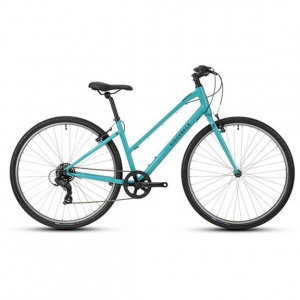
Ridgeback Comet
Comfortable, practical urban transport that strips away the faff and gets you riding every day.
- 6061 heat-treated aluminium frame balances strength and weight
- Single chainring drivetrain: simple, low-maintenance urban setup
- Mudguard and rack mounts for all-weather practicality
- 700×42c tyres smooth out rough tarmac and towpaths
- Upright geometry keeps you comfortable in traffic
- Shimano Tourney 7-speed covers moderate hills easily
Ridgeback Comet Deals

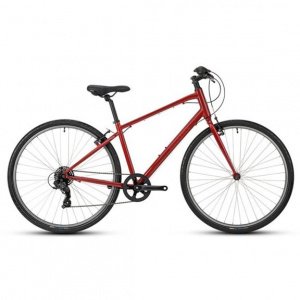
Prices and availability can change quickly. Delivery charges are not always included in listed prices.
Final price, stock status and delivery terms are set by retailer. We may receive a commission on purchases made.
Bikesy's Verdict
The Ridgeback Comet is the bike you buy when you want to ride more and think about bikes less. It's comfortable, practical, and refreshingly uncomplicated - no suspension to service, no complex gearing to master, no marketing waffle about marginal gains you'll never notice on a wet Wednesday morning. The upright position and stable handling make it easy to ride in traffic, the mudguard and rack mounts mean you can commute year-round without getting soaked or loading up a rucksack, and the single-chainring drivetrain keeps maintenance to a minimum.
It's not a bike for performance riders or steep terrain, and the entry-level components won't impress anyone chasing speed or precision. But if your riding is mostly urban, mostly practical, and mostly about getting places rather than setting times, the Comet delivers exactly what you need at a price that makes sense. It's the kind of bike that rewards consistency: ride it every day, and you'll wonder why you ever thought cycling had to be complicated.
Pros
- Comfortable upright geometry ideal for traffic and longer commutes
- Mudguard and rack mounts add year-round practicality
- Single-chainring drivetrain keeps maintenance simple and reliable
- 700×42c tyres smooth out rough roads and light gravel
- Excellent value for first-time buyers and everyday riders
Cons
- Entry-level Tourney drivetrain and Promax V-brakes if you're chasing performance or riding steep, technical terrain
- Limited seven-speed range when tackling sustained climbs with loaded panniers
- Heavier than racier hybrids if you need to carry it upstairs daily
About the Ridgeback Comet
The Ridgeback Comet lands squarely in that sweet spot where simplicity meets everyday usefulness. Built around a 6061 heat-treated aluminium frame with a chromoly fork, it's designed for riders who want to get on, ride to work or the shops, and not think about the bike until they need it again. There's no suspension to service, no complex gearing to fuss over, and no marketing spin about performance metrics you'll never use on a Tuesday morning commute.
What you get instead is a single-chainring seven-speed drivetrain that covers the gears most urban and suburban riders actually need, a pair of 700×42c tyres wide enough to take the sting out of potholed cycle lanes, and mounts for mudguards and racks so you can carry your stuff without a rucksack turning your back into a swamp. The riding position is upright enough to let you see over parked cars and scan junctions without craning your neck, and the contact points - saddle, grips, bars - are shaped for comfort over the long haul rather than aero gains you'll never notice.
It's the kind of bike that rewards consistency. You'll not set any Strava records, but you will arrive feeling fresher than you would hunched over a drop-bar racer, and you'll spend less time adjusting derailleurs or bleeding brakes than you would on something more complex. Ridgeback has kept the spec deliberately straightforward: Shimano Tourney shifting, Promax V-brakes, and a sealed bottom bracket that'll shrug off winter grime longer than you might expect. This is a bike that knows what it is and doesn't pretend otherwise.
Ridgeback Comet geometry
The Comet's frame geometry leans heavily toward comfort and control in traffic rather than speed or aggression. The upright posture puts your weight over the saddle rather than the bars, which takes pressure off your wrists and opens up your chest for easier breathing when you're threading through queues at lights. The steering feels stable and predictable - there's no twitchiness to catch you out when a car door swings open or a pedestrian steps off the kerb without looking.
Handlebar rise and a short stem keep the front end high and the reach short, so you're sitting more like you would on a Dutch city bike than a road racer. That translates to less strain on your lower back over longer rides and better visibility in urban environments where seeing and being seen can be the difference between a smooth commute and a close call. The longer wheelbase and relaxed angles mean the bike tracks straight and steady on flat roads and gentle descents, though it won't carve tight switchbacks with the urgency of something more aggressive.
Across the size range - from small through to XX-large - the frame scales to keep that upright, confidence-inspiring posture consistent. Taller riders get a longer top tube and higher stack, shorter riders a more compact cockpit, but the overall feel stays planted and easy to manage whether you're navigating narrow cycle paths or wider suburban roads.
Component choices & upgrades
The stock build on the Comet is already well-sorted for its intended use. Shimano Tourney shifting and a Promax V-brake setup might sit at the entry end of the component spectrum, but they're reliable, easy to service, and perfectly adequate for the speeds and conditions most commuters encounter. The single 40-tooth chainring paired with an 11 - 32-tooth seven-speed cassette gives you a sensible spread of gears: low enough for moderate climbs, high enough to keep pedalling on the flat without spinning out.
If you're planning to ride in hillier terrain or carry heavier loads, you might consider swapping the cassette for something with a wider range - though you'll be limited by the Tourney derailleur's capacity. A set of puncture-resistant tyres or slightly wider rubber (the frame will clear a bit more than the stock 42c) can add confidence if your route takes in rough towpaths or poorly maintained cycle lanes. Upgrading the saddle is always a personal call; the stock Ridgeback saddle has a pressure-relief channel and decent padding, but if it doesn't suit your sit bones after a few weeks, a swap is straightforward.
For riders whose skills or ambitions outgrow the Comet's spec, you're probably better off moving to a different bike than sinking money into major upgrades. The frame and fork are solid, but the V-brake mounts and entry-level drivetrain mean you'll hit diminishing returns quickly if you start chasing performance gains. That said, adding mudguards, a rear rack, and some decent lights will transform the bike's practicality without breaking the bank, and those are upgrades that make sense for almost any commuter.
Where the Ridgeback Comet excels
The Comet is outstanding at one thing above all: getting you from A to B in urban and suburban environments without drama. It's the bike for daily commutes, shopping trips, leisurely rides along canal towpaths, and weekend errands where you need to carry a bag or two. The upright position and stable handling make it easy to ride in traffic, the mudguard and rack mounts mean you can ride year-round without getting soaked or loading up a rucksack, and the simple drivetrain means less time in the workshop and more time riding.
It also does well on light gravel paths and rougher lanes - the 700×42c tyres have enough volume to smooth out the worst of the bumps, and the rigid fork keeps things predictable when the surface gets loose. If your commute mixes tarmac with a stretch of compacted gravel or a rutted farm track, the Comet will handle it without complaint. It's comfortable enough for longer leisure rides, too, as long as you're not chasing speed or tackling serious hills.
Where it's not ideal: steep, sustained climbs will expose the limited gear range, and the V-brakes won't inspire the same confidence as discs when you're descending in the wet. It's not a bike for fast group rides, sportives, or anything approaching performance cycling. The Tourney drivetrain and Promax brakes are built for durability and ease of use, not precision or power, so if you're after something more responsive or capable, you'll need to look elsewhere. But if your riding is mostly flat to rolling, mostly urban, and mostly about getting places rather than setting times, the Comet is exactly what you need.
Ridgeback Comet FAQs
What is the Ridgeback Comet best used for?
The Comet is best used for urban commuting, everyday errands, and leisurely rides on tarmac, towpaths, and light gravel. It's designed to be practical, comfortable, and low-maintenance rather than fast or performance-oriented.
Is the Ridgeback Comet a good commuter bike?
Yes, it's an excellent commuter bike. The upright geometry, mudguard and rack mounts, simple drivetrain, and stable handling make it ideal for navigating traffic, carrying loads, and riding in all weathers without fuss.
What kind of maintenance does a Ridgeback Comet require?
Maintenance is minimal: keep the chain clean and lubricated, check brake pad wear occasionally, and ensure tyres are inflated to the recommended pressure. The sealed bottom bracket and single-chainring setup reduce the usual drivetrain faff, and V-brakes are straightforward to adjust or replace.
Can I fit pannier racks and mudguards to a Ridgeback Comet?
Yes, the frame and fork have dedicated mounts for both mudguards and rear racks, making it easy to add practical accessories for commuting and touring without aftermarket bodges.
What is the gear range on a Ridgeback Comet?
The Comet runs a single 40-tooth chainring with a seven-speed 11 - 32-tooth cassette, giving you a range that covers moderate hills and flat roads comfortably. It's not designed for steep climbs or high-speed sprints, but it's well-suited to typical urban and suburban terrain.
Is the Ridgeback Comet suitable for beginners?
Absolutely. The simple drivetrain, stable handling, and comfortable riding position make it an ideal first bike for riders who want something reliable and easy to use without a steep learning curve.
What is the weight of the Ridgeback Comet?
The exact weight isn't published, but bikes in this category typically sit around 12 - 14 kg. It's not a lightweight, but it's manageable for lifting onto bike racks or carrying up a flight of stairs when needed.
How does the Ridgeback Comet compare to the Ridgeback Motion?
The Motion offers a wider gear range, making it better suited to hillier terrain, while the Comet keeps things simpler with a seven-speed setup that's easier to maintain. Both share a similar comfort-first philosophy, but the Motion is the choice if your commute involves serious climbing.
Key Features & Benefits
- 6061 heat-treated aluminium frame: Balances durability and weight for reliable everyday riding without the heft of cheaper alloys
- Single 40T chainring with 7-speed cassette: Simplifies shifting and maintenance while covering the gears most urban riders actually use
- Mudguard and rack mounts: Lets you ride in all weathers and carry shopping or work kit without a sweaty rucksack
- 700×42c Vee Tire Zilent tyres: Wide enough to absorb potholes and rough towpaths, keeping the ride comfortable over longer distances
- Upright riding position: Reduces strain on wrists and lower back, improves visibility in traffic, and makes stop-start riding less tiring
Ridgeback Comet 2024 & 2023 differences
The 2025 Comet retains the core specification and geometry of the 2024 model, with only minor updates to colour options and potential small tweaks to component suppliers. The 2024 version ran the same 6061 aluminium frame, chromoly fork, Shimano Tourney seven-speed drivetrain, and Promax V-brakes, so riders choosing either year will find an identical ride character and capability.
Looking back to 2022, some sources list Shimano ST-EF41 EZ-Fire brake levers instead of the Promax units fitted to later models, but the overall spec - single chainring, seven-speed cassette, V-brakes, and mudguard/rack mounts - has remained consistent. Ridgeback has kept the Comet's design philosophy stable across recent years, prioritising reliability and simplicity over year-on-year spec changes, so older models offer much the same experience as the current bike.
Alternatives to Consider
Within the Ridgeback range, the Ridgeback Motion offers a wider gear spread for hillier commutes, while the Ridgeback Velocity steps up with disc brakes and a more performance-oriented build if you want a bit more capability without leaving the brand. Cross-brand, the Giant Escape 3 delivers similar comfort and practicality with a slightly more refined component spec, and the Trek FX 1 Disc adds hydraulic disc brakes for stronger, more consistent stopping power in all conditions. The Specialized Sirrus 1.0 sits in the same price bracket with a comparable feature set, though it leans a touch sportier in geometry. For riders after something even simpler, the Dawes Discovery 201 offers a similar upright hybrid platform with a focus on ease of use and value. All of these bikes share the Comet's urban-commuter DNA, but differ in braking systems, gearing options, and how much performance they trade for comfort.
Reviews
Stability and comfort define the Comet's character on tarmac and towpath alike. The upright posture and wide tyres soak up the worst of broken surfaces without jarring your wrists, and the rigid fork tracks straight through ruts and over kerb drops with a reassuring planted feel. When you're weaving through traffic or holding a line on a narrow cycle path, the steering responds predictably - no sudden twitches, no vague wandering - so you can focus on what's around you rather than what's underneath.
Shimano Tourney shifting is basic but functional; the twist-grip action is intuitive for riders new to gears, and the seven-speed range covers moderate climbs and flat stretches without leaving you hunting for ratios that aren't there. We appreciate the single-chainring simplicity - there's one less thing to adjust, one less cable to stretch, and no front mech to rub when the bike's loaded with shopping. Promax V-brakes offer adequate stopping power in the dry and remain serviceable in light rain, though they lack the bite and modulation of discs when conditions turn properly wet.
Comfort over distance is where the Comet really earns its keep. The saddle's pressure-relief channel and high-density padding work well for most riders, the grips are shaped to reduce hand fatigue, and the 700×42c tyres cushion the ride enough that you'll arrive feeling fresher than you would on narrower rubber. Because the geometry keeps your weight centred over the saddle rather than the bars, longer commutes don't leave your shoulders and lower back complaining. It's not a bike that demands your attention or rewards aggressive riding - it simply gets on with the job, mile after mile, without fuss or drama.
Full Specification
| Spec | Value |
|---|---|
| Frame Material | 6061 Heat Treated Aluminium Alloy |
| Frame Design | Crossbar frame |
| Frame Features | Mudguard and rack mounts |
| Fork | Hi-Ten Chromoly, rigid, mudguard eyelets |
| Bottom Bracket | CH CH52 Sealed Bearing 68/118mm |
| Headset | Neco H-148-MP 1-1/8 inch |
| Drivetrain | 7-speed single chainring |
| Shifters | Shimano Tourney SL-RS35-7R RevoShift 7-speed twist shifter |
| Rear Derailleur | Shimano Tourney RD-TY300 |
| Crankset | Prowheel A105P(3) 40T 170mm |
| Cassette | Shimano CS-HG200-7 11-32T |
| Chain | KMC Z7 |
| Brakes | V-Brakes |
| Brake Calipers | Promax TX-117 |
| Brake Levers | Promax BL-39G |
| Rims | Shining A6N 36h |
| Spokes | Steel 14g |
| Hubs | KT A16F/AY1R front and rear |
| Tyres | Vee Tire Zilent 700 x 42c |
| Handlebar | Ridgeback alloy, 20mm rise, 6° backsweep, 640mm (15in/19in) or 660mm (21in/25in) |
| Stem | Ridgeback alloy, +7°, 70mm |
| Grips | Ridgeback |
| Seatpost | Alloy 27.2 x 350mm |
| Saddle | Ridgeback custom, pressure relief channel, high-density fill |
| Pedals | Resin Metro |