
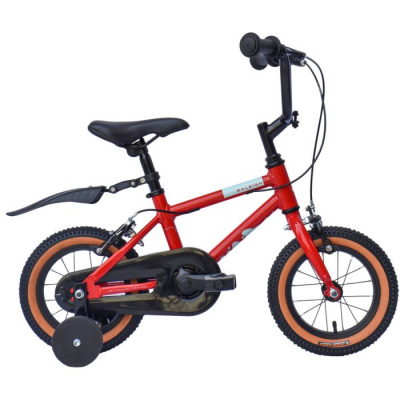
Raleigh Pop 12
A light, simple first pedal bike that builds confidence quickly on pavements and park paths.
- Aluminium 6061 frame: light enough for little legs
- Internal cables keep fingers safe, look tidy
- Puncture-resistant tyres mean more riding, less fixing
- Full chain guard protects clothes and curious hands
- Child-sized brake levers with reach adjustment
- Single speed simplicity: just pedal and steer
Raleigh Pop 12 Deals

Prices and availability can change quickly. Delivery charges are not always included in listed prices.
Final price, stock status and delivery terms are set by retailer. We may receive a commission on purchases made.
Bikesy's Verdict
The Raleigh Pop 12 does exactly what it's meant to do: it gets young children pedalling with confidence and without fuss. It's light enough that they can handle it themselves, simple enough that they can focus on riding rather than mechanics, and tough enough to survive the inevitable crashes and scrapes. The full chain guard, internal cables, and puncture-resistant tyres make it practical for everyday use, and the upright position and low standover height build confidence quickly.
It's not the lightest or most refined kids' bike you can buy, but it's well-priced, well-built, and thoughtfully designed. If you're looking for a first pedal bike that'll last through one or two children and won't require constant maintenance, the Pop 12 is a very solid choice.
Pros
- Lightweight aluminium frame makes handling and lifting easy for young riders
- Full chain guard and internal cables keep fingers safe and clothes clean
- Puncture-resistant tyres reduce flats and downtime
- Child-sized brake levers with reach adjustment fit small hands
- Upright position and low standover build confidence quickly
Cons
- Brake lever reach can still be a stretch for the smallest hands, even when adjusted
- Heavier than premium kids' bikes if weight is your top priority
- Caliper brakes offer less power than V-brakes if you're tackling steeper hills
About the Raleigh Pop 12
The Raleigh Pop 12 is built for one job: getting young riders pedalling with confidence. It's a proper first pedal bike, stripped of anything that might confuse or overwhelm a three- or four-year-old who's just worked out how balance bikes work and is ready for the next step. Aluminium keeps the weight down to around seven kilos, so when your child tips it over (and they will), they can pick it up themselves. The upright position lets them see what's ahead rather than staring at the front wheel, and the low step-through frame means mounting and dismounting doesn't require a running jump.
This isn't a bike that tries to be clever. Single-speed gearing, caliper brakes, steel components where they need to be tough, aluminium where weight matters. The full chain guard wraps the drivetrain so trousers stay clean and fingers stay safe, and internal cable routing keeps everything tidy and out of harm's way. Puncture-resistant tyres mean fewer walks home pushing a deflated bike, and the bright colour schemes - coordinated grips, saddle, and tyres - make it look like something a child actually wants to ride, not a hand-me-down from the shed.
It's designed for pavements, park paths, and quiet streets. You're not buying a bike that'll tackle bridleways or survive being launched off kerbs; you're buying a tool that teaches pedalling, steering, and braking without drama. The Pop 12 does that job very well indeed.
Raleigh Pop 12 geometry
Raleigh doesn't publish reach, stack, or head angles for a 12-inch kids' bike, and frankly you don't need them. What matters is how the bike fits a child between roughly 85 and 107 centimetres tall, with an inside leg of 33 to 41 centimetres. The frame's low standover height means even cautious riders can get both feet flat on the ground when they stop, which is worth more than any geometry chart when you're building confidence.
The upright handlebar position - 480 millimetres wide on a steel riser bar - keeps the rider's weight centred and their head up. It's not a racy crouch; it's a posture that lets them look around, wave at friends, and generally feel in control. The short wheelbase makes the bike easy to turn and manoeuvre, though it also means it's twitchy if you're used to adult bikes. For a four-year-old, that responsiveness is exactly what you want: quick steering feedback teaches them how their inputs affect the bike's direction.
The saddle and bars are adjustable enough to cover a year or two of growth, but once your child's knees start coming up too high on the pedal stroke or they're stretching to reach the bars, it's time to move up to a 14- or 16-inch wheel. Fit matters more than age here; some tall three-year-olds will be ready, some small five-year-olds won't.
Component choices & upgrades
The Pop 12 comes with everything a young rider needs, and there's not much point swapping parts. The aluminium caliper brakes work well for the speeds involved, and the two-finger levers have reach adjustment so you can dial them in as hands grow. Some parents find the levers still sit a bit far out for very small hands even when fully adjusted, but that's a limitation of the brake type rather than poor setup - V-brakes would offer more leverage but add complexity.
The single-speed drivetrain is bombproof. A 25-tooth steel chainring drives a 16-tooth freewheel through a KMC single-speed chain, giving a gear ratio that's low enough for gentle climbs and high enough that keen pedallers won't spin out on the flat. There's no derailleur to bend, no shifter to confuse, no chain slap to rattle. The one-piece steel crank is heavy but indestructible, and the 79-millimetre crank arms are short enough that little legs can turn them without overextending.
If you're tempted to upgrade anything, start with the saddle if your child finds it uncomfortable after longer rides - though most won't ride long enough for saddle choice to matter. The resin pedals offer good grip and are easy to find with a foot, but if your child's outgrown the bike and you're passing it on, check the pedal threads haven't stripped. Beyond that, leave it alone. The bike's already well-sorted for its purpose, and money spent on lighter components would be better saved for the next size up.
Where the Raleigh Pop 12 excels
This bike is outstanding at teaching children how to pedal, steer, and brake on pavements and smooth paths. It's light enough that a young rider can control it, stable enough that they won't feel twitchy or nervous, and simple enough that they can focus on riding rather than fiddling with gears. The upright position and low standover height build confidence quickly, and the puncture-resistant tyres mean you'll spend more time riding and less time fixing flats.
It also does well on short park loops, quiet residential streets, and anywhere else a child might ride in their first year or two of pedalling. The full chain guard and internal cables make it practical for everyday use - no oil stains on school trousers, no cables snagging on playground fences. The bright colours and coordinated components make it appealing to children, which matters more than you might think when you're trying to coax a reluctant rider out the door.
Where it's not ideal: rough terrain, long distances, or anything involving speed. The caliper brakes are fine for gentle stops but don't have the power or modulation of V-brakes or discs, so steep hills or emergency stops can be challenging. The steel components add weight, and while seven kilos isn't heavy for an adult, it's significant for a small child. If your child's already confident on a balance bike and you're looking for something that'll handle more adventurous riding, you might want to look at brands that specialise in lightweight kids' bikes - though you'll pay more for the privilege.
Raleigh Pop 12 FAQs
What is the best first pedal bike for a 3-year-old?
The Pop 12 is a strong contender if your three-year-old is tall enough (at least 85 centimetres) and has moved on from a balance bike. It's light, simple, and safe, with features that help rather than hinder learning. Other options include the Frog 40 or Specialized Jett 12, though both typically cost more.
How tall should a child be for a 12-inch bike?
Raleigh recommends 85 to 98 centimetres for the Pop 12, though some children up to 107 centimetres will still fit comfortably. Inside leg measurement matters more than height: you want 33 to 41 centimetres so they can touch the ground with both feet when seated.
Are Raleigh bikes good quality for kids?
Yes. Raleigh's kids' bikes are well-built, thoughtfully designed, and priced fairly for what you get. The Pop 12 uses an aluminium frame, puncture-resistant tyres, and child-friendly components that balance durability with ease of use. It's not the lightest or most refined option, but it's a solid choice that'll last through one or two children.
What is the average weight of a 12-inch kids bike?
Most 12-inch bikes weigh between six and nine kilos. The Pop 12 sits around seven kilos, which is light enough for a young child to handle but not so featherweight that it feels flimsy. Lighter bikes exist but usually cost significantly more.
Do 12-inch bikes come with stabilisers?
Many do, though the Pop 12's stabilisers are typically sold separately or included depending on where you buy it. If your child's coming from a balance bike, they often won't need stabilisers - they've already learned balance and just need to add pedalling to the mix.
How do I adjust the brakes on a Raleigh Pop 12?
The brake levers have reach-adjustment screws that let you move them closer to the bars for smaller hands. You'll also want to check the cable tension: if the brakes feel spongy or don't engage quickly enough, tighten the cable at the caliper. If you're not confident doing this yourself, any bike shop can sort it in a few minutes.
Can a 4-year-old ride a 12-inch bike?
Absolutely, if they're within the height range. Many four-year-olds will be ready to move up to a 14- or 16-inch bike, but if they're on the smaller side or just starting out, the Pop 12 will fit them well. Check the inside leg measurement rather than relying on age alone.
What is the difference between a balance bike and a pedal bike?
A balance bike has no pedals, chain, or drivetrain - children propel themselves by pushing with their feet and learn to balance and steer without worrying about pedalling. A pedal bike like the Pop 12 adds the drivetrain and brakes, so children need to coordinate pedalling, steering, and braking all at once. Most children who've mastered a balance bike transition to a pedal bike quickly because they've already learned the hardest part.
Key Features & Benefits
- Aluminium 6061 frame: Keeps the bike light enough for a young child to lift and manoeuvre without help
- Full chain guard and internal cable routing: Protects clothing from grease and keeps cables out of the way of curious fingers
- Puncture-resistant 12 × 1.50 tyres: Fewer flats mean more riding time and less frustration for parents and children alike
- Single-speed drivetrain with 25T chainring and 16T freewheel: Simple, reliable gearing lets children focus on pedalling and steering without shifting distractions
- Child-specific brake levers with reach adjustment: Easier for small hands to operate and can be dialled in as the child grows
Raleigh Pop 12 previous model years
Specific year-over-year changes for the Pop 12 are not widely documented, as Raleigh tends to keep the core design consistent across model years. Updates typically involve minor component spec tweaks or new colourway options rather than significant frame or geometry revisions. The 2024 and 2025 models share the same aluminium 6061 frame, single-speed drivetrain, and child-friendly features that have defined the Pop 12 for several years. If you're buying a previous-year model, you're getting essentially the same bike at a potentially lower price.
Alternatives to Consider
Within Raleigh's own range, the Pop 14 and Pop 16 offer the same design philosophy with larger wheels for children who've outgrown the 12-inch size. If you're after something lighter and more refined, the Frog 40 is a strong step up - it uses better components and a more carefully tuned geometry, though you'll pay a fair bit more for the privilege. The Specialized Jett 12 sits in a similar price bracket to the Pop 12 and offers comparable features, while the Woom 2 is lighter and more polished but commands a premium that's hard to justify unless weight is your absolute priority.
The Trek Wahoo 12 is another solid peer, with a similar aluminium frame and child-friendly spec, and the Cannondale Trail 12 offers much the same package with slightly different styling. If you're looking at budget options, many supermarket and online brands offer 12-inch bikes at lower prices, but they're typically heavier and less thoughtfully designed - fine if the bike's only going to see occasional use, less so if your child's riding regularly.
Reviews
Parents consistently describe the Pop 12 as a brilliant first pedal bike that children take to quickly. Lightweight handling makes it easy for young riders to steer and control, and the upright position helps them feel secure rather than pitched forward. Puncture-resistant tyres earn praise for reducing the number of rides cut short by flats, and the full chain guard keeps trousers clean enough that you don't need to change clothes every time they ride to the park.
Brake performance is generally good for the speeds involved, though some feedback notes that the lever reach can still be a stretch for very small hands even with the adjustment screws wound in. When children do get the levers dialled in, stopping power is adequate for gentle slopes and pavements. The single-speed drivetrain is simple and reliable - no missed shifts, no chain slap, just pedal and go.
Build quality holds up well to the inevitable tumbles and rough handling that come with learning to ride. The aluminium frame shrugs off scrapes, and the steel components are tough enough to survive being dropped repeatedly. Colourful designs and coordinated grips and saddles make the bike appealing to children, which matters when you're trying to build enthusiasm for riding. A few reviewers mention that the bike's weight - around seven kilos - is noticeable for smaller or less confident riders, but most children adapt quickly once they're moving.
Full Specification
| Spec | Value |
|---|---|
| Frame Material | Aluminium 6061 |
| Frame Design | Low step-through, internal cable routing |
| Frame Features | Internal cable routing, rear mudguard, full chain guard |
| Tyre Clearance | 12 x 1.50 |
| Bottom Bracket | Cartridge 120/122mm |
| Rear Axle Type | Nutted, standard |
| Drivetrain | Single speed |
| Crankset | Steel 25T, 1-piece, 79mm aluminium crank arm |
| Cassette | 16T freewheel |
| Chain | KMC Single Speed, 1/2" x 1/8" |
| Brakes | Aluminium caliper brakes, front and rear |
| Brake Levers | Aluminium 2-finger, child-sized, adjustable reach |
| Rims | Aluminium 12" single wall, 16 spoke |
| Hubs | Steel 16h, nutted (front and rear) |
| Spokes | 16 per wheel |
| Tyres | 12 x 1.50 with puncture protection |
| Handlebar | Steel high rise, 480mm wide |
| Stem | Steel quill, 25.4mm |
| Grips | Junior grips, 100mm |
| Headset | Steel 8-piece |
| Seatpost | Steel, 27.2 x 200mm |
| Saddle | Junior saddle with bumper, CP rails and clamp |
| Pedals | Resin junior pedals with non-slip rubber pads, 9/16" thread |
| Weight (Approx) | 6.4 - 8.3 kg |