
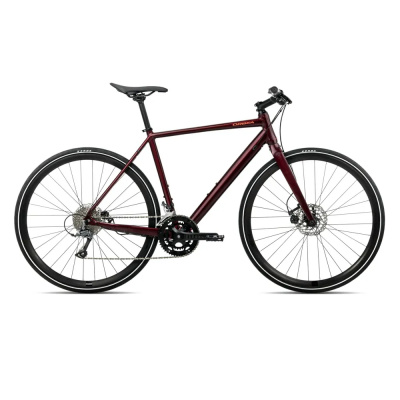
Orbea Vector 30
Versatile aluminium hybrid that handles urban commutes, fitness rides, and gravel detours with dependable Claris gearing and practical everyday toughness.
- Aluminium Urban Speed frame: light, stiff, all-day capable
- Shimano Claris 2×8: wide range for hills and flats
- Mechanical disc brakes: reliable wet-weather stopping
- Mudguard and rack mounts: commute-ready versatility
- 700×40C tyre clearance: smooth tarmac or gravel detours
- Reflective tyres: safer low-light visibility
Orbea Vector 30 Deals

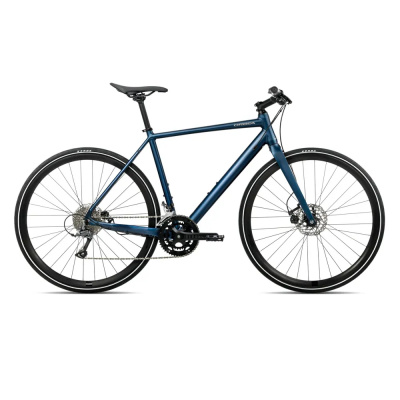
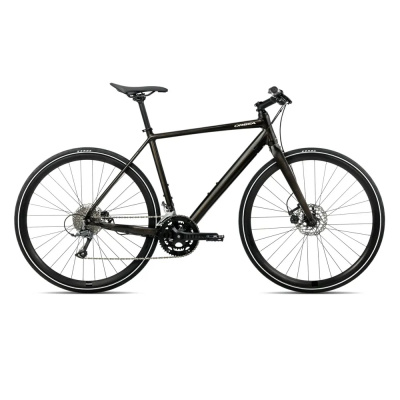
Prices and availability can change quickly. Delivery charges are not always included in listed prices.
Final price, stock status and delivery terms are set by retailer. We may receive a commission on purchases made.
Bikesy's Verdict
The Orbea Vector 30 is the kind of bike that quietly gets on with the job, day after day, without demanding constant attention or specialist knowledge. It's versatile enough to handle your weekday commute, capable enough for a spirited weekend ride, and practical enough to load up for a mini tour or a heavy shopping run. The spec is honest - Shimano Claris, mechanical discs, a rigid alloy fork - but nothing here feels like a compromise when you're actually riding. The geometry keeps you comfortable and in control, the tyre clearance invites exploration, and the mudguard and rack mounts mean you can adapt the bike to your life rather than the other way around.
If you want one bike that'll do it all without drama, and you value reliability and real-world practicality over marginal gains and Instagram aesthetics, the Vector 30 delivers cleanly. It's not the lightest, it's not the flashiest, but it's the kind of dependable, go-anywhere machine that earns its place in your life rather than your garage.
Pros
- Versatile geometry and tyre clearance handle city streets, gravel paths, and fitness rides equally well
- Mudguard and rack mounts make commuting and light touring straightforward
- Shimano Claris 2×8 drivetrain offers wide range and proven reliability
- Mechanical disc brakes deliver consistent wet-weather stopping without hydraulic complexity
- Reflective tyres and internal cable routing add practical safety and durability
Cons
- Mechanical discs require more lever effort than hydraulic if you're used to high-end brakes
- Heavier than dedicated road bikes if you're chasing speed or carrying it upstairs daily
- Stock saddle may not suit all riders - budget for a swap if comfort becomes an issue
About the Orbea Vector 30
The Orbea Vector 30 lands squarely in that sweet spot where urban practicality meets fitness-ride ambition. Built around Orbea's Urban Speed aluminium frame - shaped and hydroformed for a blend of low weight and real-world durability - it's the kind of bike that'll handle your weekday commute without complaint, then happily stretch its legs on a Saturday morning loop through the lanes. The geometry sits you upright enough to scan traffic and potholes, yet forward enough that you're not fighting the wind when you pick up the pace. Internal cable routing keeps the lines clean and the cables protected from winter grime, while mudguard and rack eyelets signal that Orbea knows you'll actually use this thing in the real world, not just pose with it in the hallway.
Under the skin, the spec is refreshingly honest: Shimano Claris 2×8 gearing, mechanical disc brakes, and a rigid alloy fork. Nothing here pretends to be more than it is, but equally nothing feels like a compromise when you're riding. The 32×48 chainrings paired with an 11 - 34 cassette give you enough range to spin up short climbs without grinding, and the mechanical discs - Shimano TX805 calipers with Claris levers - deliver consistent, predictable stopping power in all weathers. You're not chasing marginal gains or shaving seconds off Strava segments; you're riding a bike that works, day in, day out, with minimal fuss.
What makes the Vector 30 genuinely versatile is its willingness to adapt. The 700×40C tyre clearance means you can swap the stock 32 mm Kendas for something wider and knobbier if your route takes in towpaths or gravel byways, or go narrower and slicker if you're chasing speed on smooth tarmac. The tubeless-ready rims make that swap easier still, and the reflective tape on the stock rubber is a thoughtful nod to visibility when the days shorten. It's a bike that doesn't lock you into one riding style - it invites you to explore whatever's around the next corner, whether that's a shortcut through the park or an unplanned detour down a bridleway.
Orbea Vector 30 geometry
Orbea describes the Vector's geometry as 'Urban Speed', which translates to a frame that balances comfort with enough forward bias to keep things engaging when you're pushing. The head angle is relaxed enough to inspire confidence on rougher surfaces and when you're threading through traffic, while the seat angle puts you in a position where you can generate power without feeling cramped or overstretched. The riser handlebar - 640 mm wide, clamped in a 31.8 mm stem with a modest 7° rise - lifts your hands into a natural, open-chested posture that's easy on the neck and shoulders over longer rides, yet doesn't rob you of control when you need to react quickly.
Reach and stack aren't published in granular detail, but the five-size run (XS through XL) covers riders from around 150 cm to 200 cm, and the proportions feel well-judged across the range. The 135×9 mm quick-release rear end and relatively short chainstays (by modern standards) keep the back end snappy and responsive, so the bike doesn't feel sluggish when you're accelerating away from lights or sprinting for a gap in traffic. The 27.2 mm seatpost diameter - zero offset - offers a bit of natural flex to take the sting out of potholes and cobbles, and the overall stance is neutral enough that you can ride all day without your lower back staging a protest.
When you're climbing, the geometry keeps your weight centred so the front wheel tracks cleanly without wandering, and when you're descending - or just rolling fast on a smooth descent - the stable front end inspires enough confidence that you're not white-knuckling the bars. It's not a bike that'll carve tight switchbacks like a mountain bike or dive into corners like a crit racer, but it's composed and predictable, which is exactly what you want when you're sharing space with cars, pedestrians, and the occasional distracted dog-walker.
Component choices & upgrades
The stock build on the Vector 30 is already well-sorted for its intended audience. Shimano Claris might sit at the entry point of Shimano's road groupset hierarchy, but it's proven, reliable, and shifts cleanly enough that you won't be cursing it mid-ride. The 2×8 setup gives you sixteen gears to play with, and while the jumps between cogs are slightly larger than you'd find on a ten- or eleven-speed cassette, the range is wide enough to cover most real-world riding. The mechanical disc brakes are similarly dependable - easy to adjust, straightforward to service, and powerful enough for loaded commuting or spiralling down a long descent. If you're coming from rim brakes, the difference in wet-weather performance alone will feel like a revelation.
That said, there are a few areas where thoughtful upgrades can tailor the bike more closely to your riding. The stock saddle - listed as a Selle Royal Asphalt GR on some model years, a Fizik Aliante R5 on others - is a personal thing; if it doesn't suit your sit bones after a few rides, swapping it for something that does will transform your comfort. Tyres are another obvious candidate: the Kenda K1098s are functional and reflective, but if you're spending more time on gravel or rough tarmac, a set of wider, more supple rubber (the frame clears up to 40 mm) will smooth the ride and boost grip. If you're chasing a bit more speed on smooth roads, a narrower, faster-rolling slick will sharpen things up without sacrificing too much comfort.
Beyond that, consider your use case. If you're loading the bike with panniers for touring or heavy commuting, a set of quality racks and mudguards (the frame has the mounts) will make life easier, and a slightly wider handlebar or ergonomic grips can reduce hand fatigue on longer rides. Pedals aren't included, so budget for a decent set - flats if you're hopping on and off in town, clipless if you're chasing efficiency on longer rides. The beauty of the Vector 30 is that the stock spec doesn't demand immediate upgrades; it's capable as-is, but it's also a solid platform if you want to evolve the bike as your riding does.
Where the Orbea Vector 30 excels
The Vector 30 is outstanding as a daily commuter and fitness bike for riders who want one machine to do it all without drama. If your typical week mixes urban riding - stop-start traffic, wet roads, the occasional kerb hop - with longer weekend rides on mixed surfaces, this bike will handle the lot without breaking stride. The upright position and mechanical discs make city riding safer and less stressful, while the gearing and frame stiffness mean you can still crack on when the road opens up. It's equally at home on a canal towpath, a gravel byway, or a smooth tarmac loop, and the mudguard and rack mounts mean you can load it up for a mini tour or a heavy shopping run without complaint.
It also does well as a gateway bike for riders stepping up from a basic hybrid or a heavy old mountain bike. The Claris groupset is forgiving and easy to live with, the geometry is confidence-inspiring without being dull, and the overall package feels like a proper bike rather than a budget compromise. You'll appreciate the reflective tyres and internal cable routing when you're riding in the dark or the rain, and the aluminium frame shrugs off the kind of knocks and scrapes that come with daily use.
Where it's not ideal: if you're chasing outright speed on long road rides, the upright position and slightly heavier build (compared to a dedicated road bike) will hold you back, and if you're planning serious off-road adventures - rocky singletrack, steep technical descents - the rigid fork and hybrid geometry won't give you the control or comfort you need. It's also not the lightest bike in its class, so if you're hauling it up flights of stairs every day or lifting it onto a train rack, that extra weight will make itself known. But for the vast majority of riders who want a versatile, dependable, go-anywhere bike that doesn't demand constant fettling or specialist knowledge, the Vector 30 hits the mark cleanly.
Orbea Vector 30 FAQs
What is the Orbea Vector 30 best suited for?
The Vector 30 is best suited for commuting, fitness riding, and light touring on mixed surfaces - tarmac, gravel paths, towpaths, and rough urban roads. It's designed to be a versatile, everyday bike that handles varied terrain and conditions without fuss.
Is the Orbea Vector 30 a good commuter bike?
Yes, it's an excellent commuter. The mechanical disc brakes work reliably in wet weather, the upright geometry keeps you visible and comfortable in traffic, and the mudguard and rack mounts mean you can easily add practical accessories. Reflective tyres boost safety in low light.
What is the tyre clearance on the Orbea Vector 30?
The frame clears tyres up to 700×40C, which gives you plenty of room to fit wider, knobbier rubber for gravel riding or narrower slicks for faster road work. The tubeless-ready rims make tyre swaps straightforward.
What kind of brakes does the Orbea Vector 30 have?
It's fitted with Shimano TX805 mechanical disc brakes paired with Shimano Claris levers. They're cable-actuated rather than hydraulic, but they offer consistent, predictable stopping power in all weathers and are easy to adjust and maintain.
How many gears does the Orbea Vector 30 have?
It has sixteen gears: a 2×8 setup with a 32×48 chainring and an 11 - 34 cassette. That range covers everything from steep urban climbs to fast flat sections, though the jumps between gears are slightly larger than you'd find on higher-speed groupsets.
Can I fit racks and mudguards to the Orbea Vector 30?
Yes, the frame has dedicated eyelets for both racks and mudguards, so you can easily add practical accessories for commuting, touring, or winter riding. The internal cable routing keeps everything tidy once they're fitted.
What is the difference between Orbea Vector models?
The Vector range spans several models, with the Vector 10 and Vector 20 typically offering higher-tier components - more gears, potentially hydraulic brakes, and sometimes carbon forks. The Vector 30 sits at the more accessible end of the range, with Shimano Claris and mechanical discs, but shares the same versatile frame platform.
Is the Orbea Vector 30 a mountain bike or a road bike?
Neither - it's a hybrid. It blends road-bike efficiency with enough tyre clearance and durability to handle light off-road riding, making it ideal for mixed-surface commuting and fitness rides rather than dedicated road racing or technical mountain biking.
Key Features & Benefits
- Orbea Urban Speed aluminium frame with internal cable routing: Light, stiff, and durable with clean lines that protect cables from weather and knocks
- Shimano Claris 2×8 drivetrain with 11 - 34 cassette: Wide gear range tackles urban hills and flat stretches with reliable, easy-to-maintain shifting
- Mechanical disc brakes (Shimano TX805 calipers, Claris levers): Consistent, predictable stopping power in wet or dry conditions, simple to adjust and service
- 700×40C tyre clearance and tubeless-ready rims: Swap tyres to suit your terrain - wider for gravel comfort, narrower for road speed - without frame limits
- Mudguard and rack mounts with reflective tyres: Commute-ready versatility with safer low-light visibility and easy accessory fitment
Orbea Vector 30 2025 & 2024 differences
The 2025 and 2024 model years of the Vector 30 share the same core platform: Orbea Urban Speed Aluminium 6000 frame, Speed 400mm alloy fork, Shimano Claris 2×8 drivetrain, and Shimano TX805 mechanical disc brakes. Component specifications remain largely consistent across both years, with the same 32×48 chainrings, 11 - 34 cassette, and 700×40C tyre clearance. The 2026 model continues this stable spec, with potential minor updates to saddle choice (some sources list a Fizik Aliante R5 for 2026, while earlier years used a Selle Royal Asphalt GR) and possible colour or graphic refreshes. No significant geometry or frame changes have been documented between 2024, 2025, and 2026, making any of these model years a sound choice if you find stock or a good deal on an earlier year.
The 2021 model featured a Prowheel Steel Custom logo crankset (32 - 48T) rather than the Orbea-branded alloy unit found on later years, and reviews from that period noted Kenda puncture-proof tyres and the Selle Royal saddle. The shift to the current Orbea alloy crankset and refined component choices happened around 2022 - 2023, but the overall character and capability of the bike have remained consistent throughout the Vector 30's recent history.
Alternatives to Consider
Within Orbea's own range, the Orbea Vector 10 steps up with a more refined spec - typically a higher-tier Shimano groupset (often Sora or Tiagra) and potentially hydraulic disc brakes - while the Orbea Vector 20 sits between the two, offering incremental component upgrades without the full jump in price. If you're drawn to Orbea's urban-focused philosophy, the Orbea Carpe 30 shares similar versatility but often leans slightly more towards comfort and upright touring geometry.
Cross-brand, the Specialized Sirrus 2.0 is a direct peer: aluminium frame, flat-bar fitness geometry, mechanical discs, and a similar blend of urban practicality and weekend-ride capability. The Trek FX 2 Disc offers comparable spec and tyre clearance, with Trek's Alpha Aluminium frame and a reputation for bombproof reliability. The Giant Escape 2 Disc undercuts on weight slightly and delivers Giant's trademark value, while the Cannondale Quick 5 brings a bit more road-bike DNA into the mix with a slightly racier position and SmartForm aluminium. The Marin Fairfax 1 is another solid contender, often spec'd with wider tyres as standard and a slightly more adventure-ready attitude. Each of these bikes targets the same rider - someone who wants one versatile machine for commuting, fitness, and light exploration - but they differ in geometry nuance, component choices, and brand character. The Vector 30 distinguishes itself with Orbea's clean frame design, practical tyre clearance, and a spec that prioritises reliability over flash.
Reviews
Aluminium frames can feel harsh when the spec skimps on compliance, but the Vector 30's Urban Speed tubing strikes a sensible balance between stiffness and comfort. Longer rides on mixed surfaces - smooth tarmac transitioning to potholed lanes, then gravel towpaths - reveal a frame that doesn't punish you for choosing the scenic route. The 27.2 mm seatpost diameter adds a touch of natural flex, and the geometry keeps your weight distributed so you're not loading your wrists or lower back unevenly.
Shimano Claris shifts with enough precision that you're not hunting for gears mid-climb, and the 11 - 34 cassette paired with the 32×48 chainrings covers urban gradients and rolling countryside without leaving you spinning out or grinding. When the road tilts up, the bike stays composed; weight distribution keeps the front wheel tracking cleanly, and the frame's stiffness translates your effort into forward motion rather than flex. Descending or rolling fast on smooth tarmac, the stable front end and predictable handling inspire confidence without feeling sluggish.
Mechanical disc brakes deliver consistent, progressive stopping power in all conditions. While they lack the effortless modulation of hydraulics, the TX805 calipers paired with Claris levers offer plenty of bite when you need it, and they're straightforward to adjust if a cable stretches or a pad wears. The reflective tyres are a practical touch for low-light commuting, and the internal cable routing keeps everything tidy and protected from road spray. Because the frame clears up to 40 mm rubber, you can tailor the ride feel with a tyre swap - wider for gravel comfort, narrower for road speed - without hitting frame limits.
Full Specification
| Spec | Value |
|---|---|
| Frame Material | Aluminium 6000 with Orbea Tube Shaping |
| Frame Design | Orbea Urban Speed geometry |
| Frame Features | Flat Mount Disc Brake compatible, Inner Cable Routing (ICR), Carrier and Mudguard compatible |
| Tyre Clearance | 700x40C maximum |
| Rear Axle | 135x9mm Quick Release |
| Fork | Speed 400mm Alloy, rigid |
| Drivetrain | 2x8 speed (16 gears total) |
| Shifters | Shimano Claris SL-R2000 |
| Front Derailleur | Shimano Claris FD-R2000-F |
| Rear Derailleur | Shimano Claris RD-R2000-GS |
| Crankset | Orbea Alloy, 32x48t |
| Cassette | Shimano HG50 11-34t 8-Speed |
| Chain | KMC X8 |
| Brakes | Mechanical Disc Brakes |
| Brake Levers | Shimano Claris BL-R2000 |
| Brake Calipers | Shimano TX805 Mechanical Disc |
| Wheels | 700c, Alloy, Tubeless Ready |
| Rims | Alloy, 21c internal width, 32H |
| Tyres (Front) | Kenda K1098 700x32 with reflective tape |
| Tyres (Rear) | Kenda K1098 700x32 with reflective tape |
| Handlebar | Alloy, 31.8mm clamp, Riser, 640mm width |
| Stem | Alloy, 7º angle |
| Headset | VP-Z104PD 1-1/8" Semi-Cartridge |
| Seatpost | Alloy, 27.2mm diameter, 0mm offset |
| Saddle | Fizik Aliante R5 (2026 spec) |
| Available Sizes | XS, S, M, L, XL |