
Udog Road Shoes
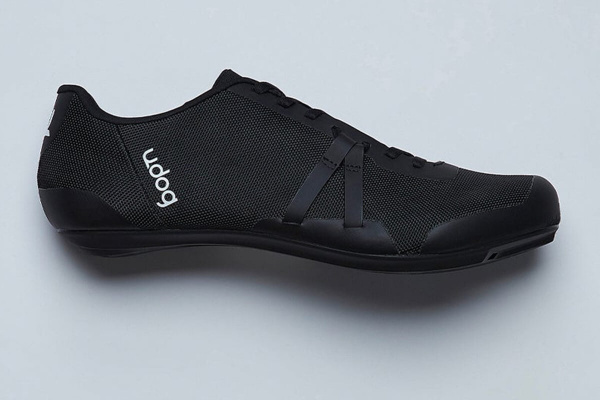
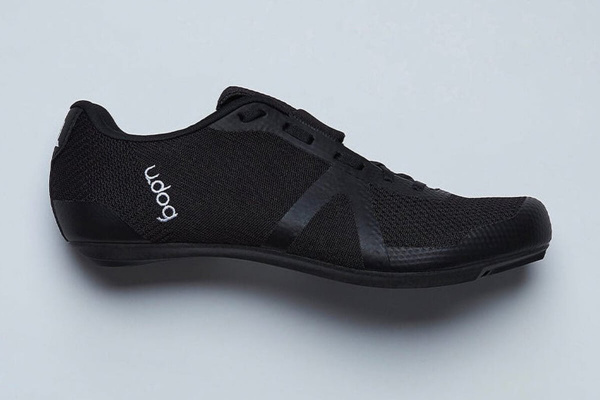
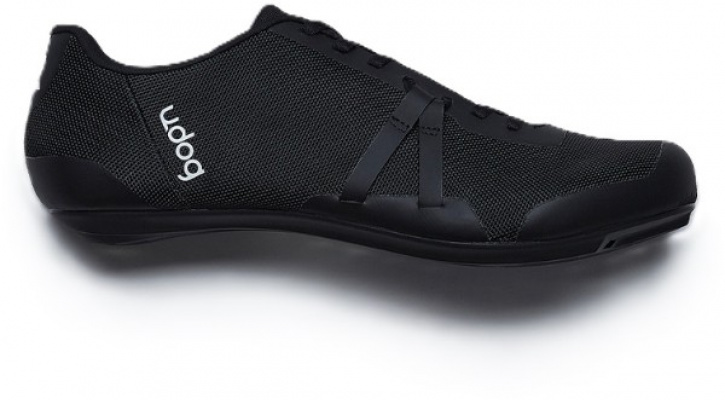
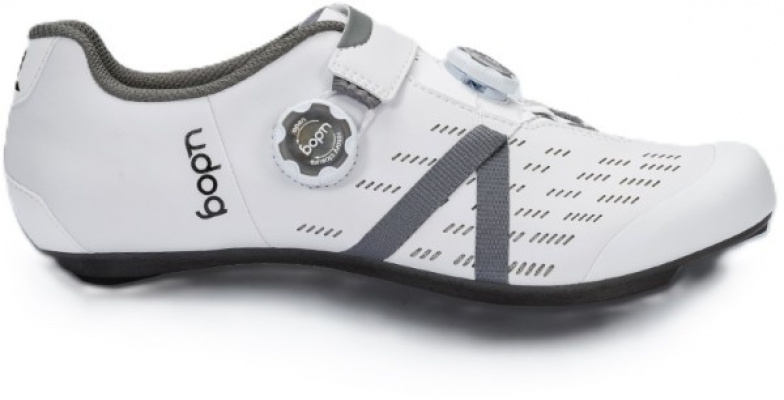
UDOG road shoes have done something quietly radical: they've made lace-up closures credible at the sharp end of road performance. Designed in Italy, the range pairs striking minimalist aesthetics with closure systems that actually solve the problems dials and straps have always created - hotspots, uneven pressure, and that nagging tightness on long days in the saddle. The proprietary Tension Wrap System (TWS) delivers metatarsal support that wraps evenly across the foot rather than clamping at a single point, and the Pocket Tension System (PTS) keeps laces tucked cleanly away so they stay out of your drivetrain and out of the wind. Fit-wise, UDOG uses a secure heel cup with a slightly more generous toe box than many classic European brands - genuinely useful if you've ever spent the last 30 miles of a sportive negotiating with your little toe. The range runs from the everyday-comfort Tensione through to the ultra-stiff Cima and the dial-equipped Cento, so there's a shoe for the club rider doing mixed-distance weekends and the climber counting grams. If you've been written off by narrow-lasted shoes before, these are worth a serious look.
Prices and availability can change quickly. Delivery charges are not always included in listed prices.
Final price, stock status and delivery terms are set by retailer. We may receive a commission on purchases made.
The Microfiber Upper: Breathability, Cleanability, and Aero Lacing
The one-piece seamless Microfiber leather upper is where UDOG makes a strong opening argument. Seams are pressure points waiting to happen, so removing them entirely means a cleaner interface between shoe and foot - particularly welcome on humid summer climbs where swelling is a factor. The material breathes well enough to keep things reasonable on a warm day, though it's more focused on comfort and structure than the mesh-heavy ventilation you'd find on dedicated hot-weather shoes.
Where it earns its keep in a UK context is cleanability. After a wet spin through gritty country lanes - the kind that coats everything from your calves downward - you can wipe the Microfiber upper down with a damp cloth and be done with it in minutes. No fabric panels to trap road filth, no stitched seams to harbour grit. That matters when you're riding through autumn and the roads are permanently dressed in leaf mulch and standing water.
The Pocket Tension System (PTS) handles the aerodynamics side. Once you've tied the laces, the loops and loose ends tuck into a hidden pocket at the tongue - out of the airflow, away from the chainring, and not going anywhere. It's a neat solution to the one genuine criticism of lace-up cycling shoes, and it works without adding bulk or faff to the process. If you're comparing this to the Fizik road shoes range where Boa dials handle closure, the PTS trades instant micro-adjustment for a more even, pressure-free hold across the whole forefoot.
Tensione, Cima, and Cento: Picking the Right Shoe for Your Riding
UDOG keeps the range focused rather than sprawling, which makes the decision reasonably straightforward once you know what each model is doing.
The Tensione sits at the entry point and uses a nylon-carbon hybrid sole - lighter and stiffer than a pure nylon base, but not the full-carbon rigidity of the upper models. It's the one for riders who want the UDOG fit and lace system for everyday riding, sportives, or long-distance comfort without paying for stiffness they won't fully exploit. Think of it as the sensible choice for most club riders doing varied distances across the week.
The Cima is a different proposition. A high-stiffness carbon composite sole means power transfer that's immediate and unforgiving in the best possible sense - every watt goes where it should. It's noticeably lighter than the Tensione, which makes it the natural pick for those obsessing over weight on climbs. If your Saturday ride involves grinding up something long and steep in the Yorkshire Dales or the Brecon Beacons, the Cima is built around that kind of effort. Giro road shoes at a similar price point offer comparable carbon sole stiffness, but UDOG's lace closure gives the Cima a fit consistency that Boa systems occasionally struggle to replicate on higher insteps.
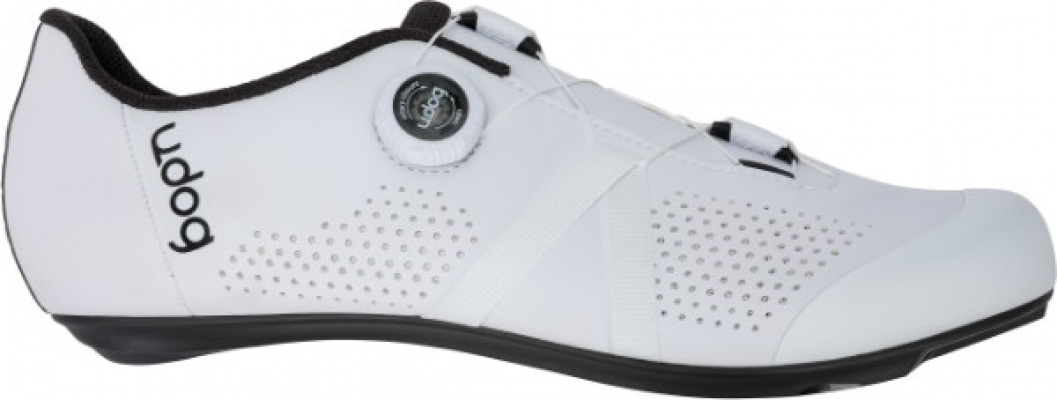
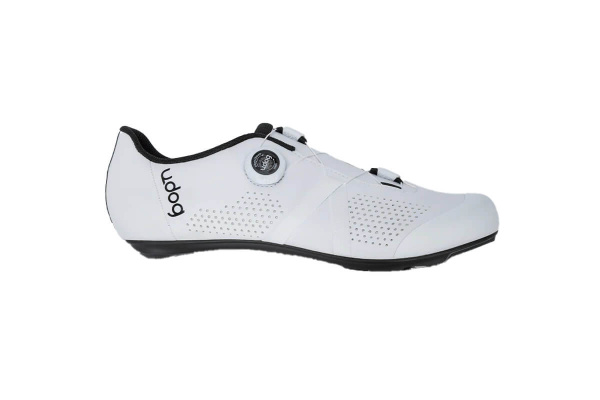
The Cento introduces a Micro-Twist dial for on-the-fly adjustment - a nod to riders who want the convenience of a dial system while still benefiting from UDOG's fit philosophy. The carbon sole carries the same high-stiffness index as the Cima, so performance isn't compromised. This is the model to consider if you're doing crit racing or rides where you need to tweak fit quickly without stopping.
Across all three, the fit profile is consistent: a snug, secure heel cup that prevents lift, paired with a toe box that's roomier than you'd expect from an Italian brand. If you've found Quoc road shoes comfortable but wanted more sole stiffness, the UDOG range occupies a similar fit philosophy with a higher performance ceiling. UDOG shoes generally run true to size, but if you're between sizes, measure your foot in centimetres and use their size chart - the generous toe box means going up isn't usually necessary.
Keeping Them Road-Ready: Care After Grim British Rides
Road shoes take a battering in this country. A decent set of UDOG cycling shoes deserves better than being shoved under a boot still wet from the A-road puddle that soaked you halfway home.
After wet or gritty rides, wipe the Microfiber upper down with a damp cloth while the shoes are still slightly warm - muck comes off far more easily before it dries and bonds. Don't use harsh detergents; they'll degrade the Microfiber over time. For the laces, remove them occasionally and wash them by hand or in a mesh bag in the machine, then let them air dry fully before re-threading. Wet laces that go straight back into the PTS pocket can develop a musty character quickly.
Drying is where people get it wrong. Leave them at room temperature - stuffed loosely with newspaper if they're sodden - and resist the temptation to put them on a radiator or near a direct heat source. Carbon composite soles and Microfiber uppers both respond badly to rapid heat: the sole bonding can degrade and the upper can lose its shape. It's a slow process but an irreversible one. A warm airing cupboard with the door ajar is fine; directly on the heated element is not. Store them away from direct sunlight when they're not in use and the Microfiber will hold its structure and appearance for considerably longer.
If you're also riding off-road and want a shoe built for that rather than improvising with your road pair, the UDOG MTB & Gravel Shoes collection applies the same fit principles to a platform designed for mud, recessed cleats, and the kind of surfaces where a carbon road sole would be a liability.
Udog Road Shoes FAQs
Are UDOG road shoes true to size?
Generally, yes. UDOG shoes fit true to size and have a slightly more generous toe box than many traditional Italian cycling brands, so going up a size is rarely necessary. If you're between sizes, measure your foot in centimetres and cross-reference their size chart rather than guessing - it's worth doing properly.
How do you secure the laces on UDOG shoes?
UDOG uses the Pocket Tension System (PTS) - a hidden pocket built into the top of the tongue. Tie the laces as normal, then tuck the loops and loose ends into the pocket. They stay put, stay clean, and don't flap near the drivetrain. It takes about five seconds once you've done it a couple of times.
Are lace-up cycling shoes better for road riding?
For long-distance comfort, there's a strong case for them. Laces distribute pressure evenly across the forefoot rather than clamping at a single dial point, which reduces hotspots significantly on extended rides. The trade-off is that you can't adjust them while moving - something the Cento's Micro-Twist dial addresses if that matters to you.