
Mongoose Singlespeed & Fixie Bikes
Mongoose singlespeed and fixie bikes take the brand's decades of BMX-forged toughness and point it squarely at city streets. Strip away the cables, the mechs, the indexing faff - what you're left with is a bike that simply gets on with it. That ethos runs through the whole Mongoose urban range: 4130 Chromoly steel frames that soak up punishment rather than transmitting it into your wrists, aggressive track geometry that keeps the handling sharp, and drivetrains with almost nothing left to go wrong on a filthy January commute.
Whether you want to ride fixed and feel every pedal stroke feeding directly into forward momentum, or prefer the float of a freewheel for nipping to the station, Mongoose covers both modes on the same rear wheel. The flip-flop hub means you're not locked in. Buy one bike, ride it two ways. For UK riders dealing with potholed side streets, close-passing lorries, and the kind of winters that destroy gear cables in weeks, that simplicity is a genuine advantage rather than a compromise. Mongoose sits at the accessible end of the fixie market - think Elops territory on spec but with a BMX pedigree that shows up in build quality and frame confidence.
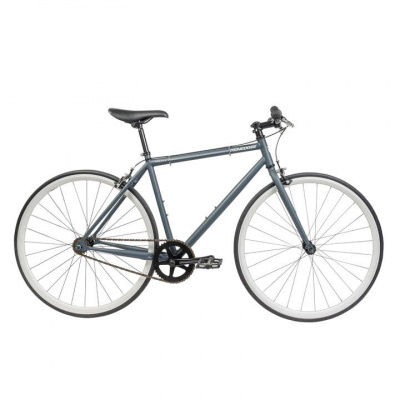
Prices and availability can change quickly. Delivery charges are not always included in listed prices.
Final price, stock status and delivery terms are set by retailer. We may receive a commission on purchases made.
Decoding the Mongoose Singlespeed Lineup
The name most people associate with Mongoose's urban range is the Maurice. It's been around long enough to have built a reputation on its own terms - a track-inspired frame, drop bars, and a no-nonsense parts list that won't leave you wincing if you lock it to a wet railing every day. The Maurice leans into proper track dropouts and a geometry that feels alert rather than sluggish, closer in spirit to a road-going pursuit bike than a relaxed city cruiser.
Within the range, the key split is material. Entry-level builds use hi-ten steel, which is heavier and less refined to ride but takes knocks without drama - fine if the bike lives outside or doubles as a loaner. Step up to the premium trims and you get full 4130 Chromoly throughout, which is noticeably lighter and has a livelier, more responsive feel under load. The component spec follows a similar arc: basic but functional cranks and saddles at the lower end, with better finishing kit as you move up. What stays consistent across the board is the drivetrain philosophy - one gear, two riding modes, nothing complex to service. If you're weighing up alternatives, Quella and Cinelli both offer comparable steel fixie builds, though Mongoose tends to sit at a more accessible price point with a slightly chunkier, more abuse-tolerant feel.
How the Tech Actually Works
Mongoose's BMX roots aren't just a marketing footnote - they show up directly in how the frames are engineered. BMX-heritage 4130 Chromoly steel tubing is drawn to handle flex and impact loading rather than optimised purely for minimum weight. On a fixie, where you're constantly loading and unloading the frame through pedalling, braking via leg resistance, and hopping kerbs, that compliance is useful. It takes the edge off road buzz in a way that an aluminium frame simply doesn't.
The dual-mode flip-flop rear hub is the most practically useful piece of kit on these bikes. One side carries a fixed cog - pedals turn, wheel turns, no coasting. Flip the wheel and the other side runs a standard freewheel, so you can spin your legs freely. Swapping takes five minutes and a couple of spanners. It means a Mongoose fixie genuinely suits riders who aren't sure yet whether they want to commit to riding fixed full-time. Try fixed for a month; if you hate it, flip the wheel. No new bike required.
The urban-proof horizontal track dropouts with integrated chain tensioners are worth understanding before you buy. Unlike vertical dropouts (standard on most geared bikes), horizontal dropouts let you slide the rear axle back and forth to dial in chain tension precisely. That matters on a single-speed because there's no derailleur taking up slack - get the tension wrong and the chain either skips or wears fast. The integrated tensioner bolts make this adjustment straightforward even if you're not mechanically confident. It's a considered detail that makes day-to-day ownership less fiddly. For anyone wanting to go deeper on fixie-specific components, M Part stock a solid range of compatible parts.
Riding a Mongoose Fixie on UK Roads
Mongoose fixies are genuinely well-suited to British city riding, and the steel frame is a big part of why. Roads in most UK cities - particularly anything off the main arterials - are a patchwork of utility cuts, subsidence patches, and Victorian-era cobbles. A steel frame doesn't eliminate that, but it spreads and dampens high-frequency chatter better than aluminium. Your hands and lower back will thank you on a long commute.
The stock gear ratio on most Mongoose builds sits around 44x18t, which gives you a development of roughly 5.7 metres per pedal revolution on 700c wheels. That's workable for flat urban riding - fast enough to keep pace with traffic, manageable enough for most riders to spin home. In hillier cities like Bristol or Sheffield, though, you'll feel it. There's no bailing out to an easier gear; you either push harder or slow down. Riders who aren't used to fixed-gear climbing often find a 44x18 tough going on anything sustained. Dropping to a 46x18 or even 44x16 changes the feel significantly, and with horizontal dropouts, swapping a cog is a basic job. Worth thinking about before your first commute takes you up a proper incline.
On tyre clearance: most Mongoose steel frames comfortably fit 28c tyres if you want more cushion and puncture resistance than the stock 25c rubber. A wider tyre at slightly lower pressure makes a real difference on rough tarmac. Many frames also have enough mud clearance for clip-on guards - a necessity for anyone commuting through winter rather than just riding on dry weekends. Check the specific model's stated clearance before buying, but the Chromoly builds are generally more accommodating than the entry-level hi-ten versions. For a more premium alternative if your budget stretches, Condor offer beautifully finished British-made frames, though the gap in price is significant. Specialized also have skin in this game if you want a bigger-brand warranty behind you.
Sealed bearings throughout the drivetrain and hubs are worth checking on whichever Mongoose build you go for - open bearings degrade fast in wet, gritty conditions and add maintenance overhead that somewhat defeats the point of a single-speed commuter. The better-specced Chromoly models tend to be better sorted here.
Mongoose Singlespeed & Fixie Bikes FAQs
Are Mongoose singlespeed bikes good for commuting?
Yes, solidly so. The BMX-influenced steel frames handle potholed city streets better than most aluminium alternatives, absorbing road noise rather than amplifying it. With no derailleur or cables to corrode, maintenance through a wet UK winter drops to next to nothing - clean the chain, check tyre pressure, ride.
Do Mongoose fixies come with a flip-flop hub?
Most Mongoose track-style bikes, including the Maurice, come with a flip-flop rear hub as standard. One side is fixed, the other runs a freewheel. Switching between them means removing the rear wheel and flipping it - about five minutes' work - so you can ride either mode on the same bike.
What tyre size fits a Mongoose single speed?
Stock builds usually roll on 700x25c or 28c tyres. Most Mongoose Chromoly frames have enough clearance to run slightly wider rubber - useful for adding comfort and puncture resistance on rough streets - and many will accommodate clip-on mudguards for year-round commuting. Check the specific model's clearance spec before fitting wider tyres.