
Mavic Arm Warmers
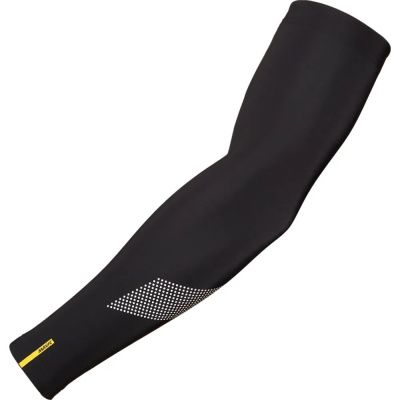
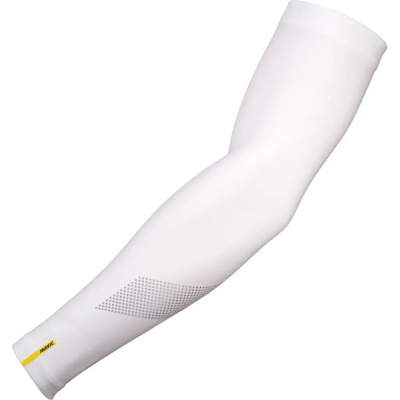
Mavic arm warmers are the kind of thing you'll wonder how you ever managed without once they've saved a ride. Stuffed into a back pocket at the start line on a damp October morning, pulled on at the top of a long drag when the mist rolls in - they're one of the most practical bits of kit you can carry. Mavic builds these around an ergonomic, articulated cut that follows the natural bend of your arm in the riding position, so you don't get that bunched, twisted feeling at the elbow that cheaper options dish out after twenty minutes. The brushed fleece interior traps warmth immediately against your skin, while a DWR surface treatment takes the edge off road spray and light drizzle. Double-sided silicone grippers lock the warmer to both your skin and your jersey sleeve, so they stay put whether you're grinding up a moorland climb or tucked on a fast descent. When the sun finally does its thing, they compress down small enough to disappear into a jersey pocket without a fight. For UK riding - where April can feel like February and August can surprise you the other way - that kind of packable, on-the-fly versatility genuinely earns its place in your kit bag.
Prices and availability can change quickly. Delivery charges are not always included in listed prices.
Final price, stock status and delivery terms are set by retailer. We may receive a commission on purchases made.
Fabric Tech and Weather Performance
Mavic's Cold Ride technology is the foundation here. The brushed fleece interior works like insulation that moves with you - it traps a thin layer of warm air against your skin without adding the kind of bulk that makes your jacket sleeve feel like a sausage casing. That matters on climbs where you're generating heat, but it matters just as much on descents where you stop generating it instantly. The fabric manages that transition better than a plain knit because the pile structure keeps some warmth even when it's damp from sweat.
The DWR coating handles the kind of weather UK riders actually encounter most often: not a biblical downpour, but the persistent fine drizzle of a Welsh valley morning, or road spray kicking up from a wet B-road. It won't keep you dry in a proper storm - no arm warmer will - but it buys you time and stops that immediate cold soak-through that kills your motivation before the first café stop. Worth noting: DWR treatments do degrade with washing, so how you care for them directly affects how long that weather resistance lasts (more on that below).
Moisture-wicking is the other side of the coin. Push hard up a climb and you'll sweat; the fleece interior needs to shift that moisture outward rather than holding it against your skin, where it turns cold the moment you crest the top. Mavic's construction addresses this with flatlock seams that reduce friction and a fabric blend designed to wick rather than saturate. The result is that the warmers stay comfortable across varied effort levels rather than feeling clammy after the first proper effort.
Understanding the Mavic Fit and Range
The articulated cut is the detail that separates well-designed arm warmers from an afterthought. Mavic pre-shapes these for the riding position - arms bent, slightly forward - so the fabric sits naturally rather than pulling or creasing when you're on the hoods. Straighten your arms and there's a little excess; get into your normal position and it disappears. That's exactly how it should work.
Sizing is where people go wrong most often. Your jersey size is not your arm warmer size. Measure your bicep circumference and use that as your reference point. The double-sided silicone grippers need enough contact with your skin to hold without pinching, and if the fit is too loose, no amount of gripper technology will stop them migrating south on a long ride. If you're sitting between sizes, go smaller. A slightly compressive fit stays put and tends to feel better in use than one that's a touch too generous.
The silicone gripper runs on both the inner edge (against your skin) and the outer edge (against your jersey sleeve), which is a smarter design than a single strip. It distributes the holding force more evenly, so you don't get that pressure mark from a single band digging in on a four-hour ride. If you're comparing options, Castelli arm warmers take a similar approach to gripper design, while Assos arm warmers lean into a more compressive overall construction - both are worth a look if you're deciding between premium options.
Mavic produces warmers across a range of weights and treatments, from lighter options suited to cool summer evenings or UV protection on exposed rides, to heavier thermal versions aimed squarely at autumn and spring riding in Britain. The thermal arm warmers cycling context is where the Cold Ride fleece versions sit; the lighter water-resistant arm sleeves are more about shoulder-season versatility than deep cold.
Layering and Care for UK Riding
The most useful layering combination for UK riding is simpler than most people make it. A Mavic base layer next to your skin, a Mavic short-sleeve jersey over the top, arm warmers tucked under the jersey sleeves, and a Mavic gilet over the lot. That combination covers you from about six degrees up to fifteen without needing to stop and fully re-dress. The gilet goes in the pocket first if it warms up; the arm warmers come off second. It's a system that works whether you're doing a Surrey Hills loop that starts cold and finishes sunny, or a Peak District ride where the temperature barely moves all day.
Arm warmers go under your jersey sleeves, always. The sleeve overlaps the warmer, which seals out wind and rain at the join and keeps the silicone gripper locked against your skin rather than exposed. Getting this wrong is a common mistake that leads to cold gaps and warmers that shift around.
Care is straightforward but worth doing right. Wash at 30 degrees, turn them inside out, and skip the fabric softener entirely - softener clogs the DWR coating and kills the moisture-wicking performance. If the water repellency starts to drop off, a short tumble dry on low heat can reactivate the DWR treatment. It's a simple fix that extends the life of the coating considerably. Don't iron them and keep them away from anything abrasive in the wash. GripGrab arm warmers follow similar care protocols if you're running mixed kit and want consistency across your layering system.
Mavic Arm Warmers FAQs
How do I choose the right size Mavic arm warmers?
Measure your bicep circumference rather than going off your jersey size - that's what determines whether the silicone grippers hold properly. If you're between sizes, go smaller. A snug fit stays put on long rides and tends to feel better than one that's slightly too loose, which will slowly work its way down your arm.
Do arm warmers go over or under your cycling jersey?
Always under the jersey sleeve. The sleeve sits over the top of the warmer, which closes the gap against wind and rain and keeps the silicone gripper in contact with your skin. Wearing them over the sleeve leaves a cold gap at the join and means the gripper has nothing to lock onto on the jersey side.
Are Mavic arm warmers waterproof?
Not waterproof, no. Most models carry a DWR coating that handles light drizzle and road spray well, and buys you time in heavier rain before the fabric saturates. For sustained downpours you'll need a proper waterproof jacket over the top. The DWR also needs occasional care - avoid fabric softener and a low tumble dry periodically helps maintain it.