
MAAP Road Shoes
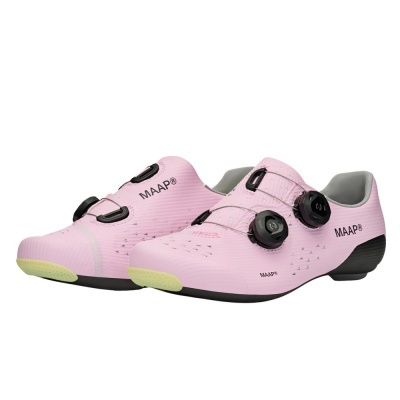
MAAP road cycling shoes sit at a genuinely interesting crossroads: Australian aesthetic sensibility fused with Swiss performance engineering, most notably through their collaboration with Suplest on the Edge+ platform. The result is a shoe that looks razor-sharp on the bike and backs it up with construction that serious road riders will actually care about.
At the core of that construction is the ERGO 360° carbon outsole - stiff enough that every watt you produce goes straight to the pedal rather than flexing away into the sole. Dual BOA® Li2 dials let you dial in fit while you're rolling, and the SOLESTAR insoles tucked inside add genuine arch support and alignment benefit rather than the foam offcuts you'd find in lesser shoes. The Anatomic WRAP tongue distributes pressure evenly across the instep, which matters on longer efforts when cheaper shoes start to bite.
The micro-fiber upper is breathable enough for summer climbing and wipes clean after a damp British road has covered your feet in grit. That clean profile also means overshoes slide on without a fight when autumn bites. If you're weighing up MAAP road shoes against the broader carbon sole road cycling shoes market, these are a compelling option for riders who want race-ready stiffness without sacrificing fit quality.
Prices and availability can change quickly. Delivery charges are not always included in listed prices.
Final price, stock status and delivery terms are set by retailer. We may receive a commission on purchases made.
Engineered for Wattage: What's Actually Going On Inside the Shoe
The headline spec is the ERGO 360° carbon outsole, and it earns its place at the top of the list. A stiff carbon sole is the single biggest performance differentiator in road shoe design - flex in the sole is energy that doesn't reach your pedal. MAAP's outsole is constructed to resist torsional as well as longitudinal flex, so you're not just getting stiffness on the push stroke but stability across the whole foot platform. That matters whether you're grinding up a long Welsh climb or hammering out of a roundabout.
Above the sole, a Carbon Shield layer sits beneath the lace zone across the instep. Its job is to spread the load from the BOA dials evenly rather than creating pressure points. On a long sportive this is the difference between feet that feel locked in and feet that feel squeezed. The micro-fiber upper is seamless where it counts - no internal ridges to create hot spots over hours in the saddle. It's also highly breathable, which keeps things manageable on humid summer days in the lanes. When the roads get gritty and wet, the synthetic surface wipes down with minimal effort. A damp cloth after a filthy ride through the Surrey Hills is genuinely all it takes.
The dual BOA® Li2 dials are positioned to give independent control over the forefoot and the instep zone. Small adjustments mid-ride - loosening slightly on a long climb, tightening for a descent - are straightforward. The Li2 system is among the most reliable dial mechanisms available, with a broad aftercare network if a dial ever needs replacing.
Getting the Fit Right: Sizing, Width and the WRAP System
MAAP road shoes, developed on the Suplest Edge+ platform, use a European last that runs true to size for most riders but leans toward a race-oriented, slightly snug fit. If you're between sizes or plan to wear thicker winter socks during shoulder-season rides, moving up half a size is sensible. Measure your foot length in centimetres and cross-reference the size chart carefully - MAAP cycling shoes sizing follows European convention, so don't assume your UK shoe size translates directly without checking.
The Anatomic WRAP tongue is worth understanding properly. Rather than a flat tongue that shifts around and bunches under the dial wire, it's shaped to wrap the instep and distribute volume adjustment evenly. This means riders with a higher instep get a more accommodating fit than the narrow silhouette might suggest at first glance. That said, if your feet are genuinely wide across the metatarsals, the carbon sole base is narrower than dedicated wide-fit options from some other brands. The BOA dials can compensate for volume variation, but they can't widen the footbed itself. Worth knowing before you buy.
The SOLESTAR insoles included in the box are a meaningful upgrade over standard footbeds. They're designed to improve arch support and knee tracking, which has a knock-on effect on pedalling efficiency over long efforts. If you already use custom insoles, they'll drop straight in - the shoe's volume accommodates aftermarket options without cramping the toe box. Pair these with a set of MAAP bib shorts and you've got a fit system working from the pedal up.
Making Them Work Year-Round on UK Roads
These are primarily warm-weather road shoes. The ventilation that keeps your feet comfortable on a hot August ride in the Cotswolds becomes a liability in January. The good news is that the low-profile upper is genuinely overshoe-friendly - neoprene overshoes slide over without snagging on buckles or bulk. Keep a pair of decent overshoes in your kit and the MAAP road shoes cover a much wider seasonal window than their summer-focused construction implies.
For the wet and gritty conditions that make up a significant chunk of British road riding, the synthetic micro-fiber upper is practical rather than precious. Road spray, mud flicks, and general road muck don't penetrate or stain it badly. After a rough ride, wipe the upper down with a damp cloth and mild soap. Don't put them in a washing machine - the heat and tumbling will degrade the BOA dial housings and the carbon sole bonding over time.
The BOA dials themselves need occasional attention. Dried grit working into the dial mechanism is the most common cause of stiffness or skipping. A soft-bristled brush - an old toothbrush does the job - run around the dial housing after muddy or wet rides keeps them spinning cleanly. MAAP and BOA both offer dial replacement programmes if a unit is damaged, so don't worry if one takes a knock.
Remove the SOLESTAR insoles after any wet or particularly sweaty ride and let them air dry separately. Leaving them compressed inside a damp shoe accelerates breakdown of the foam and reduces the support benefit faster than necessary. It takes thirty seconds and noticeably extends the lifespan of both the insole and the shoe's interior. Round out your setup with MAAP socks cut to match the shoe's collar height, and pick up a MAAP jersey to complete the look if you're already buying into the kit.
MAAP Road Shoes FAQs
How do MAAP cycling shoes fit compared to other brands?
MAAP road shoes, built on the Suplest Edge+ platform, run true to size but use a race-oriented European last that fits snugly. If you're between sizes or prefer a little extra room for thicker socks on cooler rides, go half a size up. Always measure foot length in centimetres and check the size chart directly rather than converting from UK sizing.
Are MAAP road shoes suitable for wide feet?
The Anatomic WRAP tongue and dual BOA Li2 dials give good volume adjustment across different instep shapes, so higher-volume feet are reasonably well catered for. However, the carbon sole base is on the narrower side. Riders with genuinely wide forefeet may find the footbed width a limitation that dial adjustment alone can't fully resolve.
How do I clean and maintain my MAAP cycling shoes?
Wipe the micro-fiber upper with a damp cloth and mild soap after dirty rides - never machine wash them. Keep the BOA dials clear of dried grit by brushing around the housing with a soft-bristled brush. Pull the SOLESTAR insoles out after wet or sweaty rides and let both the insoles and the shoe interior dry separately before storing.