
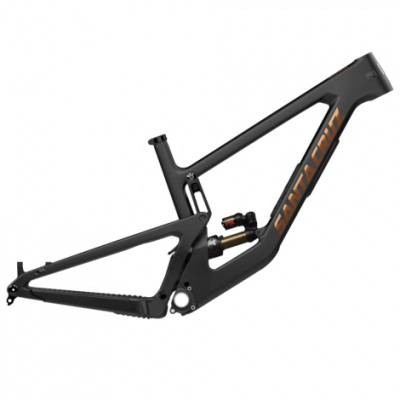
Santa Cruz Megatower CC
Charge steep, rough descents with downhill confidence, then pedal back up without the usual enduro penalty.
- VPP suspension: plush control through big hits
- 170mm fork, 165mm rear: enduro-race travel
- Glovebox downtube storage: tools without a pack
- Progressive geometry: stable at speed, confident steep
- Carbon CC layup: stiff, light, lifetime warranty
- Size-specific tuning: reach and chainstay tailored
Santa Cruz Megatower CC Deals

Prices and availability can change quickly. Delivery charges are not always included in listed prices.
Final price, stock status and delivery terms are set by retailer. We may receive a commission on purchases made.
Bikesy's Verdict
The Megatower CC is a bike for riders who want to go faster down than they thought possible, without giving up the ability to get back to the top under their own power. It's confidence-inspiring, composed, and built to handle the kind of terrain that makes other bikes feel out of their depth. If your idea of a good day involves steep, technical descents, rough trails, and the occasional bike-park lap, this is one of the best tools for the job.
It's not the lightest or most playful option, and it'll feel like overkill on mellow trails, but that's not what it's for. The VPP suspension, progressive geometry, and thoughtful details like the Glovebox make it a refined, capable machine that rewards skill and commitment. You'll pay a premium for the Carbon CC frame and top-tier spec, but you're getting a bike that's built to last and backed by a lifetime warranty. If enduro racing or aggressive trail riding is your focus, the Megatower CC deserves serious consideration.
Pros
- Exceptional descending confidence and high-speed stability
- Plush, controlled VPP suspension through rough terrain
- Climbs efficiently for a bike with 165mm rear travel
- Glovebox downtube storage: ride without a pack
- Progressive geometry inspires commitment on steep lines
Cons
- Premium price point reflects top-tier carbon and spec
- Feels over-biked on mellow, smooth trails if that's your usual terrain
- Heavier than shorter-travel options when chasing climb times
About the Santa Cruz Megatower CC
The Megatower CC sits at the sharp end of Santa Cruz's enduro lineup, built for riders who want downhill security without the uphill penalty. It's a bike that thrives when the trail tilts down and the rocks multiply, yet it'll still haul you back to the top without feeling like a punishment. With 165 millimetres of VPP travel out back and 170 up front, it occupies that sweet spot where you can charge bike-park lines all morning, then pedal to the next stage without wishing you'd brought something lighter.
This isn't a trail bike that dabbles in enduro; it's an enduro race machine that happens to climb respectably. The Carbon CC layup keeps weight in check while delivering the stiffness you need when you're leaning hard into a berm or landing flat off a drop. Santa Cruz's Glovebox - a tidy storage cavity in the downtube - means you can ditch the hip pack and still carry a tube, CO₂, and a multi-tool. It's a small touch, but it changes how the bike feels in the air and how your back feels after five hours in the saddle.
The geometry is unashamedly modern: long reach, slack head angle, steep seat tube. It's designed to let you sit centred and comfortable on the climbs, then shift your weight back and let the front wheel track through the rough stuff when gravity takes over. Size-specific chainstays keep the handling balanced across the range, so a small frame doesn't feel twitchy and an XXL doesn't feel like a barge.
Santa Cruz Megatower CC geometry
Reach stretches from 430 millimetres in small to 520 in double-XL, giving you room to move around without feeling cramped when the trail gets rowdy. The head angle sits at 63.8 degrees in the low setting - slack enough to inspire confidence at speed, but not so laid-back that you're wrestling the front end through tight switchbacks. Stack holds steady at 644 millimetres across sizes, which keeps the cockpit feeling roomy without forcing you into an overly upright position.
The seat tube angle is steep - 77.8 degrees in low - which plants you over the bottom bracket when you're grinding uphill. You'll feel more connected to the pedals, and your weight stays forward enough to keep the front wheel tracking rather than wandering. Chainstays measure 435 millimetres, short enough to let you pop the bike around but long enough to keep things stable when you're flat-out through a rock garden.
Wheelbase grows with frame size, from 1,235 millimetres in small to 1,335 in double-XL, so the bike scales predictably. Bottom-bracket drop is 35 millimetres, which lowers your centre of gravity just enough to aid cornering grip without leaving you vulnerable to pedal strikes on technical climbs. The geometry adjusts via a flip chip in the lower link, raising or lowering the bottom bracket and tweaking the angles by a few tenths of a degree. Most riders will leave it in low and enjoy the planted, confident feel it delivers.
Component choices & upgrades
The stock build on the Megatower CC is already well sorted. You'll typically find a Fox 38 or RockShox Zeb fork up front - both are stiff, controlled, and more than capable of handling the bike's intended use. Out back, a Fox Float X2 or RockShox Super Deluxe (air or coil) pairs beautifully with the VPP linkage, offering a plush, controlled ride that soaks up square-edged hits and stays composed through fast compressions. SRAM's Eagle AXS or GX Eagle Transmission drivetrain gives you reliable, crisp shifts, and the wide 10-52 cassette range means you've got gears for both lung-busting climbs and flat-out descents.
Brakes are typically SRAM Maven or Code RSC, with 200-millimetre rotors front and rear. They're powerful and easy to modulate, which matters when you're scrubbing speed before a tight corner or managing heat on a long descent. If you're riding steeper, more technical terrain regularly, a 220-millimetre front rotor is a sensible upgrade - it'll give you more bite and better heat management without adding much weight or complication.
Wheels are often Santa Cruz's own Reserve 30|HD carbon hoops, laced to Industry Nine or DT Swiss hubs. They're stiff, tough, and built to take a beating. Tyres are usually Maxxis Assegai up front and Minion DHR II out back, both in 2.5-inch widths - grippy, predictable, and confidence-inspiring in loose or wet conditions. If you're chasing a bit more speed on hardpack or smoother trails, swapping to a faster-rolling rear tyre like a Minion DHF or Dissector can shave a few watts without sacrificing too much grip.
The dropper post is typically a Fox Transfer or RockShox Reverb AXS, with 170 millimetres or more of travel depending on frame size. It's plenty for most riders, but if you're tall and want maximum saddle drop for steep descents, a longer post is an easy swap. Cockpit components - stem, bar, grips - are solid out of the box, but if you prefer a wider bar or shorter stem to fine-tune the handling, those are straightforward changes that can make the bike feel even more dialled to your style.
Where the Santa Cruz Megatower CC excels
This bike is built for enduro racing and aggressive trail riding where descents matter more than anything else. If your weekends involve shuttling, uplift days, or long backcountry loops with gnarly, technical descents, the Megatower CC will let you ride faster and with more confidence than almost anything else in its class. It's stable at speed, composed through rough sections, and inspires you to push harder into corners and commit to lines you might otherwise second-guess.
It climbs well for a bike with this much travel. The VPP suspension stays efficient under pedalling loads, and the steep seat angle keeps your weight forward so the front wheel tracks cleanly. You won't mistake it for a cross-country race bike, but you also won't be cursing it on the way back to the top. It's a bike that rewards fitness and technique, but it doesn't punish you if you're not racing the clock uphill.
Where it's less ideal is on mellower, flatter trails where the extra travel and slack geometry feel like overkill. If you're spending most of your time on smooth, rolling singletrack or groomed flow trails, the Megatower can feel a bit sluggish and over-biked. It's also not the nimblest option in tight, twisty sections where a shorter-travel bike would feel more playful and responsive. And if you're counting grams or chasing Strava times on climbs, there are lighter, more efficient options out there - though you'll give up the descending confidence this bike delivers in spades.
Santa Cruz Megatower CC FAQs
What is the travel of the Santa Cruz Megatower?
The Megatower runs 165 millimetres of rear travel and pairs with a 170-millimetre fork. That's enduro-race territory, giving you the suspension to handle big hits and rough terrain while still being efficient enough to pedal uphill without too much penalty.
Is the Santa Cruz Megatower good for climbing?
Yes, it climbs well for a bike with this much travel. The VPP suspension stays efficient under power, and the steep seat angle keeps your weight forward so the front wheel tracks cleanly. You'll work harder than on a shorter-travel trail bike, but it's far from a slog.
What is the best size Santa Cruz Megatower for me?
Reach is the key metric. Small starts at 430 millimetres and suits riders around 155 - 165 centimetres tall; medium (455mm) fits 165 - 175cm; large (475mm) suits 175 - 185cm; XL (495mm) covers 185 - 193cm; and XXL (520mm) is for riders 193 centimetres and taller. If you're between sizes, go larger for stability or smaller for a more playful feel.
How much does a Santa Cruz Megatower weigh?
A top-spec CC build with SRAM X0 AXS and Reserve carbon wheels comes in around 15.97 kilograms. Weight varies depending on build kit, but the Carbon CC frame keeps things competitive for a bike with this much capability.
What are the key technologies on the Santa Cruz Megatower?
VPP suspension is the headline act - it's plush, controlled, and balances pedalling efficiency with bump absorption. The Glovebox downtube storage lets you carry essentials without a pack, and size-specific geometry tuning ensures the bike handles predictably across the size range. The Carbon CC layup is stiff, light, and backed by a lifetime warranty.
Is the Santa Cruz Megatower suitable for downhill riding?
Absolutely. It's stable at speed, confident through rough terrain, and has the travel and geometry to handle bike-park laps, shuttle days, and steep, technical descents. It's not a full downhill race bike, but it's more than capable for most riders in most conditions.
What are the differences between the Santa Cruz Megatower CC and C frames?
The CC frame uses Santa Cruz's top-tier carbon layup, which is lighter and stiffer than the C frame. The C frame is more affordable and still plenty capable, but the CC offers a performance edge if you're chasing every advantage. Both come with a lifetime warranty.
What tyre clearance does the Santa Cruz Megatower have?
You can fit up to 2.5-inch tyres comfortably, with some builds accommodating 2.6-inch rubber depending on rim width and tyre casing. That's plenty of room for aggressive, grippy treads without worrying about mud clearance or rub.
Key Features & Benefits
- VPP suspension with 165mm rear travel: Soaks up big hits and trail chatter while staying efficient under power, so you can charge descents and still pedal uphill without penalty
- Glovebox integrated downtube storage: Carry tools, tube, and CO₂ inside the frame, ditching the hip pack for better weight distribution and cleaner jumps
- Progressive geometry with 63.8° head angle and steep seat tube: Stable and confident at speed on descents, yet keeps you centred and efficient when climbing technical sections
- Carbon CC layup with lifetime warranty: Stiff, light, and durable construction that won't let you down, backed by Santa Cruz's confidence in the frame's longevity
- Size-specific chainstay and reach tuning: Ensures balanced, predictable handling across all frame sizes, so small riders aren't twitchy and tall riders aren't piloting a barge
Santa Cruz Megatower CC 2025, 2024 & 2023 differences
The 2025 model introduced builds like the X0 AXS RSV and C GX AXS, highlighting SRAM's Eagle AXS T-Type electronic drivetrain and maintaining the 170-millimetre fork and 165-millimetre rear travel established in the V2 refresh. The 2023/2024 V2 iteration brought the most significant updates: revised VPP kinematics for a more linear, controlled feel; size-specific chainstays to improve handling across the range; increased travel from 160 to 165 millimetres rear (170 front); and the addition of the Glovebox downtube storage. Geometry was refined with longer reach figures and a slacker head angle to enhance stability at speed.
The 2020/2021 models ran 160 millimetres of rear travel and 170 front, with adjustable geometry via a flip chip in the lower link and adjustable chainstay length via dropout chips. The original 2019 Megatower debuted with the same 160/170 travel split and adjustable geometry, replacing the Hightower LT in Santa Cruz's lineup. If you're considering a used V1 (2019 - 2022) model, expect slightly less travel, a touch less refinement in the suspension kinematics, and no Glovebox - but the core character and capability remain strong.
Alternatives to Consider
Within Santa Cruz's own range, the Nomad CC offers a more playful, mixed-wheel setup (29-inch front, 27.5-inch rear) with 170 millimetres of travel, leaning into freeride and aggressive trail use with a livelier, more flickable character. If you want something more versatile and less enduro-focused, the Hightower CC drops to 150 millimetres rear and 160 front, balancing climbing efficiency with capable descending for all-day trail rides where you're not always hunting the steepest lines.
Cross-brand, the Specialized Enduro Expert is a direct rival, offering similar travel and geometry with Specialized's own suspension platform and a reputation for composed, confidence-inspiring handling. The Trek Slash 9.7 brings a slightly more aggressive edge with adjustable geometry and a focus on downhill speed, while the YT Capra Core 3 delivers enduro capability at a keener price point, though you'll sacrifice some of the refinement and after-sales support. The Norco Range C2 is another strong contender, with a reputation for plush suspension and stable descending, appealing to riders who prioritise all-day comfort on rough terrain. Each of these bikes trades blows with the Megatower depending on your priorities - geometry preferences, component spec, or brand loyalty - but the Santa Cruz holds its ground with VPP refinement, the Glovebox, and a geometry package that inspires commitment without feeling unwieldy.
Reviews
Stability at speed defines the Megatower's character. When the trail tilts down and the rocks multiply, the bike settles into a rhythm that lets you carry momentum through sections where other enduro machines start to feel busy or vague. Long reach and a slack head angle give you room to shift your weight back, and the front wheel tracks cleanly through ruts and roots without deflecting or chattering. Corners feel planted, with enough grip and composure to let you lean hard into berms or rail flat turns without second-guessing your line.
VPP suspension delivers a plush, controlled ride that absorbs square-edged hits and fast compressions without feeling wallowy or disconnected. The bike stays high in its travel under pedalling loads, so you're not fighting bob or squat when you're grinding uphill, yet it opens up willingly when you hit a rough section or land a drop. Coil and air shocks both work well with the linkage, though coil adds a touch more small-bump sensitivity and mid-stroke support if you're riding particularly rough or high-speed terrain.
Climbing performance surprises riders who expect a bike with this much travel to feel sluggish or inefficient. The steep seat angle keeps your weight forward, and the suspension platform stays composed under power, so you can maintain traction and momentum on technical climbs without feeling like you're pedalling a marshmallow. It's not as quick or nimble as a 130-millimetre trail bike, but it's far from a penalty when the trail points up.
Because the geometry is so progressive, the Megatower rewards commitment. When you trust the bike and let it run, it feels stable and predictable; when you're tentative or riding below its capability, it can feel a bit heavy or less responsive than shorter-travel options. Tight, twisty sections don't play to its strengths - it's happier on open, fast trails where you can carry speed and let the suspension do its job. The Glovebox is a practical touch that changes how the bike rides: less weight on your back means better balance in the air and less fatigue over long days.
Full Specification
| Spec | Value |
|---|---|
| Frame Material | Carbon CC or Carbon C |
| Frame Design | Full suspension, 29-inch wheels |
| Frame Features | ISCG-05 tabs, internal cable routing, integrated Glovebox downtube storage |
| Tyre Clearance | 2.5 inches |
| Available Sizes | S, M, L, XL, XXL |
| Bottom Bracket | SRAM DUB 73mm MTB Wide or Threaded 73mm BSA |
| Rear Axle | 148x12mm Boost |
| Fork Travel | 170mm |
| Fork Type | Air fork with adjustable compression and rebound |
| Rear Travel | 165mm |
| Suspension Platform | Santa Cruz Virtual Pivot Point (VPP) |
| Rear Shock Compatibility | Air or coil shocks |
| Drivetrain | 1x12 speed |
| Shifters | SRAM AXS Pod Controller, X0 Eagle AXS T-Type, or GX Eagle T-Type |
| Rear Derailleur | SRAM X0 Eagle AXS T-Type or GX Eagle T-Type |
| Crankset | SRAM X0 Eagle DUB T-Type or GX Eagle DUB T-Type |
| Crank Length | Approximately 170mm for larger sizes |
| Cassette | SRAM Eagle T-Type, 10-52T |
| Chain | SRAM Eagle T-Type Flattop 12-speed |
| Brakes | Hydraulic disc |
| Brake Calipers | SRAM Maven, Hope Tech4 V4, or SRAM Code RSC/DB8 |
| Rotors (Front) | 200mm or 220mm |
| Rotors (Rear) | 200mm |
| Rims (Internal Width) | 30mm (Santa Cruz Reserve 30|HD) |
| Hubs (Front) | Industry Nine 1/1 or DT Swiss, Boost 110x15mm |
| Hubs (Rear) | Industry Nine 1/1 or DT Swiss, 148x12mm Boost |
| Tyres (Front) | Maxxis Assegai, 29x2.5 inches |
| Tyres (Rear) | Maxxis Minion DHR II, 29x2.5 inches |
| Handlebar Width | 800mm |
| Seatpost Travel | 170mm or longer |
| Weight (Approx) | 15.97kg (35.21 lbs) for CC X0 AXS build |