
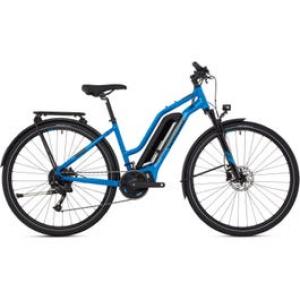
Ridgeback Arcus 2
Tackle your commute and weekend towpath adventures with torque-rich assist and proper utility kit.
- Sportdrive mid-drive motor: 90Nm torque for hills
- Integrated lights run from main battery
- Full mudguards and pannier rack fitted
- 700x45c WTB Riddlers: grip on gravel and tarmac
- 63mm suspension fork smooths rough surfaces
- Step-through frame option for easy mounting
Ridgeback Arcus 2 Deals

Prices and availability can change quickly. Delivery charges are not always included in listed prices.
Final price, stock status and delivery terms are set by retailer. We may receive a commission on purchases made.
Bikesy's Verdict
The Ridgeback Arcus 2 is a proper utility e-bike that knows its brief and delivers it without fuss. You get a torque-rich mid-drive motor, integrated lights, full mudguards, a pannier rack, and tyres that handle everything from wet tarmac to gravel tracks - all fitted as standard. It's comfortable, practical, and ready to work the moment you wheel it out, which makes it a strong choice for commuters and recreational riders who want electric assistance without the faff of bolting on extras or second-guessing the spec.
The motor's 90Nm of torque is generous for this level of bike, making climbs and acceleration feel effortless, and the upright geometry keeps you comfortable even on longer rides. The step-through frame option broadens its appeal, and the overall package represents solid value for riders who prioritise function over flash. Range is the main limitation - up to 55km in real-world conditions - so plan accordingly if you're venturing further afield.
If you need a dependable, well-equipped e-bike for daily commuting, errands, and light exploration, the Arcus 2 delivers exactly what it promises. It's not chasing speed or technical trail glory, but for the riding it's designed to do, it's hard to fault.
Pros
- 90Nm mid-drive motor delivers strong, natural-feeling assist on climbs and from standstill
- Integrated lights, full mudguards, and pannier rack fitted as standard - ready to work immediately
- 700×45c tyres and 63mm fork handle mixed surfaces from tarmac to towpaths with calm confidence
- Step-through frame option broadens accessibility for riders who prefer easy mounting
- Hydraulic disc brakes offer reliable stopping power in all weathers
Cons
- 418Wh battery range (up to 55km) may feel limiting if you're planning longer rides without charging access
- MicroSHIFT Mezzo drivetrain is entry-level; experienced riders may miss the precision of higher-tier shifting
- Weight typical for robust e-bikes means it's not ideal if you need to carry it up stairs regularly
About the Ridgeback Arcus 2
The Ridgeback Arcus 2 is a proper urban utility e-bike that doesn't pretend to be anything else. Built around a 6061 aluminium frame with a Sportdrive mid-drive motor nestling in the bottom bracket, it's designed for riders who need to get places - work, shops, canal paths, gravel tracks - without fuss or faff. You get full-length mudguards, a pannier rack, and integrated lights powered by the main battery, so it's ready to work the moment you wheel it out. The 2025 model leans into practicality with a 1×9 microSHIFT Mezzo drivetrain, hydraulic disc brakes, and 700×45c tyres that straddle the line between urban grip and light trail capability.
Ridgeback positions the Arcus 2 as a modern take on the hybrid e-bike: comfortable enough for longer rides, capable enough for rougher surfaces, and equipped enough that you won't need to bolt on extras before your first commute. The motor delivers 90Nm of torque, which is generous for a bike at this level, and the 418Wh battery offers a claimed range that'll cover most daily loops without anxiety. It's available in both a traditional crossbar and a step-through open frame, broadening its appeal to riders who value easy mounting or simply prefer a lower standover.
This isn't a bike chasing speed records or technical singletrack glory. It's aimed squarely at commuters and recreational riders who want electric assistance that feels natural, a riding position that won't leave them aching, and the confidence to explore beyond tarmac when the mood strikes. The Arcus 2 delivers that brief with a straightforward spec and a sensible price point, making it a solid entry into e-bike ownership for riders who prioritise function over flash.
Ridgeback Arcus 2 geometry
The Arcus 2's geometry is tuned for stability and comfort rather than aggressive handling. The head angle sits at a relaxed 69 degrees across all three sizes, which keeps the front end calm and predictable when you're navigating potholes or gravel ruts. You're not going to carve tight switchbacks with race-bike precision, but that's not the point - this geometry rewards a more upright, observant riding style that suits urban traffic and leisurely trail exploration equally well.
Stack figures are generous, placing the bars high enough that you're not hunched over the cockpit. Combined with the short stem and swept-back alloy bars, the result is a posture that keeps your weight centred and your sightlines clear. Reach is moderate, so you're not stretched out, and the chainstays are a consistent 465mm across the size range, contributing to a planted feel under power. The wheelbase grows slightly as you move up through the sizes, but the overall character remains stable and confidence-inspiring rather than nimble.
When you're climbing, the seat angle (74 degrees on small and medium, 73 on large) keeps you over the pedals well enough that the motor's torque doesn't feel like it's lifting the front wheel. Descending, the slightly longer wheelbase and relaxed head angle mean the bike tracks straight and absorbs line changes without drama. It's a geometry that prioritises comfort and control over quick direction changes, which makes perfect sense for a bike that'll spend most of its time on commutes, canal paths, and the occasional gravel byway.
Component choices & upgrades
The Arcus 2 arrives with a well-sorted spec that covers the essentials without unnecessary frills. The microSHIFT Mezzo 1×9 drivetrain offers a sensible 11-36T cassette range paired with a 42T chainring, giving you enough gears to spin up moderate climbs with the motor's help and cruise comfortably on the flat. It's entry-level componentry, certainly, but it's reliable and straightforward to maintain - qualities that matter more on a utility bike than the latest shifting tech. The hydraulic disc brakes (ALHONGA AHJ-OD07) provide confident stopping power in all weathers, which is non-negotiable when you're carrying shopping or navigating wet city streets.
The WTB Riddler tyres in 700×45c are a smart choice, offering enough volume to cushion rough surfaces and enough tread to grip damp tarmac or loose gravel without feeling sluggish. The RST Volant fork with 63mm of travel takes the sting out of kerb drops and rutted paths, though it's a coil spring unit rather than air, so you won't be fine-tuning compression or rebound. For most riders, it'll do the job without complaint.
If you're planning longer tours or heavier loads, consider upgrading the saddle to something with more padding or a cut-out if comfort becomes an issue. The stock Ridgeback Metro saddle is functional but not particularly plush. Similarly, if you're riding in low light frequently, aftermarket bar-end mirrors or a brighter rear light (in addition to the integrated one) can boost visibility. The tyres are a good all-rounder, but if you're spending most of your time on tarmac, swapping to a slicker 700×40c option will reduce rolling resistance and extend your range slightly. Conversely, if gravel and towpaths dominate your routes, a more aggressive tread pattern will give you extra bite in loose conditions.
The drivetrain and brakes are best left as-is unless something fails - upgrading to a 10- or 11-speed cassette would require new shifters, derailleur, and possibly a new freehub, which quickly becomes uneconomical. The motor and battery are fixed components, so your focus should be on contact points (saddle, grips) and tyres to tailor the bike to your specific riding. The stock build is already practical and capable; upgrades are about personal preference rather than necessity.
Where the Ridgeback Arcus 2 excels
The Arcus 2 is outstanding at daily commuting and mixed-surface utility riding. If your route involves a mix of tarmac, cycle paths, towpaths, and the occasional gravel track, this bike handles it all with calm competence. The motor's 90Nm of torque means you can tackle moderate climbs without breaking a sweat, and the assist cuts in smoothly enough that you're not lurching forward at traffic lights. The integrated lights, mudguards, and rack mean you can load it up with panniers, ride through rain, and still be visible - no need to strip the bike down or bolt on extras before it's genuinely useful.
It's also a strong choice for recreational riders who want to explore beyond their usual routes without committing to a full gravel or mountain bike. The 700×45c tyres and suspension fork give you enough capability to venture onto rougher surfaces with confidence, and the upright position keeps things comfortable even on longer rides. The step-through frame option makes it accessible to riders who find traditional crossbar designs awkward or intimidating, broadening its appeal significantly.
Where the Arcus 2 is less ideal is on technical terrain or fast, flowing singletrack. The relaxed geometry and modest fork travel mean it's not built for aggressive descending or tight, twisty trails. You'll also find the range (up to 55km in real-world conditions, depending on assist level and terrain) limiting if you're planning all-day adventures without access to charging. The weight - typical for a robust e-bike but not specified - means it's not a bike you'll want to carry up flights of stairs regularly, and the entry-level drivetrain won't offer the precision or range that more experienced riders might expect on varied terrain.
If you're chasing speed, racing mates on road rides, or tackling serious off-road trails, the Arcus 2 isn't the tool for the job. But if you need a dependable, comfortable, and practical e-bike for commuting, errands, and light exploration, it delivers exactly what it promises without pretension or compromise.
Ridgeback Arcus 2 FAQs
What is the range of the Ridgeback Arcus 2?
The Arcus 2's 418Wh battery offers a claimed range of up to 55km in typical mixed riding, though this varies significantly based on terrain, rider weight, assist level, and conditions. If you're using higher assist modes on hilly routes, expect the lower end of that range. Flat commutes with moderate assist will stretch it further, and some sources suggest up to 75km in ideal conditions, though that's optimistic for most real-world use.
Is the Ridgeback Arcus 2 suitable for gravel paths?
Yes, the Arcus 2 handles gravel paths and towpaths comfortably. The 700×45c WTB Riddler tyres provide good traction and cushioning on loose surfaces, and the 63mm suspension fork absorbs the worst of the bumps. It's not a dedicated gravel bike, so don't expect it to excel on technical or very rough terrain, but for canal paths, fire roads, and light gravel, it's more than capable.
What type of motor does the Ridgeback Arcus 2 use?
The Arcus 2 uses a Sportdrive MD250S mid-drive motor, which delivers 250W of power and up to 90Nm of torque. Mid-drive motors are mounted in the bottom bracket area and drive the cranks directly, offering better weight distribution and more natural pedalling feel compared to hub motors. The 90Nm torque figure is generous for this level of bike, making climbs and acceleration feel effortless.
Can I fit panniers and mudguards to the Ridgeback Arcus 2?
Yes, the Arcus 2 comes with full-length mudguards and a pannier rack already fitted as standard. You don't need to source or install anything extra - it's ready to carry shopping, work kit, or touring gear straight out of the box. The rack is robust enough for typical loads, and the mudguards offer proper coverage for wet-weather riding.
What are the best alternatives to the Ridgeback Arcus 2?
Within Ridgeback's range, the Arcus 3 offers upgraded components if you want a step up in spec. Cross-brand, the Trek District+ 1 Lowstep, Giant Explore E+ 1, and Cube Reaction Hybrid SLX 800 are all worth considering, each with slightly different component choices and geometry. The Raleigh Felix is another option, though availability can vary. If budget is tight, Woosh Bikes are known for value and strong customer service in the e-bike space.
How much does the Ridgeback Arcus 2 weigh?
The exact weight of the Arcus 2 isn't published by Ridgeback, but e-bikes of this type typically weigh between 20 and 25kg. The aluminium frame, mid-drive motor, and battery all contribute to the overall heft, which is typical for a robust utility e-bike. It's not a bike you'll want to carry up stairs regularly, but the weight contributes to stability and durability on the road.
Is the Ridgeback Arcus 2 a good bike for commuting?
Absolutely. The Arcus 2 is designed with commuting in mind: integrated lights for visibility, full mudguards to keep you clean, a pannier rack for carrying gear, and a motor with enough torque to make hills and headwinds manageable. The hydraulic disc brakes offer reliable stopping power in all weathers, and the comfortable geometry means you'll arrive at work without aches or fatigue. It's a practical, dependable choice for daily riding.
What are the different frame sizes available for the Ridgeback Arcus 2?
The Arcus 2 is available in three sizes: Small (for riders roughly 148 - 168cm), Medium (163 - 178cm), and Large (173 - 188cm). Each size is offered in both a traditional crossbar frame and a step-through open frame design, giving you flexibility based on your preference for mounting and standover height. The geometry adjusts slightly across sizes to maintain similar handling characteristics.
Key Features & Benefits
- Sportdrive MD250S mid-drive motor with 90Nm torque: Delivers strong, natural-feeling assistance on climbs and quick acceleration in traffic without feeling lurchy or artificial
- Integrated lights powered by main battery: Keeps you visible in low light without the hassle of charging separate lights or remembering to fit them before each ride
- Full mudguards and pannier rack fitted as standard: Ready to carry shopping, work kit, or touring gear in all weathers - no need to source or install extras before it's genuinely useful
- 700×45c WTB Riddler tyres and 63mm RST Volant fork: Cushions rough surfaces and grips damp tarmac or loose gravel, giving you confidence to explore beyond smooth cycle paths
- Step-through frame option alongside traditional crossbar: Makes mounting and dismounting easier, especially when loaded with panniers or wearing work clothes, broadening the bike's appeal
Ridgeback Arcus 2 2024 differences
The 2024 Ridgeback Arcus 2 shares the same core specification as the 2025 model, featuring the microSHIFT Mezzo 1×9 drivetrain, ALHONGA hydraulic disc brakes, and the Sportdrive MD250S motor with 90Nm of torque. Geometry, frame design, and utility features (integrated lights, mudguards, pannier rack) remain consistent across both years. The 2024 model was priced at £1,799, though earlier availability saw it listed at £1,599. Component spec and overall capability are effectively identical, so if you find a 2024 model at a discount, you're getting the same bike.
Earlier iterations of the Arcus 2, such as the 2021 model, featured Shimano Altus shifters and rear derailleur along with Shimano hydraulic brakes, indicating a component supplier change in later years. The shift to microSHIFT and ALHONGA represents a cost-saving measure but maintains functional performance for the bike's intended use. If you're considering a used or older-stock Arcus 2, the Shimano-equipped versions may offer slightly more familiar shifting feel, though parts availability and overall capability remain comparable.
Alternatives to Consider
Within Ridgeback's electric range, the Arcus 3 sits a step above the Arcus 2, offering upgraded components - typically a higher-tier drivetrain and possibly improved fork or brakes - if you want more refinement without leaving the brand. If you're looking to save, Ridgeback's entry-level e-hybrids may offer similar utility with slightly pared-back spec, though the Arcus 2 already represents strong value for the kit you get.
Cross-brand, the Trek District+ 1 Lowstep is a direct competitor, offering a similar urban utility brief with Bosch motor assistance and a step-through frame. The Giant Explore E+ 1 brings Giant's SyncDrive motor and typically a more refined component package, though at a higher price point. The Cube Reaction Hybrid SLX 800 leans slightly more towards trail capability with a sportier geometry and upgraded suspension, making it a good choice if you want more off-road confidence. The Raleigh Felix is another practical urban e-bike worth considering, though availability can vary depending on your local dealers. Finally, Woosh Bikes are known for offering strong value and excellent customer service in the e-bike space, with models like the Woosh Karoo providing similar utility at competitive prices, though component spec and motor choice differ.
Each alternative shifts the balance slightly - Trek and Giant lean towards brand refinement and dealer support, Cube adds trail capability, Raleigh offers heritage and practicality, and Woosh prioritises value. The Arcus 2 sits comfortably in the middle, delivering a well-sorted utility package without asking you to compromise on the essentials.
Reviews
Comfort defines the Arcus 2's character. Wide tyres and a coil-sprung fork smooth out potholes and gravel ruts, while the upright geometry keeps your weight centred and your sightlines clear. When you're threading through traffic or cruising along a canal path, the bike feels planted and predictable, never twitchy or nervous.
The Sportdrive motor's 90Nm torque impresses most. Hills that would normally have you grinding gears become manageable spins, and pulling away from lights feels effortless without the lurching surge some cheaper motors deliver. Assist levels are easy to cycle through, and the power delivery feels natural enough that you're still pedalling rather than just along for the ride.
Handling is fun and easy, as several sources note. The relaxed head angle and generous wheelbase mean the bike tracks straight and absorbs line changes without drama, which suits its urban and light trail brief perfectly. You're not going to carve tight switchbacks, but that's not what this bike is for - it rewards a more observant, steady riding style that lets you enjoy the journey rather than chase speed.
Hydraulic disc brakes offer confident stopping power in all conditions, which matters when you're carrying a load or navigating wet city streets. The integrated lights are a practical touch, running off the main battery so you're always visible without the faff of charging separate units. Full mudguards and the pannier rack mean the bike is genuinely ready to work straight out of the box, which is rarer than it should be.
Range could be better. The 418Wh battery offers up to 55km in typical mixed riding, but if you're using higher assist modes on hilly routes, you'll hit the lower end of that figure. For most daily commutes it's adequate, but longer weekend adventures will require planning around charging stops.
Componentry is entry-level but functional. The microSHIFT Mezzo drivetrain shifts reliably enough for the intended use, though more experienced riders may miss the precision and range of higher-tier groupsets. The fork does its job without fuss, but it's a basic coil unit - don't expect fine-tuning or plush performance. For the price and purpose, it's a sensible compromise rather than a limitation.
Full Specification
| Spec | Value |
|---|---|
| Frame Material | 6061 heat-treated aluminium |
| Frame Design | Hybrid, available in standard crossbar and open frame (step-through) |
| Frame Features | Mounts for full-length mudguards and pannier rack; integrated front and rear lights |
| Tyre Clearance | Up to 700x45c |
| Available Sizes | Small (SM), Medium (MD), Large (LG) |
| Fork | RST Volant |
| Fork Travel | 63mm |
| Fork Type | Coil spring with lockout |
| Motor | Sportdrive MD250S mid-drive, 250W, 90Nm torque |
| Drivetrain | 1x9 speed |
| Shifters | microSHIFT Mezzo TS39-9R 9-speed |
| Rear Derailleur | microSHIFT Mezzo RDM36L 9-speed |
| Crankset | Sportdrive, 42T chainring, 170mm crank arms |
| Cassette | microSHIFT Mezzo CSH092, 11-36T |
| Chain | KMC X9E |
| Brakes | Hydraulic disc |
| Brake Calipers | ALHONGA AHJ-OD07 |
| Wheels | 700c |
| Rims | WTB SX19, 32H or 36H |
| Hubs | KTTC7, 32h front and rear |
| Spokes | Steel 14g |
| Tyres | WTB Riddler, 700x45c, Reflex puncture protection |
| Handlebar | Ridgeback alloy, 680mm width, 9-degree backsweep |
| Stem | Ridgeback alloy, 65mm length, +9-degree rise |
| Grips | Ridgeback Metro |
| Headset | FSA HS NO.10, 1-1/8 inch |
| Seatpost | Ridgeback alloy, 27.2mm diameter, 350mm length |
| Saddle | Ridgeback Metro |
| Pedals | Resin Metro |
| Mounts | Full-length mudguards, pannier rack, integrated lights |