
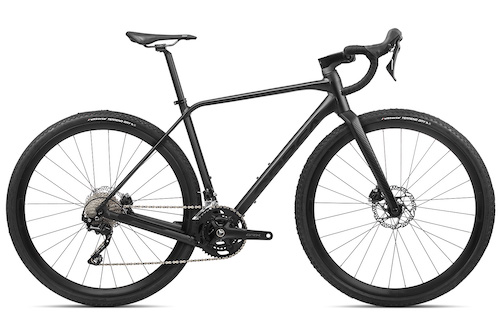
Orbea Terra H40
A versatile aluminium gravel bike that handles mixed surfaces, bikepacking, and all-day comfort without the carbon price tag.
- Hydroformed triple-butted aluminium frame for strength and compliance
- Full carbon fork damps vibration, keeps front end light
- Fits up to 700c × 45mm or 650b × 50mm tyres
- Shimano GRX 2×10 drivetrain: wide range for loaded climbs
- Three bottle mounts plus rack and mudguard eyelets
- Hydraulic disc brakes for all-weather control
Orbea Terra H40 Deals
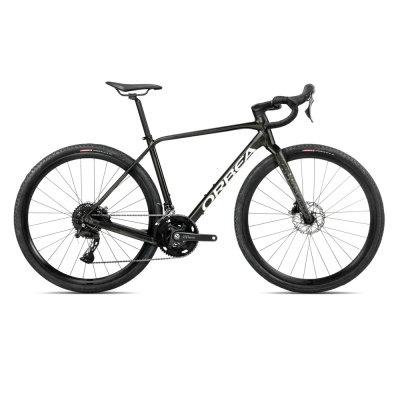
Prices and availability can change quickly. Delivery charges are not always included in listed prices.
Final price, stock status and delivery terms are set by retailer. We may receive a commission on purchases made.
Bikesy's Verdict
The Orbea Terra H40 is a gravel bike that earns its keep by doing everything well rather than one thing brilliantly. It's comfortable enough for all-day rides, capable enough for rough byways, and practical enough to handle bikepacking duties or winter commutes. The aluminium frame and carbon fork strike a sensible balance between cost, durability, and ride quality, while the Shimano GRX drivetrain and hydraulic brakes are dependable companions when the surface turns loose or the weather turns foul.
It's heavier than carbon competitors, and the stock tyres won't win you friends in deep mud, but those are minor quibbles for a bike that's this versatile. If you want one machine to handle tarmac, gravel, light trails, and the occasional loaded tour - without spending carbon money or sacrificing comfort - the Terra H40 is hard to fault. It's the sort of bike that makes you say yes to routes you'd otherwise skip, and that's worth more than a few hundred grams.
Pros
- Versatile across tarmac, gravel, and light trails - one bike for varied riding
- Generous tyre clearance (up to 700c × 45mm or 650b × 50mm) for comfort and grip
- Reliable Shimano GRX 2×10 drivetrain with wide range for loaded climbs
- Stable, confidence-inspiring geometry that's nimble enough for tight sections
- Three bottle mounts plus rack and mudguard eyelets for touring and bikepacking
Cons
- Heavier than carbon competitors if you're chasing race times or KOMs
- Stock Vittoria Terreno Dry tyres lack grip in mud - swap for wetter conditions
- Rigid fork means you'll feel every rock on sustained technical descents
About the Orbea Terra H40
The Terra H40 is Orbea's answer to riders who want genuine gravel capability without the carbon price tag. Built around a hydroformed triple-butted aluminium frame and a full carbon fork, it's designed from the ground up for mixed-surface adventure rather than being a road bike with wider tyres bolted on. You get generous tyre clearance - up to 700c × 45mm or 650b × 50mm - so you can tune the ride to suit anything from fast fire roads to chunky byways. Three bottle mounts, rack and mudguard eyelets, and internal cable routing signal the intent: this is a bike for going places, not just riding loops.
Shimano's GRX groupset anchors the build. The 2×10 setup pairs a 30/46t crankset with an 11 - 34t cassette, giving you a spread that'll haul you and your kit up long climbs without forcing you to spin out on tarmac descents. Hydraulic disc brakes offer dependable stopping power when the surface turns loose or the weather turns foul. At around 11 kg for a size large, it's not featherweight, but the frame's compliance and the carbon post's vibration damping mean you're comfortable deep into a day's ride. It's the sort of bike that thrives on variety: tarmac commutes, gravel sportives, weekend bikepacking trips, even the odd towpath detour.
What sets the Terra H40 apart is its balance. The geometry is neither twitchy nor sluggish - it tracks confidently through ruts and holds a line on descents, yet it's nimble enough to thread singletrack when the gravel path narrows. You're not fighting the bike to stay upright on loose surfaces, and you're not wrestling it through tight corners. It's composed, predictable, and surprisingly fun when the terrain gets interesting. If you're after a do-it-all gravel machine that won't punish your wallet or your back, the Terra H40 delivers.
Orbea Terra H40 geometry
The Terra H40's geometry strikes a middle ground between road poise and off-road stability. Across the size range, head angles sit between 70 and 72 degrees - slack enough to inspire confidence on loose descents, steep enough to keep the steering responsive when you're weaving through traffic or carving tarmac bends. Chainstays are a consistent 430 mm, short enough to keep the rear end lively without making the bike feel nervous under a loaded pannier.
Reach and stack grow progressively from XS to XXL, so you can dial in a position that's upright enough for all-day comfort yet forward enough to put power down when you're chasing mates up a climb. The longer head tube on larger sizes means taller riders won't need a stack of spacers to achieve a relaxed posture, while smaller frames keep the front end low enough for agile handling. Bottom bracket drop is modest - 76 to 78 mm - so you've got clearance for pedalling through technical sections without clipping rocks, yet the bike doesn't feel tall or vague when you're leaning into corners.
Wheelbase stretches from just over a metre on XS to 1072 mm on XXL, giving larger frames the planted feel you want when descending at speed or riding no-hands to grab a snack. The result is a bike that feels stable enough to inspire confidence on rough ground, yet nimble enough to enjoy when the path gets twisty. You're not perched on top of the bike; you're settled into it, with a natural weight distribution that makes long days feel shorter.
Component choices & upgrades
The stock build is well sorted for the money. Shimano's GRX RX400 levers and derailleurs are proven workhorses - they shift cleanly under load, the hoods are comfortable for hours at a time, and the hydraulic brakes offer plenty of modulation when you're braking hard into a gravel corner. The RX600 crankset is stiff enough to handle out-of-the-saddle efforts, and the 30/46t chainrings paired with an 11 - 34t cassette give you a usable range whether you're spinning up a 15% gradient with camping gear or cruising at 30 km/h on a flat rail trail.
That said, if you're planning serious bikepacking or tackling steeper, looser terrain, a few targeted upgrades will sharpen the bike's edge. The Vittoria Terreno Dry tyres are fast-rolling and predictable on hardpack, but they'll struggle for grip in mud or wet clay. Swapping to something like a Panaracer GravelKing SK or a Schwalbe G-One Bite will give you more bite in softer conditions without sacrificing too much speed. If you're carrying heavy loads or riding technical descents regularly, consider stepping up to larger rotors - 160 mm front and rear is adequate, but 180 mm up front adds stopping power and reduces fade on long descents.
The carbon seatpost does a decent job of smoothing out rough surfaces, but if you're chasing maximum comfort or planning multi-day rides on washboard gravel, a suspension seatpost or a wider, more supple saddle might be worth exploring. The OC Gravel handlebar offers a sensible 15 mm rise and 70 mm reach, but if you prefer a more aggressive position or want extra flare for off-road control, aftermarket bars are an easy swap. Beyond that, the build is solid - spend your money on tyres, saddle, and perhaps a dropper post if you're venturing into rowdier terrain, but don't feel pressured to replace components just for the sake of it.
Where the Orbea Terra H40 excels
The Terra H40 is outstanding at mixed-surface riding where the terrain changes faster than your playlist. It's happiest on gravel byways, forest fire roads, and quiet lanes - anywhere you're covering distance over varied surfaces without needing full suspension. The wide tyre clearance and stable geometry mean you can run lower pressures for comfort and grip, while the efficient drivetrain keeps you moving when the gradient kicks up. It's also a strong choice for bikepacking: the frame has mounts for three bottles, plus rack and mudguard eyelets, so you can carry what you need without resorting to a trailer.
It handles tarmac commutes and road sportives with ease, too. The geometry isn't as aggressive as a pure road bike, but you're not sacrificing much speed, and the upright position is easier on your neck and shoulders during long days. When the route includes a stretch of canal towpath or a shortcut across a ploughed field, you'll appreciate the clearance and the confidence the bike inspires. It's also well suited to riders who want one bike to do everything - commute during the week, explore gravel at the weekend, and tackle a multi-day tour when holiday time rolls around.
Where it's not ideal: serious singletrack or technical mountain bike trails. The rigid fork and gravel geometry mean you'll be working harder than you would on a hardtail, and the lack of suspension will rattle your fillings on sustained rocky descents. It's also heavier than carbon competitors, so if you're chasing podiums in gravel races or obsessing over Strava times, you might find the extra kilos frustrating. But for riders who value versatility, durability, and comfort over outright speed, the Terra H40 is hard to fault.
Orbea Terra H40 FAQs
What is the Orbea Terra H40 best suited for?
The Terra H40 excels at all-road and gravel riding - think fire roads, gravel byways, light trails, and tarmac linking sections. It's also a capable bikepacking platform thanks to generous mounts and tyre clearance. If your rides mix surfaces and you want one bike to handle it all, this is a strong contender.
What is the tyre clearance on the Orbea Terra H40?
The frame and fork accommodate up to 700c × 45mm or 650b × 50mm tyres. That's enough room to run wider rubber for comfort and grip on rough terrain, or to fit mudguards for year-round riding without compromising clearance.
Is the Orbea Terra H40 a good gravel bike for beginners?
Yes. The stable geometry inspires confidence on loose surfaces, the Shimano GRX groupset is intuitive and reliable, and the wide tyre clearance lets you tune the ride to your skill level. It's forgiving enough for novices yet capable enough to grow with you as your ambitions expand.
What kind of riding can I do on an Orbea Terra H40?
You can commute, tour, ride sportives, explore gravel, tackle light trails, and even venture onto singletrack if you're comfortable on a rigid bike. It's not a mountain bike, but it's versatile enough to handle most terrain short of technical descents or jump lines.
What are the main differences between the Orbea Terra H40 and its carbon counterparts?
The carbon Terra models are lighter and feature Orbea's LOCKR internal storage system in the downtube. The H40's aluminium frame is heavier but more affordable, and it shares the same gravel-specific geometry and tyre clearance. You're trading weight for durability and value.
How does the Orbea Terra H40 compare to other aluminium gravel bikes?
It's competitive with peers like the Cannondale Topstone Alloy and Specialized Diverge E5 in terms of geometry, tyre clearance, and component spec. The Terra H40's hydroformed frame and full carbon fork give it a refined ride quality, and the generous mounts make it particularly appealing for bikepacking.
What are the pros and cons of the Orbea Terra H40?
Pros: versatile across terrains, comfortable geometry, wide tyre clearance, reliable GRX drivetrain, plenty of mounts for gear. Cons: heavier than carbon rivals if you're chasing race times, stock tyres lack grip in mud, and it's not a substitute for a mountain bike on technical trails.
Can I fit wider tyres on the Orbea Terra H40?
Yes, up to 700c × 45mm or 650b × 50mm. That's generous clearance for gravel, allowing you to run lower pressures for comfort and traction, or to fit mudguards and still have room for a 40mm tyre.
Key Features & Benefits
- Hydroformed triple-butted aluminium frame: Balances strength, compliance, and durability for long days on rough surfaces without the carbon price tag
- Up to 700c × 45mm or 650b × 50mm tyre clearance: Lets you tune comfort, grip, and rolling speed to suit the terrain - or fit mudguards and still run wide rubber
- Shimano GRX 2×10 drivetrain with 30/46t crankset and 11 - 34t cassette: Wide gear range hauls you up steep climbs with loaded panniers, yet keeps you spinning efficiently on fast tarmac sections
- Full carbon fork with internal cable routing: Damps vibration, reduces front-end weight, and keeps cables protected from mud and weather
- Three bottle mounts, rack and mudguard eyelets: Carry the water, tools, and gear you need for multi-day tours or all-weather commuting without external straps
Orbea Terra H40 2024 & 2023 differences
The 2024 and 2023 Terra H40 models share the same core platform as the 2025 bike: hydroformed triple-butted aluminium frame, full carbon fork, and Shimano GRX 400 2×10 drivetrain with a 30/46t crankset and 11 - 34t cassette. Tyre clearance, geometry, and mounting points remain consistent across these model years, so the ride character and versatility are effectively unchanged.
Minor component variations may appear depending on production run - handlebar and stem models (GR30-R vs. GR31-R, RP21 vs. RP22) and associated dimensions (stem angle, drop measurement) have been reported differently across sources, likely reflecting running changes or regional spec differences rather than deliberate year-on-year updates. The 2021 model also featured the same GRX 400 groupset and aluminium frame, confirming Orbea's commitment to a stable, proven platform. If you're considering a previous model year, expect the same gravel capability and comfort; any savings over the 2025 bike are a bonus rather than a compromise.
Alternatives to Consider
Within Orbea's own range, the Terra M30 steps up to a carbon frame and Shimano GRX 600 1× drivetrain, shedding weight and adding the LOCKR internal storage system - ideal if you want a lighter, more refined platform for racing or fast-paced gravel events. For a more budget-conscious option, the Terra H50 shares the same aluminium frame but pairs it with a Shimano GRX 400 1× setup, simplifying the drivetrain and trimming a bit of cost if you don't need the 2× range.
Cross-brand, the Cannondale Topstone 2 offers similar aluminium construction and gravel geometry with a Shimano GRX 400 2× drivetrain, though it lacks the Terra's generous tyre clearance. The Specialized Diverge E5 Elite brings Future Shock front suspension for added compliance on rough surfaces, making it a strong choice if comfort trumps outright simplicity. The Giant Revolt 2 delivers comparable spec and tyre clearance at a competitive price, with a slightly more upright position that suits touring and bikepacking. Finally, the Marin Gestalt 2 offers a steel frame option for riders who prize ride quality and durability over weight savings, with similar GRX components and wide tyre clearance. Each brings a slightly different flavour - carbon refinement, suspension compliance, value, or steel soul - but the Terra H40's balance of capability, comfort, and versatility keeps it firmly in the conversation.
Reviews
Generous tyre clearance and stable geometry make rough gravel feel manageable rather than punishing. The bike tracks confidently through ruts and holds a line on loose descents, while the carbon fork takes the sting out of washboard surfaces. When the path narrows to singletrack, the nimble rear end and responsive steering let you thread tight sections without feeling like you're wrestling a touring barge.
Shimano's GRX groupset delivers clean, reliable shifts under load, and the hydraulic brakes offer plenty of modulation when you're braking hard into a loose corner. The 2×10 drivetrain provides a usable range - low enough for steep, loaded climbs, high enough to keep you spinning efficiently on tarmac. We appreciate the three bottle mounts and rack eyelets; they're practical touches that expand the bike's versatility without adding weight or complexity.
Weight is the trade-off. At around 11 kg, it's noticeably heavier than carbon rivals, and you'll feel that on long climbs or when shouldering the bike over obstacles. Stock tyres are fast on hardpack but lack grip in mud, so a tyre swap is worth considering if you ride in wetter conditions. Because it's a rigid bike, sustained rocky descents will rattle you more than they would on a mountain bike. Yet for riders who value comfort, durability, and the ability to tackle varied terrain on one machine, the Terra H40 delivers.
Full Specification
| Spec | Value |
|---|---|
| Frame Material | Hydroformed triple-butted aluminium |
| Frame Features | Internal cable routing, thru-axles (12×100mm front, 12×142mm rear), MMS system, mounts for mudguards, racks, and three bottle cages |
| Tyre Clearance | 700c ×45mm or 650b ×50mm |
| Bottom Bracket | PressFit (PF) |
| Rear Axle | 12×142mm thru-axle |
| Fork | Orbea Terra ICR, full carbon, rigid |
| Drivetrain | 2×10 speed |
| Shifters | Shimano ST-RX400 |
| Front Derailleur | Shimano GRX RX400 |
| Rear Derailleur | Shimano RD-RX400 |
| Crankset | Shimano GRX RX600-10, 30×46t |
| Cassette | Shimano Tiagra HG-500, 11 - 34t |
| Chain | KMC X10 |
| Brakes | Shimano RX400 hydraulic disc |
| Rims | Alloy, tubeless-ready, 700c, 21mm internal width |
| Hubs | Shimano RS470, 28-hole, thru-axle |
| Tyres | Vittoria Terreno Dry Gravel, 700×38c |
| Handlebar | OC Gravel GR31-R, 15mm rise, 70mm reach, 110mm drop |
| Stem | OC Road Performance RP22, −5° |
| Headset | FSA 1½″ integrated aluminium cup |
| Seatpost | SP 0.2 carbon, 27.2mm, 20mm setback |
| Saddle | Prologo Akero AGX STN, 155mm |
| Bar Tape | Orbea Eva |
| Approximate Weight | 11 kg (size L) |