
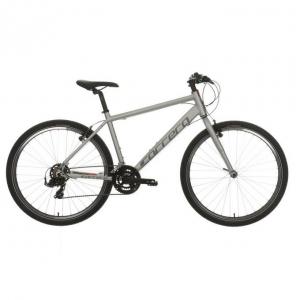
Carrera Parva
Comfortable, practical hybrid that handles commutes and weekend towpath rides without fuss or faff.
- Upright geometry: surveying position for traffic and comfort
- Puncture-resistant Kenda tyres cut roadside delays
- Pannier mounts: proper luggage capacity for commutes
- 14-speed Shimano Tourney: enough range for varied terrain
- 27.5" wheels balance agility with bump absorption
- Memory foam saddle softens longer rides
Carrera Parva Deals

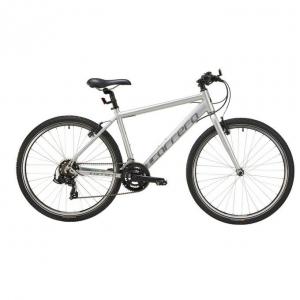
Prices and availability can change quickly. Delivery charges are not always included in listed prices.
Final price, stock status and delivery terms are set by retailer. We may receive a commission on purchases made.
Bikesy's Verdict
The Carrera Parva delivers exactly what it promises: a comfortable, practical hybrid that handles the daily grind without fuss. You get an upright position that's kind on your back, pannier mounts for proper luggage capacity, and puncture-resistant tyres that cut down on roadside delays. The 14-speed Shimano Tourney drivetrain covers most urban and light off-road scenarios, and the memory foam saddle takes the sting out of rough tarmac.
It's not a bike for speed merchants or trail shredders. The 13.5 kg weight and V-brakes limit your pace and wet-weather confidence, and the rigid fork won't forgive big hits. But if your riding diet is commutes, canal paths, and weekend pootles on mixed surfaces, the Parva offers solid value and low-maintenance reliability. Upgrade the brake pads if you ride in the wet, and you've got a dependable workhorse that'll get you from A to B without drama.
Pros
- Comfortable upright geometry suits commuting and relaxed riding
- Pannier mounts and puncture-resistant tyres add practical utility
- 14-speed Shimano Tourney drivetrain covers urban and light off-road terrain
- Memory foam saddle softens rough road surfaces
- Solid value for everyday transport and gentle weekend rides
Cons
- 13.5 kg weight feels sluggish when accelerating or climbing
- V-brakes lack stopping power in wet conditions; upgrade pads if you ride year-round
- Tourney shifting is functional but not refined - expect some clunk under load
About the Carrera Parva
The Parva sits squarely in Carrera's hybrid line-up as a no-nonsense workhorse for riders who need a bike that'll handle the daily commute, weekend canal path meanders, and the odd gravel track without drama. Built around a lightweight alloy frame with a rigid steel fork, it trades suspension plushness for simplicity and low maintenance - a sensible swap when your riding diet is mostly tarmac with the occasional dirt detour.
You're looking at a bike that prioritises comfort and practicality over speed. The upright geometry puts you in a surveying position that's kind on your back and neck during stop-start traffic, and the pannier mounts mean you can ditch the rucksack and carry your laptop or shopping without turning into a sweaty mess. At 13.5 kg it's not featherweight, but that heft brings stability when you're loaded up or navigating potholes in the dark.
Carrera's value proposition shines here: you get puncture-resistant tyres, a 14-speed drivetrain with enough range for modest hills, and a memory foam saddle that takes the sting out of rough road surfaces. It's not trying to be a race bike or a trail shredder - it's designed to get you from A to B reliably, comfortably, and without emptying your wallet on maintenance or the initial purchase.
Carrera Parva geometry
The Parva's frame geometry is built around an upright riding position that keeps your torso more vertical than a road or gravel bike would. That means less weight on your wrists, better visibility in traffic, and a more relaxed posture that won't leave you stiff after an hour in the saddle. The trade-off? You sacrifice aerodynamic efficiency and some pedalling power, but when you're navigating bus lanes or cruising through the park, that's rarely a concern.
The 27.5-inch wheels strike a middle ground between the nimbleness of smaller hoops and the roll-over capability of 29ers. Paired with 1.95-inch tyres, they offer enough air volume to smooth out cobbles and cracked tarmac without feeling sluggish on smoother surfaces. The rigid steel fork keeps the front end predictable and low-maintenance, though it won't forgive big hits the way a suspension fork would.
Handling is stable rather than snappy. The Parva doesn't dart into corners or respond to every tiny input - it tracks straight, holds a line through ruts, and feels planted when you're carrying a load on the rear rack. That composure is reassuring for newer riders or anyone who values predictability over playfulness, though more experienced cyclists might find it a touch ponderous when threading through tight gaps or making quick direction changes.
Component choices & upgrades
The stock build is well-judged for the Parva's intended use. Shimano's Tourney groupset - a 2×7 setup with a 46/30t crankset and 14-28t cassette - delivers fourteen gears that cover most urban and light off-road scenarios. Shifting isn't as crisp as higher-tier Shimano groups, and you'll notice a bit of clunk when you're under load, but it's reliable and easy to adjust. The EF500 EZ-Fire shifters integrate the brake levers, keeping the cockpit tidy.
Tektro V-brakes do the stopping. They're adequate in dry conditions and offer decent modulation once you've bedded them in, but wet weather exposes their limitations - stopping distances stretch, and you'll need a firmer squeeze. If you ride year-round in British drizzle, swapping the stock brake blocks for higher-quality pads (Kool-Stop Salmons are a popular choice) will noticeably sharpen braking performance without the expense of converting to discs.
The Kenda Puncture Protect tyres are a practical touch. They won't eliminate flats entirely, but the extra layer of protection cuts down on roadside repairs caused by glass and thorns. If you find yourself venturing onto rougher gravel or want more grip in the wet, a tyre swap to something like a Schwalbe Marathon or Continental Contact is straightforward and will broaden the bike's capability. The memory foam saddle is plush enough for most riders, though if you're logging longer distances you might want to experiment with a firmer perch that offers better support over time.
Upgrades beyond tyres and brake pads are hard to justify unless you're planning to keep the Parva for years and significantly increase your riding intensity. The Tourney drivetrain and V-brakes are the limiting factors, but replacing them with higher-spec components quickly approaches the cost of a better-equipped bike. Focus your money on contact points - grips, saddle, pedals - and practical additions like lights, mudguards (you'll need to check compatibility or use clip-on options), and a sturdy lock.
Where the Carrera Parva excels
The Parva is outstanding at short-to-medium commutes on mixed surfaces: tarmac, cycle paths, towpaths, and the occasional gravel track. Its upright position and stable handling make it confidence-inspiring in traffic, and the pannier mounts mean you can carry a week's shopping or a change of clothes without resorting to a backpack. Puncture-resistant tyres and low-maintenance components keep you rolling with minimal fuss, which is exactly what you want when the bike is a tool rather than a toy.
It also handles relaxed recreational rides well - weekend loops along canal paths, family outings on traffic-free trails, or gentle exploration of bridleways that aren't too technical. The 27.5-inch wheels and modest tyre width soak up enough bumps to keep things comfortable, and the 14-speed range gives you options when the terrain undulates. You won't set any speed records, but you'll arrive feeling fresh rather than battered.
Where the Parva isn't ideal: fast-paced group rides, aggressive off-road trails, or long-distance touring. The weight and upright position limit your ability to sustain high speeds, and the V-brakes and rigid fork won't cope with steep descents or technical singletrack. If your riding ambitions lean towards sportives, mountain biking, or multi-day tours with heavy loads, you'll quickly outgrow what the Parva offers. It's a bike for everyday utility and gentle adventure, not for pushing limits or racking up big miles at pace.
Carrera Parva FAQs
What is the Carrera Parva best suited for?
The Parva excels at commuting, urban riding, and light recreational trails. Its upright geometry, pannier mounts, and puncture-resistant tyres make it a practical choice for everyday transport and relaxed weekend rides on mixed surfaces.
Is the Carrera Parva a good bike for commuting?
Yes, it's well-suited to commuting. The comfortable riding position, reliable drivetrain, and luggage-carrying capability make it a solid workhorse for getting to work or running errands. V-brakes are adequate in dry conditions but less effective in the wet, so consider upgrading brake pads if you ride year-round.
What is the weight of the Carrera Parva?
The Parva weighs approximately 13.5 kg. That's on the heavier side for a hybrid, but the extra weight brings stability when you're carrying a load or navigating rough road surfaces.
Does the Carrera Parva have disc brakes?
No, the Parva uses Tektro V-brakes (rim brakes). They're reliable in dry conditions but offer less stopping power than disc brakes, especially in wet weather. Upgrading the brake pads can improve performance without the cost of converting to discs.
How many gears does the Carrera Parva have?
The Parva has fourteen gears, delivered by a Shimano Tourney 2×7 drivetrain. The 46/30t crankset and 14-28t cassette provide enough range for urban riding and modest hills, though the shifting isn't as refined as higher-tier groupsets.
What size tyres does the Carrera Parva use?
The Parva runs 27.5 × 1.95-inch tyres. The Kenda Puncture Protect rubber offers a balance of comfort, grip, and flat resistance for mixed-surface riding. There's scope to fit slightly wider tyres if you want more cushioning or off-road capability.
Can you fit mudguards to a Carrera Parva?
Pannier mounts are confirmed, but recent specifications don't explicitly mention mudguard eyelets. You may need to use clip-on or strap-on mudguards, which are widely available and easy to fit without permanent mounting points.
Is the Carrera Parva suitable for light trails?
Yes, the Parva handles light trails comfortably. The 27.5-inch wheels and 1.95-inch tyres offer enough traction and bump absorption for well-maintained gravel paths and bridleways. The rigid fork and V-brakes limit its capability on technical or steep terrain, so stick to gentler off-road routes.
Key Features & Benefits
- Upright alloy frame geometry: Reduces strain on your back and neck during commutes and keeps you visible in traffic
- Kenda Puncture Protect tyres (27.5 × 1.95"): Cuts down on flats from road debris and offers enough cushioning for mixed surfaces
- Pannier mounts: Lets you carry luggage on the bike rather than your back, keeping you cooler and more comfortable
- Shimano Tourney 2×7 drivetrain (14 gears): Provides enough range for urban riding and modest hills without complexity or high maintenance
- Memory foam saddle: Softens the impact of rough tarmac and cobbles, making longer rides more tolerable
Carrera Parva 2023, 2022 & 2020 differences
The 2023 model featured a similar alloy frame and upright geometry, but reviews noted twenty-one gears (suggesting a 3×7 drivetrain) and a lower component spec, including basic tyres and brakes that were criticised for poor performance. Manufacturing origin was noted as Cambodia, which drew mixed reactions.
The 2022 iteration was priced around £285 and described as a solid bike with a decent drivetrain and V-brakes, though reviewers recommended upgrading brake blocks for improved stopping power. Weight was noted as being on the heavier side, consistent with later models.
The 2020 model, listed at £300, shared the 650b (27.5-inch) aluminium frame and Tektro rim brakes, with mid-range components. Specifications were broadly similar to the 2025 version, though exact drivetrain details varied.
The 2025 model consolidates around a fourteen-speed (2×7) Shimano Tourney drivetrain, Kenda Puncture Protect tyres, and pannier mounts, refining the spec for practical everyday use while maintaining the core upright geometry and alloy frame construction.
Alternatives to Consider
Within Carrera's own range, the Carrera Vengeance offers a step up with mechanical disc brakes and sixteen gears, making it a better choice if you ride in all weathers or tackle steeper terrain. For a more leisure-focused option with suspension, Carrera's other hybrid models with front forks trade some simplicity for extra comfort on rougher paths.
Cross-brand, the Pinnacle Lithium 2 delivers similar upright comfort but often spec'd with hydraulic disc brakes and a slightly lighter frame, sharpening wet-weather confidence and overall responsiveness. The Raleigh Strada City sits in the same practical-commuter bracket, with comparable gearing and rim brakes, though component choices vary by year. The Vitus Dee VR City Nexus brings hub gears and belt drive into the mix if you want ultra-low maintenance and clean trousers, though at a higher price. For riders who want a bit more versatility, the Boardman HYB 8.6 offers disc brakes and a wider tyre clearance, opening up rougher gravel routes without sacrificing urban manners. The Specialized Sirrus 2.0 leans slightly sportier with a more efficient riding position and better component spec, though it loses some of the Parva's upright comfort and luggage-carrying practicality.
Reviews
Comfortable geometry and a plush saddle make longer rides less punishing than you'd expect at this price. The upright position offers excellent visibility in traffic, and the bike tracks straight when you're carrying a load on the rear rack. Shifting is functional rather than slick - the Tourney groupset clunks a bit under load, but it's reliable and easy to adjust when cables stretch.
V-brakes deliver adequate stopping power in dry conditions, though wet weather exposes their limits. Better brake pads sharpen performance noticeably. Puncture-resistant tyres live up to their billing, cutting down on flats from glass and thorns. When you point the Parva at light gravel or towpaths, the 27.5-inch wheels and 1.95-inch tyres offer enough cushioning to keep things comfortable without feeling sluggish on tarmac.
Weight is the main compromise. At 13.5 kg, the Parva feels stable and planted, but frequent stops and starts in traffic or hauling it up stairs becomes a chore. Because the frame and fork are built for durability rather than speed, you won't match the pace of lighter hybrids or drop-bar bikes. Still, for everyday utility and gentle adventure, the Parva delivers dependable performance without demanding constant fettling or deep pockets.
Full Specification
| Frame Material | Lightweight alloy |
| Fork | Rigid hi-tensile steel |
| Gearing | 14-speed (2×7) |
| Shifters | Shimano EF500 EZ-Fire, 2×7 |
| Rear Derailleur | Shimano RD-TY500, 7-speed |
| Front Derailleur | Shimano FD-TY710, 34.9mm clamp |
| Crankset | Prowheel 46/30t (170mm S/M, 175mm L) |
| Cassette | Shimano TZ500, 7-speed, 14-28t |
| Chain | KMC Z7, 7-speed |
| Bottom Bracket | Sealed bearing, square taper |
| Brakes | Tektro 837al V-brakes |
| Wheels | Carrera alloy double wall rims, 27.5" |
| Hubs | Alloy quick release (9×100mm front, 10×135mm rear) |
| Tyres | Carrera Puncture Protect by Kenda, 27.5 × 1.95" |
| Handlebar | Carrera alloy, 10mm rise, 640mm width, 25.4mm clamp |
| Stem | Carrera alloy, 7-degree rise (70mm S/M, 80mm L, 90mm XL) |
| Headset | Semi-integrated, 1 1/8" |
| Seatpost | Carrera alloy, 31.6×350mm, 34.9mm clamp |
| Saddle | Carrera memory foam saddle |
| Pedals | Alloy hybrid pedals, 9/16" |
| Grips | Carrera comfort grip |
| Frame Features | Pannier mounts, upright hybrid geometry |
| Approximate Weight | 13.5kg |