
Side On Trailers
Side On bike trailers give you a genuinely practical way to carry passengers or kit without spending a fortune - and for UK riders juggling school runs, weekly shopping, and the odd loaded weekend ride, that matters. The range covers both child and cargo duties, built around durable steel and alloy frames that cope with Britain's pocked tarmac rather than crumbling under it. Weather-resistant canopies keep occupants and loads dry when the rain arrives - which it will - and the hitch system is designed to get you rolling without a workshop session every time you want to attach it. What you get across the Side On lineup is honest utility: robust construction, sensible safety features like 5-point safety harnesses on the child models, and pneumatic tyres that absorb road shock passively. These aren't stripped-down toys, but they do sit firmly in the accessible end of the market. If you're comparing against Burley trailers or Thule trailers and wondering whether Side On is the right call, price-to-feature ratio is where the conversation usually lands. Browse the price-compared selection below to find the right fit for your riding.
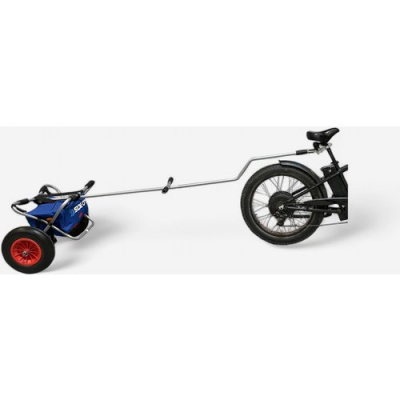
Prices and availability can change quickly. Delivery charges are not always included in listed prices.
Final price, stock status and delivery terms are set by retailer. We may receive a commission on purchases made.
Will a Side On Trailer Actually Fit Your Bike?
This is the question worth answering before anything else. Side On trailers use a universal axle-mount hitch system that works straight out of the box with standard 5mm quick-release skewer rear axles - the setup you'll find on most older road bikes, hybrids, and entry-level MTBs. Solid nutted axles are also covered. If that's your bike, you clip on the tow bar, tighten the hitch, engage the safety strap, and you're done.
Modern disc-brake bikes are a different story. If your rear wheel runs a thru-axle adapter - 12x142mm on most road and gravel bikes, or 12x148mm Boost on trail and enduro MTBs - the standard hitch won't engage safely. You'll need a trailer-specific thru-axle that swaps in for your stock axle and features an extended threaded end for hitch mounting. Here's the bit people miss: thread pitch varies between frames. Common pitches are 1.0mm, 1.5mm, and 1.75mm, and fitting the wrong one risks stripping your dropout threads permanently. Check your frame's spec sheet or measure the existing axle before ordering an adapter - a quick Google of your frame model and "rear axle thread pitch" usually turns it up. It's a five-minute job that saves an expensive mistake.
Bikes with hooded or recessed dropouts can also complicate hitch fitment, so worth checking clearance before you commit. Most riders with standard QR setups won't think about any of this - it just works.
Child Trailers vs Cargo: What the Side On Range Actually Offers
Side On splits broadly into child-carrying and cargo/utility models, and the differences go beyond just the seating. Child trailers prioritise occupant protection first. That means 5-point safety harness systems that keep small passengers secure over rough ground, a roll-cage structure built into the frame to protect in the event of a tip, and mesh ventilation panels that stop things getting stuffy on warmer days. Visibility matters too - reflective detailing and the included safety flag make the trailer easier to spot on UK roads where drivers aren't always expecting a wide towed load.
Move to the cargo side and the priorities shift. Flatbed and enclosed cargo trailers focus on payload capacity and load security - tie-down points, flat loading surfaces, and a lower centre of gravity that keeps handling predictable even when you've stacked on the weekly shop. These aren't designed to be precious; they're workhorses.
As you move up through the price tiers within the range, you gain features that genuinely change the experience rather than just adding badge value. Suspension systems - even simple spring units - make a noticeable difference when you're towing a child over cracked urban tarmac. Stroller-conversion kits extend the usefulness of child trailers beyond cycling, which is worth factoring in if storage space at home is tight. The entry-level models are stripped back but functional; the step-ups earn their premium through comfort and versatility. If you're weighing Side On against Hamax trailers at a similar price point, check whether the suspension and harness standard matches - it often doesn't at the same cost.
The quick-fold collapsible frame technology appears across the range and is one of the more practical features in day-to-day use. Folding flat for boot storage or flat-pack commuting means you're not wrestling with a rigid structure every time the trailer comes off the bike. It folds down faster than most people expect the first time they try it.
Keeping a Side On Trailer Running Through UK Winters
Buy a trailer, use it through a British winter, and you'll quickly discover that road salt and grit are more destructive than any amount of mileage. The universal hitch mechanism and tow-bar pin are the first things to suffer - salt works into the joint, the pin seizes, and suddenly detaching the trailer after a wet January school run becomes a two-handed battle. The fix is straightforward: pack a tube of marine grease or anti-seize compound in your kit and apply it to the hitch pin, spring, and any exposed pivot points every few weeks through autumn and winter. It takes two minutes and stops a £2 consumable turning into a broken component.
Pneumatic tyres are standard across the Side On range, and they do absorb road shock - but the pressure you run them at changes the experience significantly on rough UK roads. Most trailers ship with a recommended pressure range on the tyre sidewall. Running closer to the lower end of that range gives you passive cushioning over potholes and broken surfaces without risking a pinch flat, which matters when you're carrying a child or fragile cargo. Check pressure weekly; trailer tyres lose air faster than most riders assume.
The high-denier weather-shield canopy is worth treating proactively rather than reactively. Side On's canopy fabric resists water reasonably well, but the DWR (Durable Water Repellent) coating degrades with UV exposure and washing. A season of British rain and you'll notice water soaking in rather than beading off. Reproofing with a standard DWR spray - the same stuff used on waterproof cycling jackets - restores performance quickly. Do it at the start of autumn before the wet season bites, and again in spring if the trailer's been used heavily. Hang the canopy up and apply evenly; no need to remove it from the frame.
If you're also looking at Halfords trailers as a comparison, the maintenance requirements are broadly similar - all trailers running steel or alloy hardware in UK conditions need the same grease-and-reproof routine. Side On's fit and finish is comparable at equivalent price points.
Side On Trailers FAQs
Do bike trailers fit all bikes?
Most Side On trailers attach to standard quick-release or solid-nut rear axles without any additional parts. If your bike has a modern thru-axle - common on disc-brake road, gravel, and MTB frames - you'll need a compatible aftermarket thru-axle adapter before the hitch will engage safely. Check your axle standard before buying.
How do you attach a bike trailer to a thru-axle?
You swap your stock thru-axle for a trailer-specific version with an extended threaded end that accepts the hitch. The critical step is matching thread pitch exactly - 1.0mm, 1.5mm, and 1.75mm are all common, and the wrong pitch risks damaging your frame's dropout threads. Check your frame spec or measure the original axle first.
Are bike trailers safe for toddlers on UK roads?
Side On child trailers include roll-cage frames, 5-point safety harnesses, and reflective detailing - all meaningful safety features. For UK roads, always engage the hitch safety strap, use the included flag for visibility, and favour quieter routes or dedicated cycle paths where traffic speed is lower. Minimum age guidance from the manufacturer applies.